
Reviewed · LONDON WALKING TOURS
Burnings, Butchery & Black Death: A Walking Tour of London’s Bloody Past
London’s past can turn grim in a hurry: a medieval plague pit, a centuries-old meat market, public executions and a Victorian sewer all sit within this compact walking route. The Smithfield area makes a strong setting for a tour that connects the city’s violent episodes with places you can still find on today’s streets.
I like two things in particular: the route pairs famous names, such as William Wallace, with quieter corners you could easily walk past, and a maximum group of 15 people gives the guide a chance to keep the walk personal. One consideration: this is a history tour with a dark theme, and much of the experience takes place outdoors, so come ready to walk and hear about some unpleasant chapters.
At a glance: ten stops in two hours
- Plague and the medieval city: Visit Charterhouse, a fourteenth-century monastery and plague pit, then Smithfield Market, a meat market with a thousand-year history.
- A Knights Hospitaller landmark: See St John’s Gate, once the home of the medieval order.
- A Wallace memorial: Stop at the memorial to William Wallace, known as Braveheart.
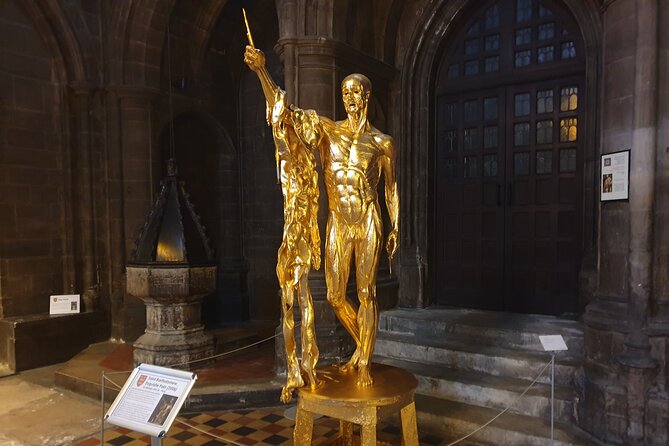
- Old church, old hospital: Visit the Church of St Bartholomew the Great, London’s oldest surviving parish church, and learn about St Bartholomew’s Hospital, the country’s oldest surviving hospital.
- Fire, river and pub: Find the Golden Boy of Pye Corner, the site where the Great Fire of 1666 died out, then walk past the former River Fleet and finish near Ye Olde Mitre.
Smithfield puts London’s darker past on the map
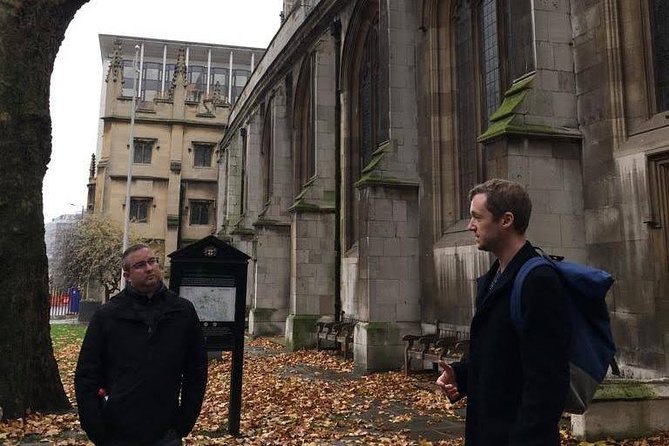
This walk focuses on a small area with an outsized share of London history. Over about two hours, you move from medieval religious life and plague to markets, executions, the Great Fire and Victorian public health. The stops do not ask you to imagine these events in some distant corner of the city: they put you among the streets and buildings where the past still has a visible address.
That local focus is part of the value. London’s older history can be hard to read from street level, especially when a plain-looking alley or building front gives little away. A guide can explain what happened there and connect one stop to the next. Several descriptions from the walk’s past outings praise Tom’s clear delivery, humor and ability to bring local stories to life. Tom is a named guide, but you should not assume he will lead every date.
The dark subject matter also sets expectations. This is not only a tour of old architecture. Its themes include plague, butchery, executions, bomb attacks during the Blitz and the city’s former open-air sewer. If that history interests you, the grim details add context. If you prefer lighter sightseeing, this may not be your best two hours.
More walking tours in London:
- Magical London: Harry Potter Guided Walking Tour
★ 4.7 · 22,044 reviews - London: The Original Jack the Ripper Walking Tour
★ 4.7 · 7,833 reviews - Tour for Muggles The Ultimate Harry Potter Walking Tour in London
★ 5.0 · 4,684 reviews
From the plague pit to Smithfield Market
The route begins at Charterhouse, a fourteenth-century monastery and plague pit. It is a striking place to start because it brings together two themes that shaped medieval London: religious life and disease. The stop is listed as ten minutes, with no admission ticket required. That makes it a brief introduction rather than a long visit inside a museum or historic building.
From there, the walk reaches Smithfield Market, described as a thousand-year-old meat market. The market’s long life gives the area a sense of continuity: this is not merely a preserved historic quarter, but a place shaped by work and trade over centuries. The tour’s account of Smithfield also ranges beyond meat and medieval life. Expect the guide to connect the market and surrounding streets with London’s rougher past, including executions and later events such as Blitz bomb attacks.
The market stop is also a useful reminder that a historic location can have several stories at once. You may hear about how the area functioned, as well as the episodes that made it notorious. Each stop is listed at ten minutes, so the guide has to choose what matters most rather than cover every detail.
St John’s Gate, Cloth Fair and William Wallace
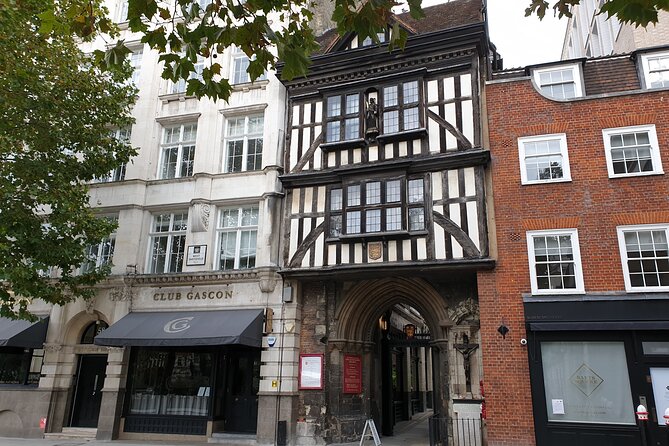
St John’s Gate was the home of the medieval Knights Hospitallers. The gate gives the walk a change of subject after the market’s trade and violence: here, the focus shifts to a religious order and its place in the city. The group’s past connections also lead into the origins of St John Ambulance, a link that adds a more modern thread to the route.
Cloth Fair is a quiet alley with a noisy history. That contrast is exactly the sort of thing that makes a guided walk useful. Without someone pointing out the significance of a narrow lane, you might see little reason to pause. The surrounding area rewards attention, and the guide’s stories help turn a short passage into a meaningful stop.
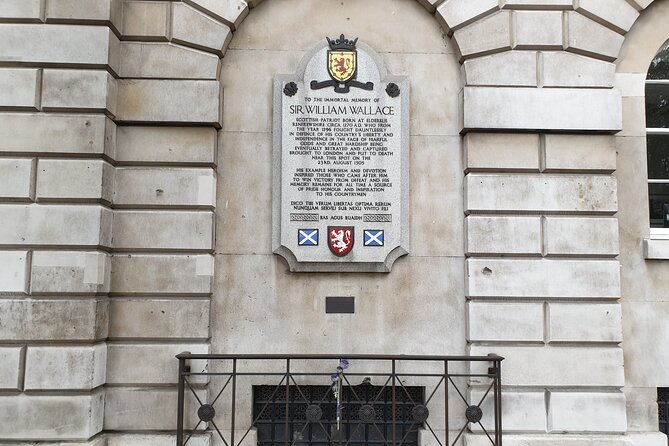
Next comes the William Wallace Memorial, dedicated to the Scottish figure also known as Braveheart. It is a quick stop, but a memorable one for anyone who recognizes the name. The value is less about spending time at a large monument and more about seeing how a famous figure’s story is marked in this part of London. The stop’s ten-minute slot keeps the pace moving.
Taken together, these three places show the tour’s range. You move from a medieval religious order to a back lane and then to a memorial associated with a figure whose story extends well beyond London. The route does not stay in one historical lane for long.
St Bartholomew the Great and the Great Fire’s last stop
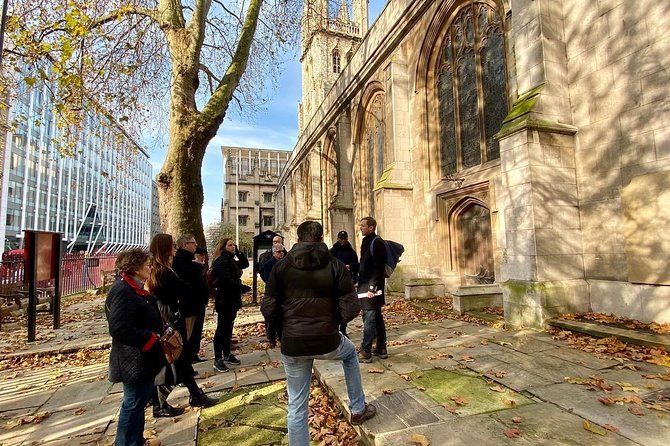
The Church of St Bartholomew the Great is described as London’s oldest surviving parish church. It is the only stop in the listed route with admission included, so the visit offers a chance to step inside rather than simply hear about a site from the pavement. In a tour full of street-level landmarks, that change of pace matters. The church also gives the guide a chance to place the area’s religious history in a setting that has survived across the centuries.
The Golden Boy of Pye Corner marks the place where the Great Fire of 1666 died out. That is a clear, memorable link between a small street landmark and one of London’s defining disasters. The site also carries a less expected story: eighteenth-century ghost hysteria. The two subjects make for an unusual pairing, and they show how the tour moves between documented events and the fears that grew around them.
The stop is listed as ten minutes and requires no admission ticket. It is a short visit, but it helps connect the city’s physical history with the stories people attached to particular places. If you enjoy the way folklore and historical events overlap, this should be one of the more intriguing points on the walk.
More tours and experiences in London:
- London: The London Eye Entry Ticket
★ 4.6 · 35,875 reviews - From London: Harry Potter Warner Bros Studio Tour
★ 4.7 · 26,588 reviews - London: Madame Tussauds London
★ 4.6 · 20,915 reviews - Stonehenge, Windsor Castle, and Bath from London
★ 4.5 · 18,662 reviews
The Fleet, Ye Olde Mitre and the hospital

At Holborn Viaduct, the tour turns to the River Fleet, once Victorian London’s largest open-air sewer. The name sounds like a river, but the important point here is what happened to it as the city changed. This stop offers a useful shift from individual stories of violence to the broader conditions of urban life and public health. It also helps explain why London’s past is not only about kings, churches and famous figures.
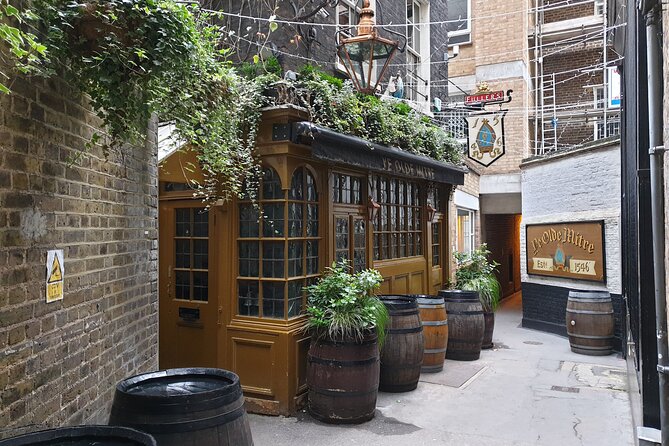
The walk then reaches Ye Olde Mitre, a pub tucked down an alleyway. It is described as a hidden gem, but the practical appeal is straightforward: it is an atmospheric old pub and a natural place to finish or continue your time in the area. The stop itself does not include a meal or drink, so budget separately if you want to stay. A number of past outings have paired the end of the walk with lunch there, with cheese toasties and pork pies singled out as popular choices. That is useful local advice, not a meal included in the tour price.
The final listed stop is St Bartholomew’s Hospital Museum, described as the oldest surviving hospital in the country. It gives the route another angle on the area’s long relationship with illness and care, balancing the stories of plague and death with the history of a continuing institution. The museum stop is listed as free admission. The tour ends on Ely Place, around the corner from Farringdon Station, so you finish close to public transport.
What the pace and group size mean for you
The tour lasts about two hours and includes ten listed stops, each with an estimated ten-minute visit. That does not mean you spend exactly 100 minutes standing at landmarks and the rest doing nothing: there are walks between stops, and the total duration is approximate. Expect a steady walking outing, with regular pauses for stories rather than long stretches inside buildings.
A group cap of 15 is a practical plus. It is small enough to make it easier to hear the guide and ask questions than on a large coach or crowded group walk. The area is also compact, so you cover many subjects without spending the day crossing London. One past participant described the walk as not too demanding, but you should still be comfortable walking for around two hours.
The experience is offered in English and uses a mobile ticket. The meeting point is Underground Ltd on Aldersgate Street, near Barbican. The end point is Ely Place, close to Farringdon Station. Both ends are near public transport, which makes the tour straightforward to fit into a day in central London.
Is $27.73 good value?
At $27.73 per person, this is a reasonable price for a guided, two-hour walk with a maximum group size of 15 and ten stops. You are paying mainly for the guide’s local knowledge and storytelling, not a string of paid admissions. Most stops are free to enter; admission is included at St Bartholomew the Great, while the St Bartholomew’s Hospital Museum stop is listed as free.
The value depends on how you like to explore. If you enjoy historic places but want help understanding what you are looking at, the guide’s role can make an ordinary street corner feel worth the pause. If you prefer to spend long stretches inside museums or want a tour focused on a single period, the quick stops and broad sweep may feel brisk.
The walk has earned a five-star rating from 262 reviews, with all recommending it. The most praised elements are the guides’ storytelling, the small group, and the chance to find parts of the City that are easy to miss alone. Past comments also highlight Tom’s humor and ability to answer questions. Those are useful signs of what the experience can offer, though the guide on your date may differ.
Who should book this walk?
Book it if you want a compact introduction to London’s darker history and enjoy connecting a place with the events that happened there. It suits repeat visitors as well as first-timers: the route offers familiar names such as William Wallace and the Great Fire, but also includes less obvious locations and local stories. It is especially appealing if you have already taken a Jack the Ripper tour and want a different account of the city’s past.
You may want to skip it if you dislike grisly history, need a fully indoor activity, or would rather explore each site at your own pace. The tour requires good weather. If poor weather forces a cancellation, you will be offered another date or a full refund. You can cancel for a full refund up to 24 hours before the experience; after that, the payment is not refunded.
The tour is typically booked 47 days in advance on average, so plan ahead if your schedule is fixed. For a curious walker who likes small groups and old streets with stories attached, this is a strong way to spend two hours. For a casual stroll with little talk of death and disease, choose another route.
FAQ
How long is the tour?
It lasts approximately two hours.
What is the price?
The listed price is $27.73 per person.
Where does the tour start?
It starts at Underground Ltd, Aldersgate Street, Barbican, London EC1A 4JA.
Where does the tour end?
It ends on Ely Place, around the corner from Farringdon Station.
What language is the tour offered in?
The tour is offered in English.
How large is the group?
The maximum group size is 15 travelers.
Is admission included?
The tour is included. Admission is included at the Church of St Bartholomew the Great. The other listed stops are free to enter, including St Bartholomew’s Hospital Museum.
Can service animals join the tour?
Yes. Service animals are allowed.
What happens if bad weather cancels the tour?
You will be offered a different date or a full refund.
Just reviewed in London
- Welcome to Paris Day Trip from London via Train★ 4.5 · 124 reviews
- London: Self-Guided Notting Hill Walking Tour with an APP★ 4.3 · 120 reviews
- Photoshoot at Notting hill,Covent Garden,St Paul Cathedral★ 4.4 · 12 reviews
- London: The Shard Entry Ticket with Champagne★ 4.5 · 147 reviews
- London: Full Day Tower, St. Paul’s, Cruise & Eye Experience★ 4.6 · 168 reviews
- Paris Explorer Rail Tour from London with Paris Sightseeing Bus★ 4.0 · 111 reviews
- London: Private Landmark Tour with Professional Photographer★ 4.7 · 91 reviews
- London: Private Photoshoot with Video Clip Option★ 4.8 · 182 reviews
London Walking Tours, compared.

Magical London: Harry Potter Guided Walking Tour
Read our review →

Tour for Muggles The Ultimate Harry Potter Walking Tour in London
Read our review →
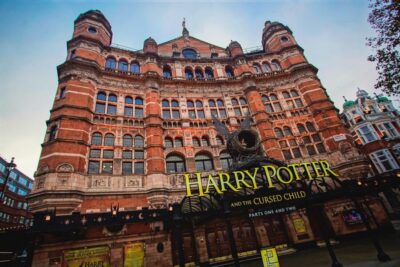
Harry Potter Movies Walking Tour (Kids Go Free)
Read our review →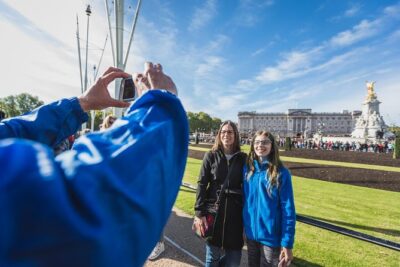
Changing of the Guard Guided Walking Tour in London
Read our review →
The Great British Rock and Roll Music Walking Tour
Read our review →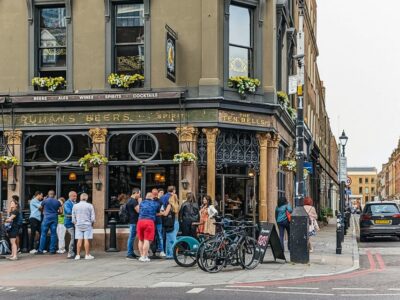
Jack the Ripper Walking Tour – Ripper Vision Tours
Read our review →Browse the lists this tour appears in