
Reviewed · JACK THE RIPPER TOURS
A Private VIP Jack the Ripper Black Cab Tour
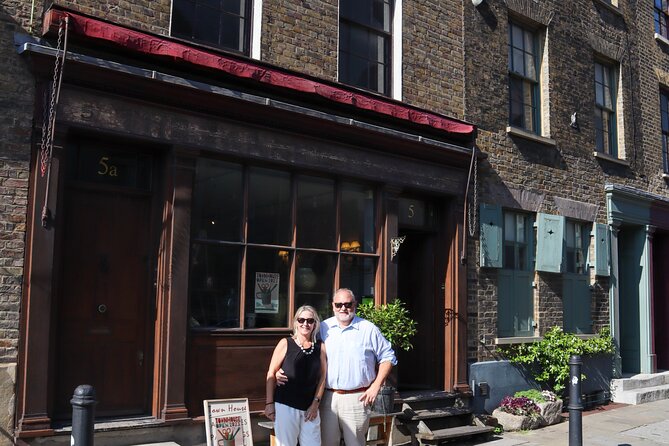
The most striking part of this tour is the way it connects the Jack the Ripper case to the streets and institutions around it. You travel by black cab between East London locations, stepping out to discuss victims, the police response and the lives of the women who were murdered in 1888.
I like the private cab format, which gives your group room to ask questions and avoids making you navigate the route alone. I also like that guide Danny uses old photographs to compare past and present streets, and includes nearby sights beyond the murder sites.
One consideration: this is a serious subject, and the tour deals with real violence against women. It may not suit every age or temperament. At $338.90 per group, it is best value when shared by several people, and the price is the same whether you bring one companion or five.
Key points to know before you book
- A private black cab for up to six: The group price covers your party, with air-conditioned transport between stops.
- Nine locations, about three hours: The route links Whitechapel and Spitalfields with sites in Limehouse, the City and Whitehall.
- Danny leads the tour: He brings historical context, period photographs and a lively storytelling style.
- More than crime-scene stops: The tour also touches on the area’s churches, a Victorian police headquarters, the Cable Street riots and a suspect’s workplace.
- Flexible departure time: You can choose a time that works with your London plans.
- Expect some walking: The cab does much of the travelling, but several stops include getting out to look around.
Following the case through East London
The Jack the Ripper murders took place in Whitechapel and the surrounding East End in 1888. The case remains unsolved, and the tour’s appeal is not just the mystery of the killer’s identity. It is also a way to understand the conditions of the neighbourhood, the police investigation and the difficult circumstances faced by the women whose lives were cut short.
Danny’s route includes nine named stops, with short visits at several locations and about three hours overall. The cab is useful here: it connects places spread across several districts, while leaving time to get out and discuss specific streets. You are not simply riding past a list of addresses. At each stop, the guide sets the scene and relates the site to the case or its wider history.
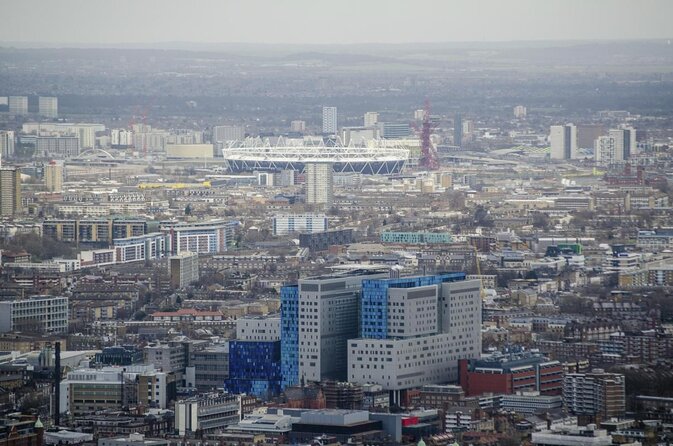
The tour begins with a drive past landmarks that help place you in Victorian London, including a hospital dating to 1740, church ruins that gave the area its name, fountains and inquest rooms connected to the murders. These details help make the period feel less like a tale confined to a few famous crime scenes. The East End was a living neighbourhood, with institutions and public spaces alongside the streets where the murders took place.
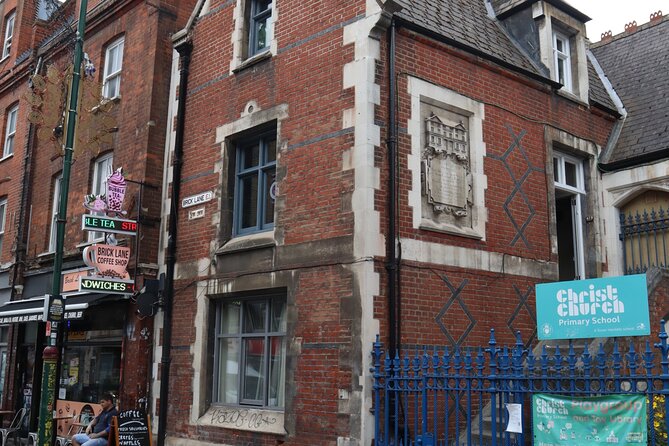
The route then visits Whitechapel, Spitalfields, Limehouse and other parts of London. The places themselves have changed over time, but some surroundings still offer a sense of the old street pattern. Danny’s use of historic photographs can help you see those changes more clearly. If you enjoy comparing old images with the modern city, bring a curious eye and take time to look beyond the cab door.
More Jack the Ripper walks in London:
- London: The Original Jack the Ripper Walking Tour
★ 4.7 · 7,833 reviews - London Jack the Ripper Guided Tour with Ripper-Vision
★ 4.5 · 4,840 reviews - London: Jack the Ripper Small Group Tour
★ 4.7 · 3,159 reviews
Whitechapel: Mary Ann Nichols on Durward Street
At Durward Street, Danny discusses Mary Ann Nichols, identified on the tour as the first victim. The stop is listed as about 10 minutes, enough time for the main story and a few questions, rather than a long walk through the area.
This is a useful first stop because it anchors the case in a particular East End street. The focus is not only on the crime, but on the world around it: the neighbourhood and the people who lived there. That social context matters. Without it, the story can become a sequence of grisly details with little sense of the lives affected.
The short visit also sets expectations for the rest of the tour. You will move between locations, with the guide supplying context in focused segments. If a particular part of the story interests you, use the private format to ask Danny about it while you are there.
Spitalfields: Hanbury Street and the market
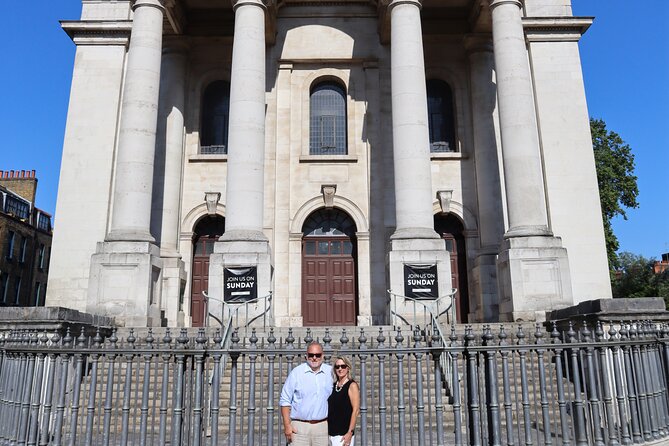
At Hanbury Street, the tour turns to Annie Chapman, the second victim. The planned stop is about 10 minutes. The route also includes Spitalfields Market, where Danny discusses Mary Kelly, identified in the tour as the fifth victim, and points out nearby streets and Christchurch Spitalfields, a church that has stood on Commercial Street for nearly 300 years.
The market area provides a broader view of Spitalfields than a single murder-site stop would. The tour connects Brushfield Street and Commercial Street with the pub where the women are said to have drunk, as well as the church. One past tour group also visited the Ten Bells pub, which has a long association with the Ripper story. Since the route description does not promise a pub visit every time, treat it as a possible part of the discussion rather than a guaranteed stop inside.
This is one of the route’s more layered sections. You get a look at the area’s social and religious landmarks alongside the case itself. Christchurch Spitalfields gives the conversation a point of comparison between the Victorian city and the present one. The market and surrounding streets also help you picture the area as a neighbourhood, not merely a backdrop for a notorious crime.
The Spitalfields Market stop is listed as about 20 minutes, longer than several of the others. That extra time makes sense: it covers multiple streets, Mary Kelly and nearby landmarks. Still, the tour moves at a planned pace, so it may not offer much time for an extended independent look around.
Limehouse and Aldgate: Elizabeth Stride and Prostitutes Square
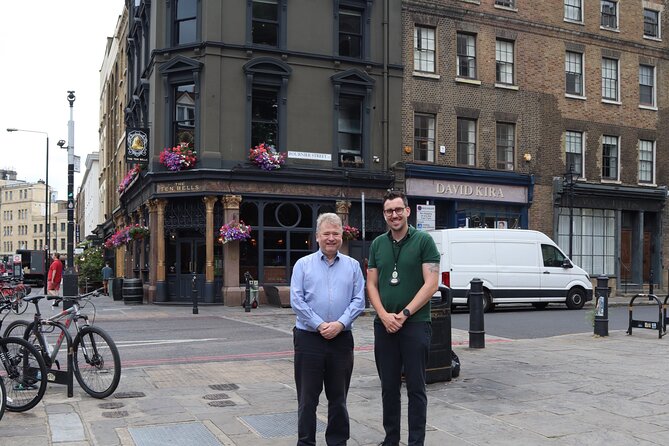
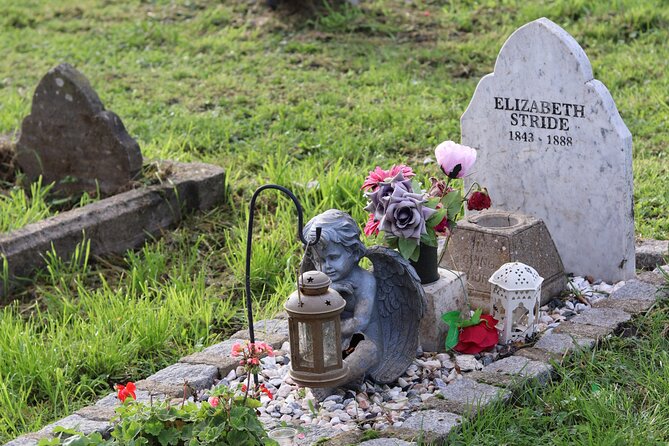
At Henriques Street, by Limehouse Basin, Danny discusses Elizabeth Stride, the third victim. The stop is listed as about 10 minutes. The tour then visits St Botolph’s Aldgate, a church that was present during the Ripper period. The surrounding area was also known as Prostitutes Square.
These stops widen the picture beyond the best-known Whitechapel streets. The church and its surroundings provide a chance to discuss the social realities of the period, including the lives of women working in the area. The tour does not treat the murders as isolated incidents detached from the city around them.
The itinerary does not give a set duration for St Botolph’s, so the amount of time there may depend on how the route runs. As with the other short stops, this is a guided look and discussion, not a long church visit.
More black cab tours in London:
- The Premier Classic London: Private 4-Hour Tour in a Black Cab
★ 5.0 · 2,737 reviews - Private Tour: Black Taxi Tour of London
★ 5.0 · 1,153 reviews - London Sightseeing Private Black Cab Tour with Hotel Pick Up
★ 5.0 · 917 reviews - Rock Cab Tours presents Music Legends Private Taxi Tour of London
★ 5.0 · 637 reviews
Cable Street: a murder mortuary and a later uprising
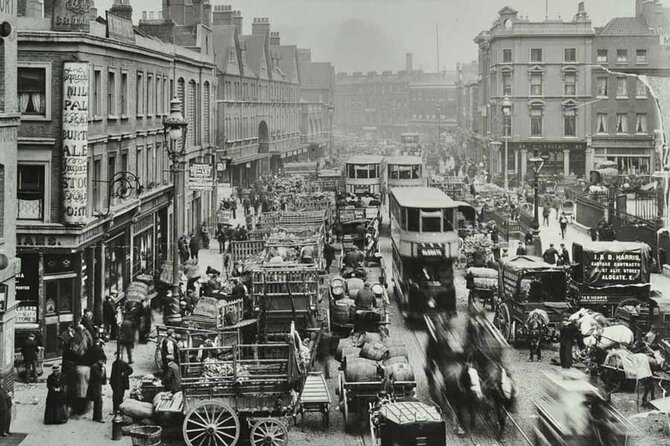
At Cable Street, you take a walk and hear about the Cable Street riots. Danny also shows you the mortuary used for some of the Ripper victims. The stop is listed as about 15 minutes.
This is an unusual pairing: the tour moves from the 1888 murders to a later chapter in the street’s history. That broader view is part of what makes the outing more than a crime tour. You get a sense of how the East End’s past includes political conflict and community life as well as the Ripper case.
The walk is worth noting if you are expecting to remain in the cab throughout. The taxi handles the longer connections, but you should be ready to get out and explore on foot at selected stops.
From Inner Temple to old Scotland Yard
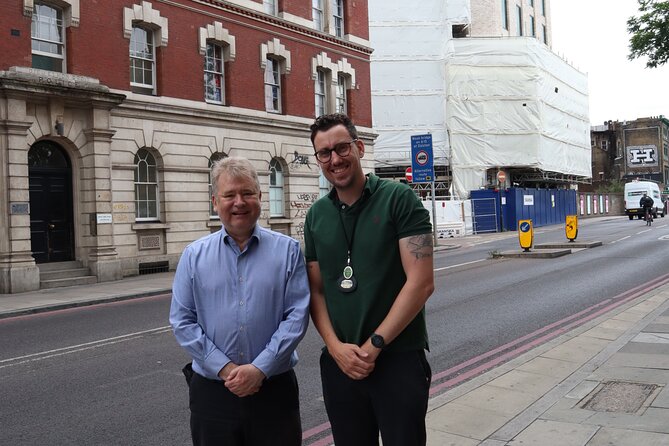
The tour leaves the East End for central London at Inner Temple, where Danny discusses the workplace of suspect M. J. Druitt and how he came to be considered in the case. The stop is about 15 minutes. It offers a change of scene and brings the investigation’s suspects into focus, while reminding you that the case was never conclusively solved.
At Farringdon, the group visits the Central News Agency and discusses letters supposedly sent by the killer. The tour description is careful to call them taunting letters that were supposedly connected to the murderer. That uncertainty is useful: the Ripper story is full of claims and theories, and a good account should distinguish what is known from what is disputed.
The final listed stop is Whitehall, where you visit old Scotland Yard and the former Metropolitan Police headquarters, dating from 1829. This gives the police side of the story a physical setting. Rather than ending only with a suspect or a theory, the route looks at the institution tasked with investigating the murders.
Together, these central London stops add variety to the route. You move from East End streets to legal and police institutions, tracing how the story extended beyond the places where the victims were found. The taxi makes that longer geographical sweep practical within an outing of about three hours.
What Danny adds to the experience
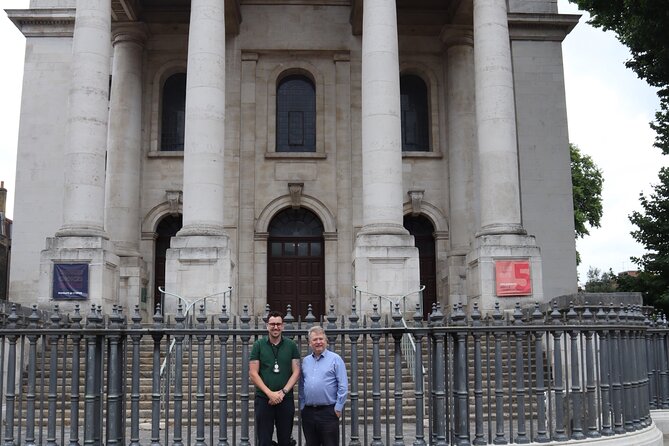
Danny, also identified as Daniel McIntyre, is the guide named for Traditional London Tours. His approach combines historical explanation with photographs of locations as they looked in the Ripper era. Those images are especially helpful where a street has changed but still holds traces of its earlier character.
His storytelling is a major part of the tour’s value. The subject can easily become lurid, but the route also makes room for social context and the community in which the victims lived. Danny’s willingness to answer questions and adjust his interaction to the group can make the private format feel more personal than a large walking tour.
The guide has also taken groups around nearby sites that are not directly tied to the murders. That can be a welcome change of pace, particularly if you are interested in London beyond the case. He has been praised for taking photos during tours and sharing them afterward, but this is not stated as a formal inclusion, so do not count on it as a guaranteed service.
Price, comfort and who gets the best value
The tour costs $338.90 for a group of up to six. At full capacity, that works out to about $56.48 per person. For two people, the effective cost is about $169.45 each; for a solo booking, you pay the group price. That makes the strongest value case for families or small groups who want a private guide and transport without splitting into separate bookings.
The price covers an approximately three-hour private activity, an air-conditioned black cab and a guide-led route across several parts of London. You are paying for more than a ride: the guide’s historical explanations and the ability to ask questions are central to the experience. A self-guided visit might cost less, but you would need to connect the locations and supply the context yourself.
Pickup is offered, but the exact pickup arrangement is not specified here. The tour is available in English, and you can choose a departure time to fit your schedule. Confirmation is provided at booking, service animals are allowed, the tour is near public transportation, and most people can participate.
The main trade-off is the subject matter and pace. The murders are real, and the tour discusses their details. Some stops are brief, so you may want to choose another option if you prefer long visits at each site or a lighter introduction to London history.
Should you book this Jack the Ripper cab tour?
Book it if you want a private, guided way to connect East London’s streets with the Ripper case, and if you value context as much as the mystery. Danny’s historical photographs, the range of locations and the cab transport make the route especially appealing for a group that wants a focused outing without managing the route alone.
Think twice if you are travelling solo on a tight budget, if the subject is too grim for your group, or if you want a full walking tour with plenty of time at every stop. For up to six people who are interested in Victorian London and comfortable with the topic, this is a practical way to see a wide stretch of the city and hear the story tied to its places.
FAQ
How long is the tour?
It lasts about three hours. The route includes nine named stops, with several visits listed at 10 to 20 minutes.
How many people can join?
The tour is private for your group, with a maximum of six people.
What is included in the price?
The $338.90 group price includes private transportation in an air-conditioned black taxi and a guided tour. The information provided does not list separate admission tickets, and the named stops are marked as free.
Is pickup offered?
Yes, pickup is offered. The specific pickup point is not stated in the tour details.
What language is the tour in?
The tour is offered in English.
Can I cancel for a refund?
Yes. You can cancel at least 24 hours before the experience’s start time for a full refund. Cancellations or changes made less than 24 hours beforehand are not accepted for a refund or change.
Just reviewed in London
- Jack the Ripper London Private Taxi Tour★ 5.0 · 10 reviews
- Jack the Ripper Private Immersive Tour★ 4.5 · 5 reviews
- Jack the Ripper Mystery Walks★ 5.0 · 28 reviews
- In Jack The Ripper Footsteps: Private Black Cab Tour in London★ 5.0 · 3 reviews
- Private Walking Tour: Jack The Ripper and East End★ 5.0 · 3 reviews
- PRIVATE Jack the Ripper Ghost Walking Tour in London★ 5.0 · 3 reviews
- Private London Tour Tailored to Your Interests with a Local Best Suited to You★ 5.0 · 4 reviews
- Isle of Wight Guided Day Tour from London★ 4.5 · 38 reviews
Jack the Ripper Tours, compared.
London Jack the Ripper Guided Tour with Ripper-Vision
Read our review →
German Language : Original Jack the Ripper Tour
Read our review →
Jack the Ripper Walking Tour – Ripper Vision Tours
Read our review →
Ultimate Jack the Ripper : Guided Tour of London
Read our review →
Browse the lists this tour appears in