
Reviewed · LONDON TOURS
London Transport Museum One Day Ticket
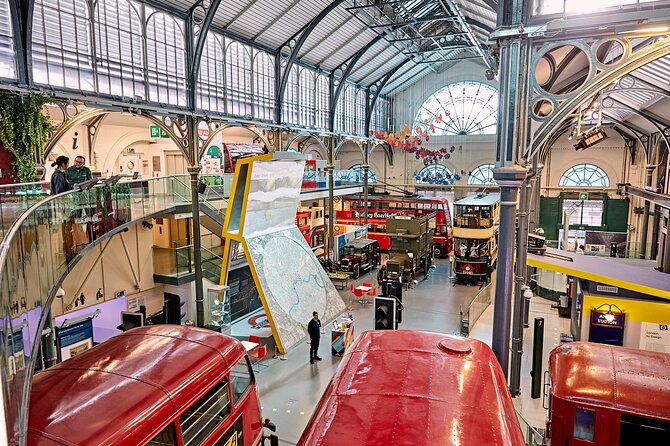
London’s transport story is also London’s growth story. In the old Covent Garden flower market, you can stand beside restored buses, trams and Underground trains, then follow the changes from horse-drawn buses to the Tube and its famous map. I especially like the full-size vehicles, which make the past feel tangible, and the hands-on All Aboard playzone, which gives children more to do than read labels.
You can explore at your own pace, and two hours is a useful starting estimate, not a limit. The trade-off is that the interactive areas can get loud and busy during school holidays, while the museum’s layout may take a little getting used to.
What to know before you go
- See transport at full scale: Restored buses, trams and Underground trains help bring two centuries of London transport to life.
- Start in Covent Garden: The museum sits at The Piazza, WC2E 7BB, in a former flower market.
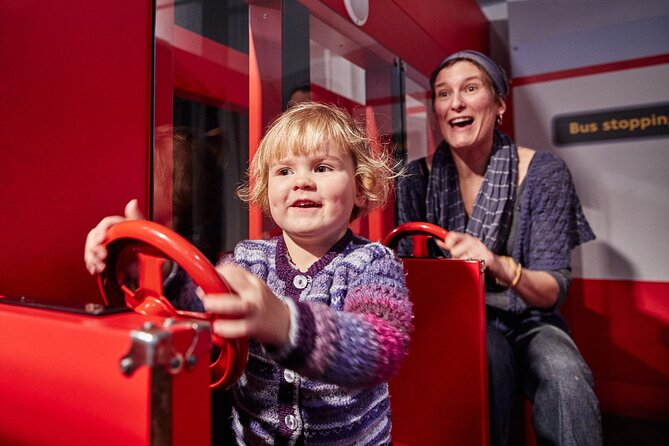
- Plan for hands-on family time: Children can play at being drivers, mechanics or conductors in the All Aboard area.
- Give yourself room to wander: The visit is listed at about two hours, but you can stay longer and explore at your own pace.
- Expect a lively atmosphere in school breaks: Interactive play is a plus for children, but it can make the galleries noisy.
- Budget for extras: The $33.76 ticket covers admission. Food and drink are not included.
London’s transport story, told through its vehicles
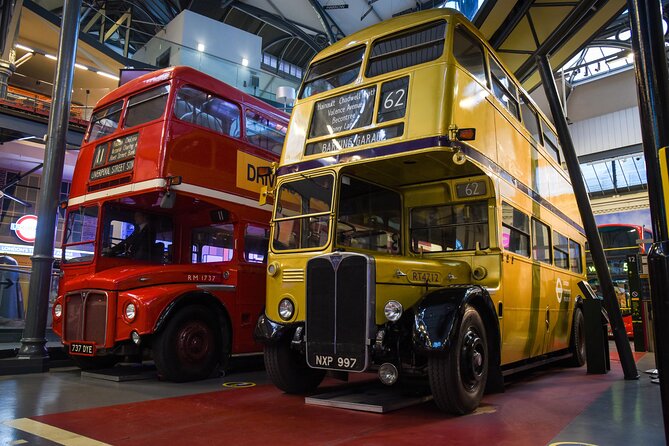
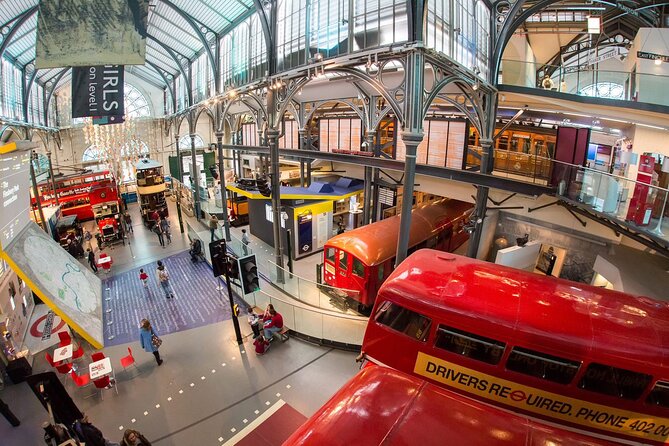
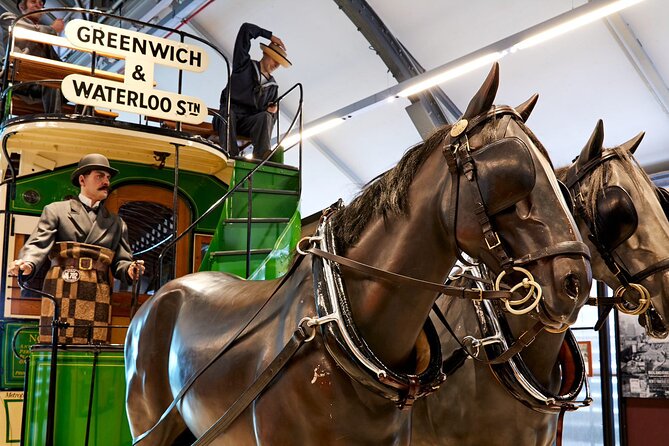
The London Transport Museum is not just a display of old buses and trains. It follows the ways transport changed the shape and daily life of the city. You can trace a path from horse-drawn buses in the 18th century to the pioneering Underground railway, with classic London buses, trams, black cabs and other vintage vehicles along the way.
That broad span gives the exhibits a practical thread. Instead of treating each vehicle as an isolated antique, the museum connects transport to the way London developed over roughly 200 years. You get a sense of how new ways to move people helped turn a large city into the London we recognize today.
The setting suits the subject. The museum occupies a refurbished old flower market in Covent Garden, a central location where you can make a museum visit part of a day in the area. The exhibits include restored vehicles, interactive displays and transport posters, so the experience shifts between large objects, visual history and hands-on activities.
The collection’s most memorable sights are likely to be the vehicles themselves. There is a particular pleasure in seeing an old bus or train at close range, rather than encountering it only in a photograph. The display of the world’s first underground steam and electric trains also gives the Tube’s early history a physical presence.
More museum visits in London:
- Tower of London and Crown Jewels Exhibition Ticket
★ 4.5 · 6,677 reviews - London: Chelsea Football Club Stadium and Museum Tour
★ 4.8 · 4,576 reviews - Chelsea FC Stadium Tours and Museum
★ 5.0 · 1,908 reviews
From horse-drawn buses to the Tube
The museum’s story begins before the familiar red double-decker became a London emblem. Horse-drawn buses offer a useful starting point: they show that the city’s transport network grew through a series of changes, not in one leap from old roads to modern rail.
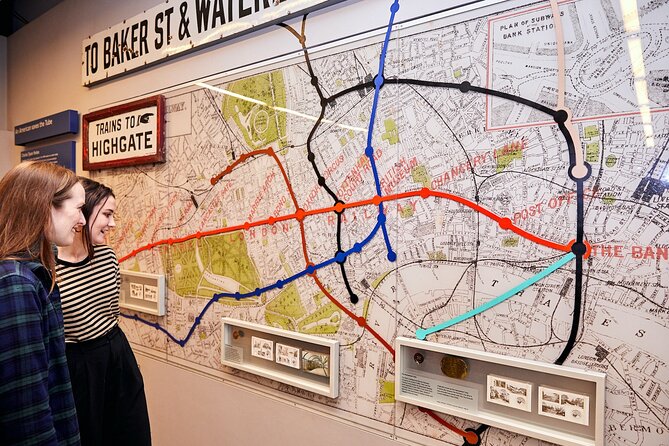
As you move through the exhibits, look for the connections between transport types. Buses, trams, taxis and Underground trains each tell a different part of the story. The collection also includes the iconic Tube map, a reminder that London’s transport identity is shaped not only by vehicles, but by the way people understand and navigate the network.
The early Underground trains deserve time. Seeing the first steam and electric examples helps explain why the Tube was such a notable development. The museum places them within a longer account of London’s changing transport, rather than asking you to admire machinery without context.
Posters add another useful angle. They bring in the visual language used to explain and promote transport, and provide a change of pace from the larger displays. If you like design as well as engineering, give these a look instead of hurrying straight from vehicle to vehicle.
You will also find material about transport during wartime. That subject broadens the museum’s scope beyond how people commuted or travelled around the city. It shows transport as part of London life in difficult periods, too.
The vehicles make the history tangible
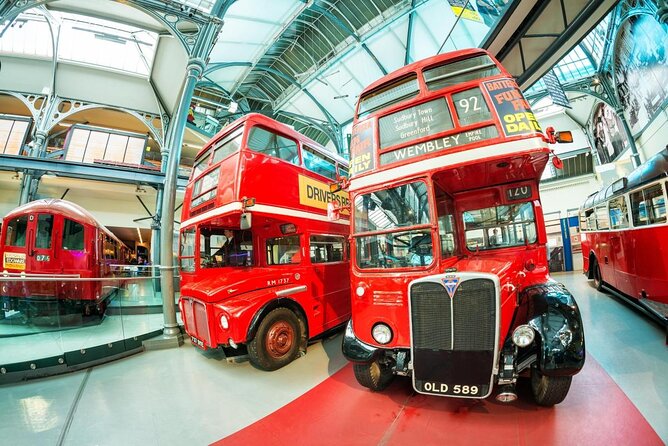
The restored buses, trams and trains are the museum’s strongest draw for many visitors. Their size and variety make the collection accessible even if you are not already keen on transport history. You can appreciate the shapes and details first, then follow the explanations to understand how each vehicle fits into London’s story.
Some vehicles can be boarded, which adds another dimension to the visit. For children, getting inside a vehicle can turn a gallery stop into an activity. For adults, it offers a closer view of how transport was designed and experienced. The precise vehicles available to board are not specified, so treat this as a feature to look out for rather than a guarantee about any one exhibit.
The museum’s displays also make room for London’s familiar transport symbols: red buses, black cabs and the Tube. That mix is a strength. You do not need to know the difference between every model or era to enjoy the collection, and the recognisable icons give you easy points of entry.
If you have limited time, I would avoid trying to read every label. Start with the vehicles that catch your eye, then use the displays and posters to add context. The museum is designed for self-paced exploration, and a steady look at the exhibits will be more rewarding than a hurried checklist.
A family museum with room to play
The All Aboard playzone is a major reason this works well for families. Children can take on roles such as conductor, mechanic or driver using interactive vehicles. That active play gives younger visitors a reason to stay engaged while the adults explore the history around them.
The museum has activities beyond the playzone, too. Children can get involved with interactive displays and, as one family-friendly detail, collect stamps on a card. These small tasks give a visit some momentum, especially for children who prefer doing something to standing still in front of an exhibit.
There is a balance to consider. The same play areas that make the museum appealing to children can bring noise and movement into the galleries. If you want a quieter visit or hope to concentrate on the historical displays, school holidays may not be the best time. If your priority is a lively outing where children can participate, the extra activity may be just what you want.
The museum has buggy access and a lift to reach the other floors, which helps when visiting with a young child or navigating the three-floor layout. Most people can take part, and service animals are allowed. If you need specific access details beyond these points, check with the museum before setting out.
More one-day tours in London:
- Windsor Castle, Stonehenge, and Oxford Day Trip from London
★ 4.5 · 5,292 reviews - London: Windsor, Stonehenge, Bath, and Roman Baths Day Trip
★ 4.5 · 5,131 reviews - London: Harry Potter Studio Tour and Oxford Day Trip
★ 4.7 · 5,098 reviews - Oxford, Stratford-upon-Avon, Cotswolds & Warwick Castle Day Trip
★ 4.5 · 2,943 reviews
Finding your way through the museum
The museum is spread over three floors, with transport exhibits and activities across the building. The layout can feel a little confusing at first, so take a moment to orient yourself when you arrive. A lift connects the floors, and the overall plan lets you move through the displays at your own pace.
A self-guided visit has clear advantages. You can linger beside a vehicle, pause for a child’s activity, or move quickly through a section that interests you less. There is no fixed commentary or group schedule to keep up with, and you can shape the visit around your own interests.
The downside is that you will be responsible for deciding what to see and in what order. If you are used to a guided tour, you may miss having someone explain the story as you go. The exhibits and displays provide material to explore, but a little curiosity helps you get the most from them.
Allow about two hours as a practical baseline. That should give you time to see a range of vehicles and displays without turning the visit into a sprint. Families with children may want longer for the play areas, while transport fans could easily prefer a slower pace. The ticket allows you to stay as long as you like, so there is no need to treat two hours as a strict finish time.
The Covent Garden location and museum extras

The museum’s address is The Piazza, London, WC2E 7BB, in Covent Garden. It is near public transportation, making it straightforward to include in a day around central London. The location is a real advantage if you want an indoor activity in the middle of an area already suited to a broader outing.
The museum also has a cafe-bar called Canteen and a shop with transport-inspired gifts. Food and drink are not part of the admission price, so account for that if you plan to stop for refreshments. The shop is an optional final stop, not an included part of the ticket.
The setting and extras help make this more than a quick look at vehicles. You can spend time with the exhibits, take a break, and browse the shop before leaving. Just remember that the ticket covers entrance only.
Is $33.76 good value?

At $33.76 per person, the ticket is best value if you plan to spend time with the collection rather than make a brief pass through it. Admission covers a museum with restored vehicles, posters, interactive displays and a dedicated play area. For a family, the chance for children to take part can make the price easier to justify than a museum made up only of objects behind barriers.
The value depends on your interests and pace. If you enjoy London history, public transport or design, the collection gives you several ways into the subject. If you are not interested in transport and want only a short stop, the price may feel steep for a visit that could be completed in about two hours.
A one-day ticket and flexible time inside are useful if you do not want to rush. But food and drink cost extra, so the ticket price is not the whole budget for a longer visit. The ticket is mobile, and confirmation is provided when you book. Make sure you can access the ticket on your phone before you arrive, since being unable to retrieve it can cause an avoidable problem at the entrance.
The booking pattern averages about 10 days in advance. That is a planning reference, not a requirement to book exactly 10 days ahead. Multiple time slots are offered, giving you some choice over when to go.
Who should book this museum ticket?
I would put this high on the list for families with children who like buttons, role-play and vehicles they can get close to. The All Aboard playzone and interactive exhibits make it easier to share the visit across ages, while adults can follow the history of London’s buses, trains and Tube.
It also suits visitors who want a museum experience in Covent Garden and have a genuine interest in how the city works. You do not need to be a transport expert. The recognisable vehicles and the story of London’s development make the subject approachable.
Think twice if you want a quiet, tightly guided museum visit, especially during school holidays. The museum is self-paced, the layout may take a little orientation, and children’s activities can make the galleries lively. If those are acceptable trade-offs, the combination of restored vehicles, city history and hands-on play makes this a useful and enjoyable way to spend part of a day.
FAQ
How much does the London Transport Museum ticket cost?
The ticket costs $33.76 per person. Food and drink are not included.
How long should I allow for a visit?
The visit is listed at about two hours, but you can explore at your own pace and stay longer.
Where is the museum?
It is at The Piazza, London, WC2E 7BB, in Covent Garden.
Is the ticket mobile?
Yes. The ticket is available as a mobile ticket.
Is the experience offered in English?
Yes, it is offered in English.
Is the museum suitable for children?
Yes. It is family-friendly and includes interactive displays and the All Aboard playzone, where children can take on roles such as driver, mechanic or conductor.
Can I visit with a buggy?
Buggy access is available, and a lift connects the museum’s floors.
Are service animals allowed?
Yes, service animals are allowed.
Is food included in the ticket?
No. Food and drink are not included. The museum has a cafe-bar called Canteen.
Can I cancel my booking for a refund?
Yes, if you cancel at least 24 hours before the experience’s start time. Cancellations made less than 24 hours before the start time are not refunded.
Just reviewed in London
- Welcome to Paris Day Trip from London via Train★ 4.5 · 124 reviews
- London: Self-Guided Notting Hill Walking Tour with an APP★ 4.3 · 120 reviews
- Photoshoot at Notting hill,Covent Garden,St Paul Cathedral★ 4.4 · 12 reviews
- London: The Shard Entry Ticket with Champagne★ 4.5 · 147 reviews
- London: Full Day Tower, St. Paul’s, Cruise & Eye Experience★ 4.6 · 168 reviews
- Paris Explorer Rail Tour from London with Paris Sightseeing Bus★ 4.0 · 111 reviews
- Hidden Tube Tour – Piccadilly Circus: The Heart of London★ 4.4 · 15 reviews
- Notting Hill Walk Celebrities and Film Locations- London★ 4.5 · 156 reviews
London Tours, compared.
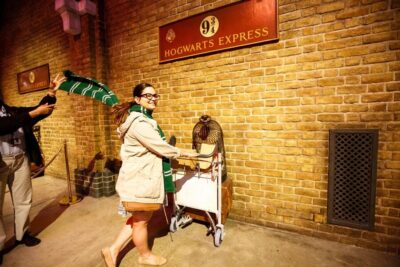

Magical London: Harry Potter Guided Walking Tour
Read our review →

Stonehenge, Windsor Castle, and Bath from London
Read our review →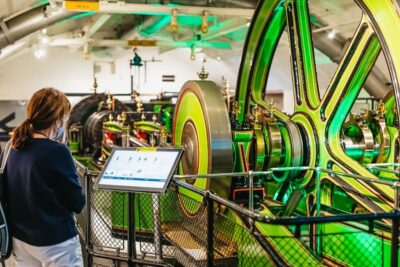
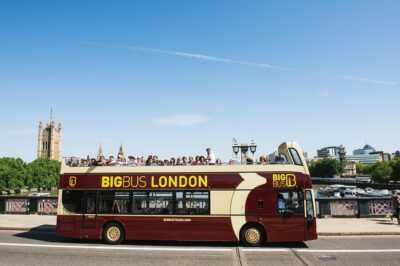
London Big Bus Hop-On Hop-Off Tour with Optional River Cruise
Read our review →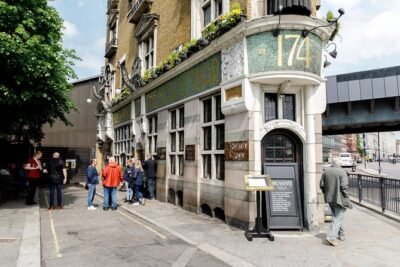
Browse the lists this tour appears in