
Reviewed · LONDON TOURS
London: Natural History Museum Guided Tour
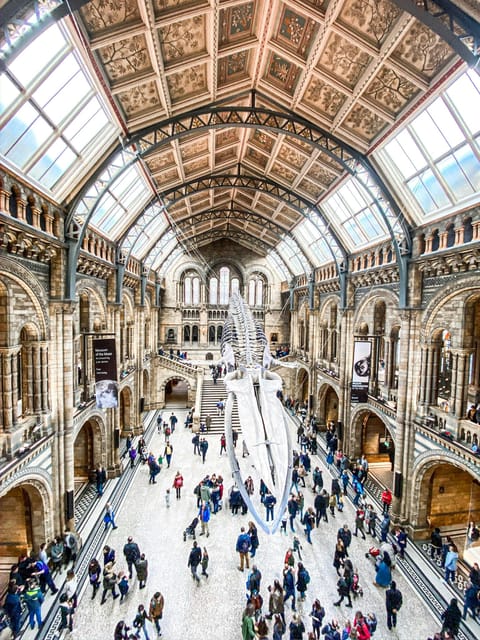
The Natural History Museum holds 80 million specimens, and that is a lot to take in without a plan. This 2.5-hour tour helps you find the stories behind standout sights, from a Dodo skeleton and Iguanodon teeth to the casts of people caught in the Pompeii eruption.
I like two things in particular: a guide can connect the museum’s showstoppers to the bigger story of life on Earth, and a small group of no more than eight makes it easier to ask questions. Families seem well served, too: guides such as Ivo, Matilda and Guy V. have made the material engaging for children as well as adults.
One consideration: $112 per person is a significant price for a museum visit, especially since the tour lasts 2.5 hours and does not include food, drinks or temporary exhibits. You are paying for an expert-led route through a vast collection, not for an all-day museum ticket or a private room with every famous object to yourself.
At a glance
- Dodo bones and Iguanodon teeth: See specimens that make extinction and prehistoric life feel concrete.
- Pompeii casts: Meet the human consequences of a volcanic disaster through preserved forms of its victims.
- Darwin on display: The tour highlights a first edition of On the Origin of Species.
- Eight people maximum: Small groups make it easier to keep up and ask questions; private tours are also offered.
- A focused 2.5 hours: Expect a highlights route through a museum too large to absorb in one visit.
- English-speaking art historian guide: The guide supplies the context that labels alone cannot.
A practical route through a very large museum
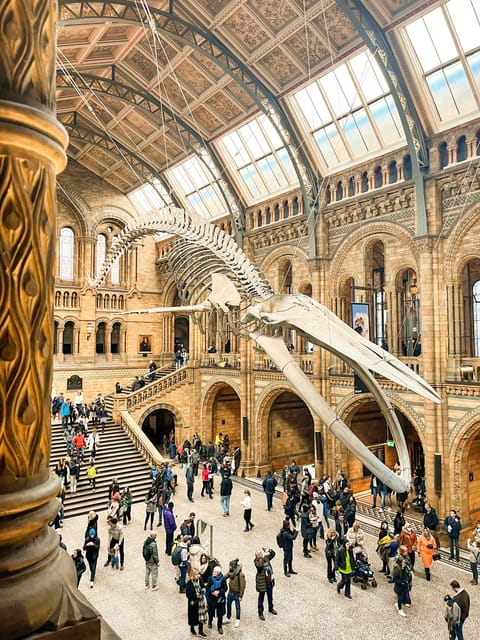
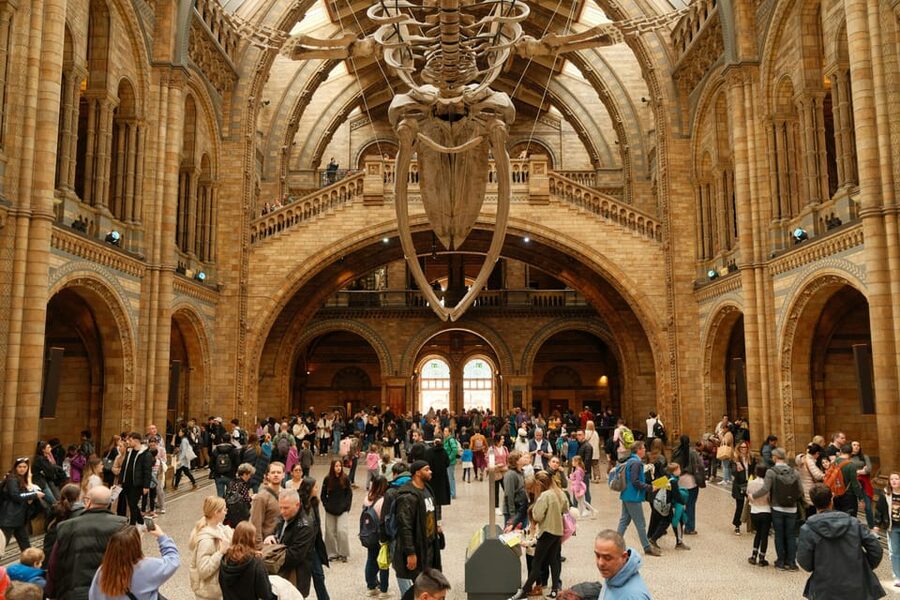
The Natural History Museum’s collection numbers about 80 million specimens. That scale is exciting, but it can also leave you wandering from one impressive room to another without a clear sense of how the pieces fit together. The tour’s main value is its selection and explanation: you get a guided path through important exhibits, with time for stories and questions.
The exact route and meeting point can vary with the option you book. The experience is offered as a private tour or a group tour capped at eight people. For a group tour to run, at least two people must book. If that minimum is not met, an alternative date or a full refund is offered.
You should think of the itinerary as a concentrated introduction rather than a promise to see every gallery. Two and a half hours is enough to cover several memorable stops, but not enough to explore a collection of this size at length. If one particular subject captures your attention, you may want to return independently after the guided visit.
More museum visits in London:
- Tower of London and Crown Jewels Exhibition Ticket
★ 4.5 · 6,677 reviews - London: Chelsea Football Club Stadium and Museum Tour
★ 4.8 · 4,576 reviews - Chelsea FC Stadium Tours and Museum
★ 5.0 · 1,908 reviews
Iguanodon teeth and the puzzle of prehistoric life
Iguanodon teeth are a useful early stop because they offer something tangible to look at while the guide sets up a larger story. Fossils are not just old objects behind glass. They are clues: what an animal ate, how it lived, and what can be inferred from the traces left behind.
A guide can help you connect that evidence to the museum’s other dinosaur displays, including Sophie the Stegosaurus. The tour promises an introduction to characters like Sophie, so you can expect the guide to use individual specimens to make the wider subject easier to follow. That approach is especially helpful for children, who often respond better to a named dinosaur than to an abstract discussion of geological time.
The museum’s size makes context important here. A quick look at one fossil can easily feel like a tick on a list. A good explanation turns it into a starting point for thinking about how life changed on Earth. The tour is designed to make those connections, though the amount of time spent at each specimen will depend on the group and guide.
A Dodo skeleton, close enough to make extinction real
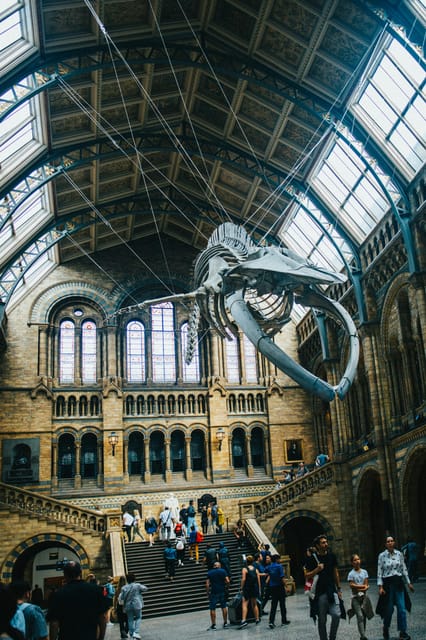
The Dodo is one of the tour’s headline sights, and for good reason. It is a familiar symbol of extinction, but seeing a skeleton makes the idea less distant. You are looking at the physical remains of an animal that once lived, not simply an illustration in a book.
This stop also gives your guide a natural opening to discuss how people understand the past through specimens and evidence. I like that the tour pairs famous objects with broader questions about the natural world, rather than treating each display as a photo opportunity. If you are visiting with children, the Dodo’s recognisable story can help hold their attention as the route moves between different subjects.
The important caveat is that the museum is a working public attraction, not a private collection. You will share the galleries with other visitors, and the tour cannot promise a quiet viewing or unlimited time in front of any one exhibit. The group cap helps keep the experience manageable, but it does not remove the museum’s normal crowds.
Archaeopteryx and the link between dinosaurs and birds
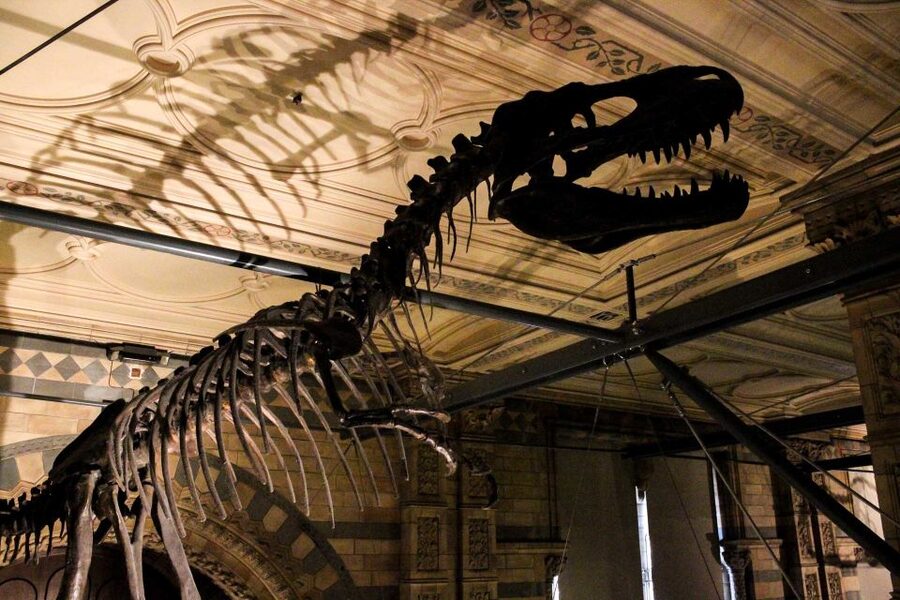
The tour also includes a glimpse of the rare Archaeopteryx, described as an alleged missing link between dinosaurs and birds. That wording is a reminder that scientific understanding is built from evidence and interpretation, not just dramatic labels. The specimen offers a chance to consider how features found in fossils can help scientists trace relationships between different forms of life.
For you, this is one of the stops where a guide’s explanation can make a real difference. A brief encounter with a rare fossil may be hard to interpret on its own. With context, you can better understand why it matters and how it fits into the museum’s account of the history of life.
The tour cannot guarantee a long, technical discussion of every subject. Its appeal is breadth: it moves among key objects and connects them into a coherent introduction. If you already have a strong interest in evolutionary science, you may want more time than a highlights visit allows.
More history tours in London:
- London Small Group Tour of Historical Pubs
★ 5.0 · 10,422 reviews - Soho Music & Historic Pubs Tour
★ 5.0 · 1,993 reviews - London: Historic Pubs of Central London Walking Tour
★ 4.9 · 1,065 reviews - London: Soho Music and Historic Pubs Walking Tour
★ 4.9 · 836 reviews
Darwin’s first edition and the ideas behind the objects
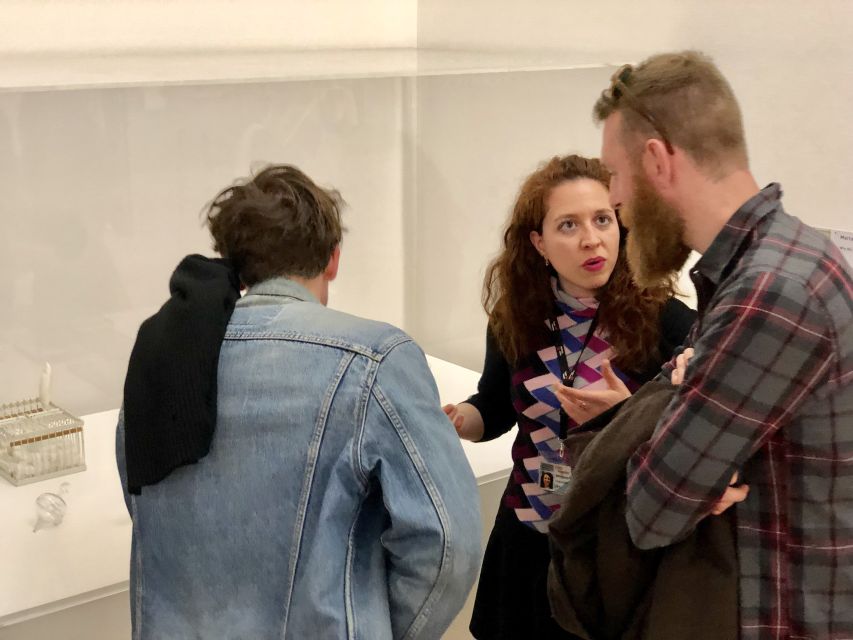
A first edition of On the Origin of Species brings the tour from specimens to the ideas people used to make sense of them. It is a chance to see a key work in the history of science and consider how the study of nature has shaped our understanding of life.
I like this contrast with the fossils. A museum visit can otherwise become a procession of old bones and spectacular displays. The book adds a human story: how observation and argument changed the way people thought about the natural world. The guide can help connect Darwin’s work to the wider path from Earth’s beginnings to the dawn of our species.
The book is a highlight, not an invitation to expect a long seminar on Darwin. The experience is a guided museum tour, and its pace has to leave room for several other major exhibits. If you are keen to study the book or its historical setting in depth, plan extra time at the museum after the tour.
Pompeii casts, a giant tree and stranger collections
The casts of victims from Pompeii bring a human dimension to a museum focused on natural history. They are connected to the volcanic disaster that buried the city, and their presence can be sobering. The stop asks you to consider how natural events affect human lives, not only landscapes and buildings.
The tour also touches on civilizations that used human skulls as drinking glasses. This is a more unsettling subject, and it will not suit every family or every child. If you are visiting with young children, you may want to ask the guide how the discussion is handled. The information provided does not set an age limit, but the subject matter is worth considering.
Other promised sights widen the range further: the Cursed Amethyst and an enormous slice of a Giant Sequoia tree. These are very different kinds of natural wonder, one associated with a mysterious reputation and the other with the scale and age of a living organism. Together, they show the museum’s breadth and keep the tour from being only about dinosaurs.
What guides add, especially for families
The strongest reason to book is the guide. A good guide does more than point out famous exhibits. They help you see what matters, explain unfamiliar ideas in clear language, and adjust when the group includes curious children or people for whom English is a second language.
Past guides named for this tour include Ivo, Guy V., Matilda, Laurence, Sacha, Luis, Becky, Anthony and Craig. Their guiding styles differ, but the qualities described across the experience are consistent: clear explanations, patience with questions, a lively pace and the ability to make complex subjects accessible. Ivo, for example, has been noted for involving children and helping a family grasp the museum’s overall story. Matilda has been praised for choosing significant objects and explaining them to both adults and a 13-year-old. Luis has been described as clear in English and able to speak Spanish.
Those names are useful examples, not a guarantee that you will be assigned a particular guide. The most highly praised part of the experience is the personal guidance, so if having a specific language or guide matters, ask the operator before booking. The stated tour language is English.
For families, the 2.5-hour length is a sensible middle ground. It gives children time to learn and ask questions without turning the visit into an all-day march. One family found that duration just right before heading to the museum café, though food and drinks are not included in the tour.
Is $112 worth it for two and a half hours?
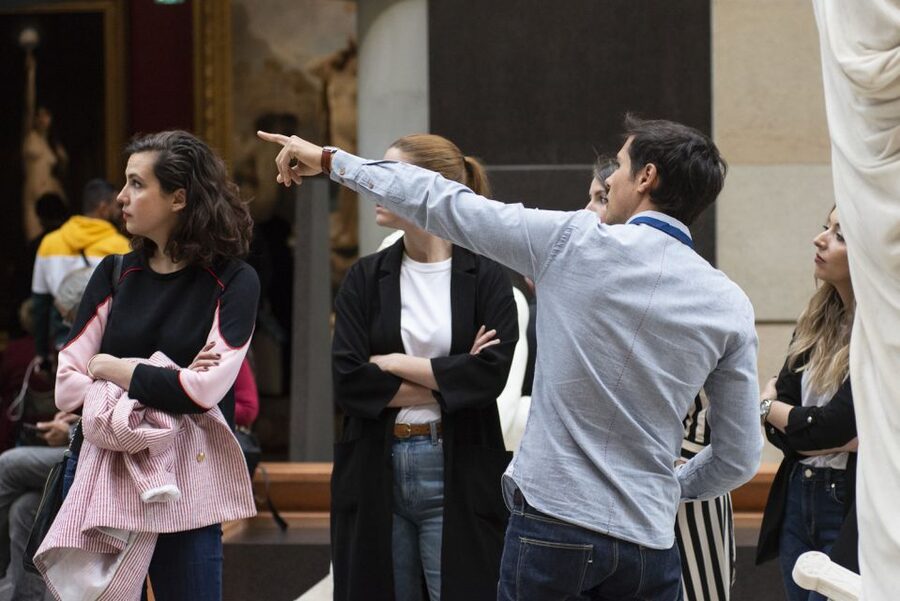
At $112 per person, this is not the budget choice. The museum’s enormous collection is the raw material, but the price pays for an English-speaking art historian guide, a focused route and the chance to make sense of important exhibits without planning the visit yourself. Private and small-group formats are available, and the group option has a maximum of eight people.
The tour is most appealing if this is your first visit, you are short on time, or you want a guide to keep children engaged. It can also suit you if you find large museums tiring to navigate alone. If you already know the museum well, prefer to explore at your own pace, or want to spend hours on one gallery, you may get better value from an independent visit.
The experience includes skip-the-ticket-line access, but that does not mean you are guaranteed to walk straight through every entrance. Security measures can still create lines. Temporary exhibits, hotel transport, food and drinks are not included, so budget and plan for those separately.
Before you go
Bring a passport or ID card, as requested for the activity. Large bags and luggage are not allowed inside; only handbags or small, thin backpacks are permitted through museum security. A small amount of walking is involved.
The tour is available daily, with start times depending on availability. The meeting point can vary according to the option booked, so check the details for your selected tour. Museum closures can happen without warning. If the museum opening time is delayed by more than an hour from the tour start, an alternative will be provided, but a refund will not be offered in that situation.
Wheelchair tours are available only on request and only as a private tour. The experience is otherwise listed as not suitable for wheelchair users, so contact the provider before booking if access needs are a factor. Free cancellation is available up to 24 hours in advance, and you can reserve now and pay later.
Should you book this Natural History Museum tour?
Book it if you want a lively, guided introduction to the museum’s best-known natural history and human-history highlights, especially if you are visiting with children or have only a few hours. The guide’s role is the main value: the fossils, Dodo, Archaeopteryx, Darwin book and Pompeii casts become easier to understand when someone helps connect them.
Skip it if you would rather wander slowly, focus on a single topic or keep costs down. At $112 per person, it makes the most sense when you will use the guide’s knowledge and the small-group format. For a first visit, that focused route can turn an overwhelming museum into a clear and memorable introduction.
FAQ
How long is the tour?
The tour lasts 2.5 hours.
What language is the tour in?
The tour guide speaks English.
How large is the group?
Group tours have a maximum of eight people. At least two people are required for a group tour to run. Private tours are also available.
Is the museum ticket line skipped?
The activity includes skip-the-ticket-line access. Security checks may still create lines.
Can I bring a large backpack or suitcase?
No. Luggage and large bags are not allowed. Only handbags or small, thin backpacks are allowed through security.
Is the tour suitable for wheelchair users?
Wheelchair tours are available on request, but only as a private tour. The activity is otherwise listed as not suitable for wheelchair users.
Just reviewed in London
- Group Kayak Experience on the beautiful Thames at Richmond★ 4.7 · 7 reviews
- Guided Italian Tour of the National Gallery in London★ 4.4 · 4 reviews
- Greenwich Highlights Private Half Day Tour★ 4.7 · 18 reviews
- Greenwich Film Locations Tour★ 3.1 · 4 reviews
- ADVANCED GRAFFITI STREET ART TOUR / SHOREDITCH / EAST LONDON★ 5.0 · 4 reviews
- Gin Safari: Boozy London History on Two Wheels★ 5.0 · 3 reviews
- Great London Food Tour: South Bank, 3 Markets & Brick Lane★ 4.6 · 17 reviews
- Ghosts of Greenwich: London’s Haunted Walking Tour★ 5.0 · 62 reviews
London Tours, compared.

Magical London: Harry Potter Guided Walking Tour
Read our review →
Stonehenge, Windsor Castle, and Bath from London
Read our review →
London Big Bus Hop-On Hop-Off Tour with Optional River Cruise
Read our review →
Browse the lists this tour appears in