
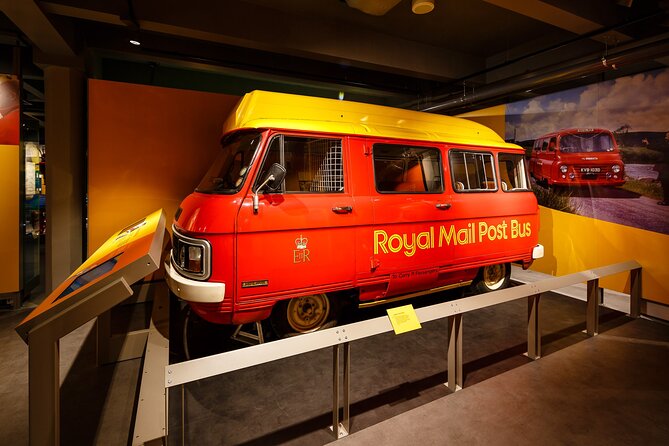
Reviewed · LONDON TOURS
The Postal Museum Admission Ticket
London’s post once travelled through its own underground railway. At The Postal Museum, you can ride a small train through the old Mail Rail tunnels, then trace five centuries of communication through objects and hands-on displays. I like that this is both a real piece of working history and an activity children can enjoy, not just a room of labels.
I also like the museum’s interactive approach and the way it connects postal work to everyday life, from the first stamps to the people who carried the mail. One thing to plan for: the railway ride has steep steps and low, dimly lit sections, and it can be unavailable during maintenance or poor weather.
- Ride through former postal tunnels: Mail Rail is the museum’s unusual centrepiece, with a narrated journey that brings the underground postal network to life.
- Allow time for two buildings: The railway and main museum are across the road from each other, and both are part of the visit.
- Expect hands-on exhibits: Models, interactive displays, and pneumatic tubes give children and adults more to do than simply read.
- Check the ride before you go: Maintenance or weather can affect operations, so confirm the status if Mail Rail is a major reason for your visit.
- Budget for optional extras: The ticket is $25.55 per person. The Sorted! play space and annual exhibition entry have separate charges.
- Consider the physical demands: The ride requires walking unaided for at least 100 metres and climbing around 70 steep steps.
Start with Mail Rail, London’s underground post train
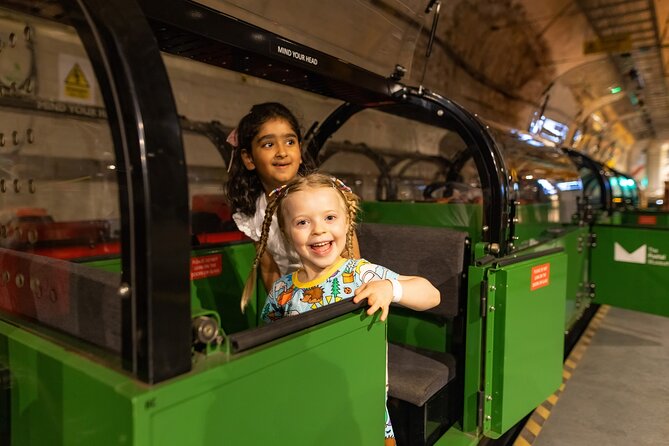
The best reason to put The Postal Museum on your London list is the chance to ride Mail Rail. This miniature train runs through the tunnels of the former Post Office Railway, a hidden transport system built to move mail beneath the city. The ride is short, but it gives the museum a strong sense of place: you are not just reading about a network, you are travelling through part of it.
Along the route, recorded information explains how the railway worked and how it changed over time. The tunnel ride is dark and can feel close, with a low ceiling that may be uncomfortable for taller adults. One person who was 5 feet 11 inches found their head nearly touching the roof, so keep that in mind if you are tall or dislike enclosed spaces.
Mail Rail is especially appealing if you have children who like trains, tunnels, or buttons to press. The displays after the ride give younger visitors a chance to explore more, while adults get the context behind the machinery and postal system. It is fun, but it is not only a novelty ride.
Two buildings, one postal story

The visit takes place in two parts. The Mail Rail building and the main museum are across the road from each other, so make sure you do not finish the train ride and assume you have seen everything. The main museum contains the wider collection and interactive exhibits, while the railway section focuses on the underground mail network.
Signage between the two locations can be easy to miss. I would take a moment to check where you are going next, especially if you are on a tight schedule or visiting with children. One visitor nearly missed the main museum after finishing the railway portion, and that would be a shame: the train is the headline act, but the exhibitions make the story bigger.
The museum follows postal communication across five centuries. Its subject is familiar, but the details are not. You see how the service helped connect people and communities, and how the tools and systems behind a simple letter changed over time. The story can also prompt a conversation about how postal work has shifted, from the local postie as a familiar figure in the neighbourhood to the modern emphasis on parcels.
More museum visits in London:
- Tower of London and Crown Jewels Exhibition Ticket
★ 4.5 · 6,677 reviews - London: Chelsea Football Club Stadium and Museum Tour
★ 4.8 · 4,576 reviews - Chelsea FC Stadium Tours and Museum
★ 5.0 · 1,908 reviews
Interactive exhibits make history easier to grasp
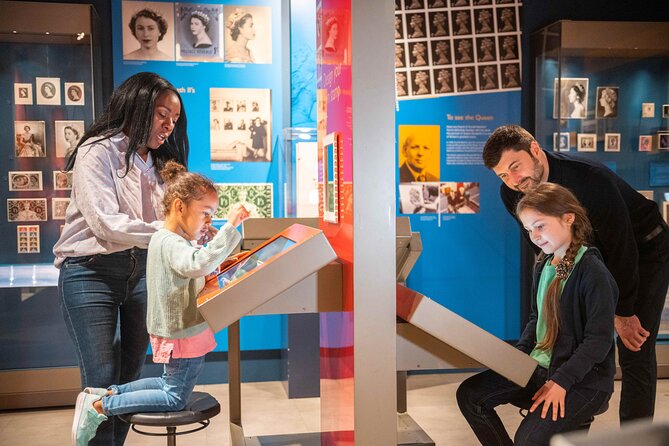
The main museum’s hands-on displays are a real strength. Models and interactive elements give children something to try, while adults can follow the broader story of how mail was sorted, moved, and delivered. The pneumatic tubes are a particular favourite, and they offer a playful way to see a once-useful technology in action.
Give your group time to explore rather than rushing from one label to the next. Families with children may find that the exhibits take longer than expected, especially when everyone wants a turn. The museum can get busy, but the spaces have been described as roomy enough to move around without feeling crowded.
The collection also reaches beyond machinery and stamps. The exhibition Voices of Resistance: Slavery and Post in the Caribbean connects postal history to a harder part of Britain’s past. If it is on display during your visit, it offers a valuable reminder that communication networks can carry power and political meaning, not just personal messages. Check what is currently showing before you go, since exhibitions can change.
If you are interested in archival material, the museum’s archive on the second floor is reported to open on the second Saturday of each month. That can be a quieter stop, though it is not part of the ordinary visit on every date. Confirm access before planning around it.
How long to spend, and how to pace the visit
The expected visit lasts about 90 minutes to 2.5 hours. That is a sensible range, but families who let children work through the interactive displays may need the longer end. A wait for the train can add time too: a 20-minute wait has occurred during a busy school holiday period.
I would begin with Mail Rail, particularly if riding it is the main reason you booked. Then cross to the main museum and give yourself enough time for the exhibits. This order helps you secure the ride before settling into the galleries, though you should follow the museum’s current instructions if staff direct you differently.
A short visit can work if you focus on the train and a few displays. But if you have come all this way, I would avoid squeezing it into a rushed gap between other London sights. The museum is not enormous, yet the combination of two buildings, the train, and child-friendly activities can easily fill a couple of hours.
A good rainy-day choice, with a few caveats
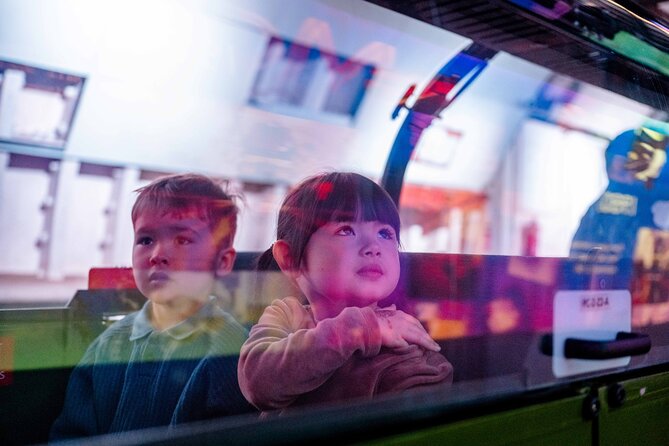
Most of the visit is indoors, making The Postal Museum a useful option when London weather turns wet. The railway itself has operational conditions, however, and it may close for maintenance or poor weather. A past closure for planned maintenance disappointed a family who had expected to ride, so check for updates before setting out if Mail Rail is central to your plans.
The ticket is non-refundable and cannot be changed. If the experience is cancelled because of poor weather, the stated policy is that you will be offered another date or a full refund. Those terms make it worth checking the operating status before you commit to a visit, especially if your London schedule is fixed.
The museum offers time slots, which can help you fit it around other plans. Bookings are often made about 13 days ahead on average, but that is not a guarantee of availability. If your dates are fixed, plan ahead rather than leaving it to the last minute.
More tickets in London:
- London: The London Eye Entry Ticket
★ 4.6 · 35,875 reviews - London: Tower Bridge Entry Ticket
★ 4.7 · 15,560 reviews - London: St Paul’s Cathedral Entry Ticket
★ 4.7 · 9,813 reviews - London: London Eye and Madame Tussauds Combo Ticket
★ 4.7 · 7,428 reviews
Is $25.55 good value?
At $25.55 per person, this is a paid museum visit, unlike London’s many free national museums. The value depends on whether you want the full combination: an unusual train ride, postal history, and interactive displays. For that mix, the price is reasonable for a visit that can occupy 90 minutes to 2.5 hours, especially if you make time for both buildings.
The basic admission ticket is included in the price. Two extras are listed separately: annual entry to the museum’s exhibitions costs £2 per person, and Sorted!, the play space for children aged 0 to 8, costs £4.50 per person. Check what your ticket covers and decide whether those additions fit your plans and budget.
A café is available and is described as family-friendly, but food service can be variable. One account described a limited menu and no hot food, while another raised concerns about food handling. I would treat it as a convenient stop rather than a reason to visit, and consider other lunch plans if you need a particular meal.
Who will enjoy the visit most?
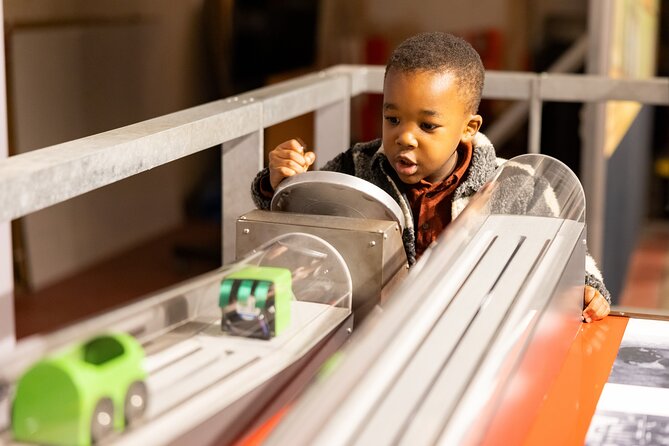
Families with children who like trains and interactive displays are a natural fit. The ride and hands-on exhibits can hold the attention of school-age children, while the postal theme gives adults plenty to talk about. The separate Sorted! play space is designed for children aged 0 to 8, though it costs extra.
History buffs will find more here than a train ride. Postal communication touches on technology, work, community life, and Britain’s connections abroad. The museum is also a good choice for anyone curious about the everyday systems that tend to disappear into the background until they stop working.
The attraction may be less comfortable for people who cannot manage the ride’s physical requirements or who are sensitive to dark, tight spaces. The railway involves uneven surfaces in low lighting, at least 100 metres of walking without assistance, and roughly 70 steep steps. Most museum spaces and the Mail Rail building are step-free, but the ride itself is not.
The museum has gender-neutral accessible toilets and a Changing Places facility. It also provides resources for autistic visitors and an audio-described introduction. An audio guide can be added to the visit, but if you need specific access support, check the museum’s full accessibility information before booking.
Should you book The Postal Museum?

Book it if you want a London attraction that feels different from a standard museum visit. Mail Rail is the draw, and the interactive displays give the visit enough substance to make the ticket worthwhile. I would especially recommend it to families, railway enthusiasts, and anyone who enjoys seeing how ordinary public services shaped daily life.
Think twice if you have limited mobility that makes steep steps difficult, if enclosed tunnels are uncomfortable for you, or if your schedule cannot absorb a possible ride closure. Before booking, check the ride status, allow time for both buildings, and budget for any extras you want. If those points work for you, this is a lively, unusual stop that turns the humble post into a London story worth following.
FAQ

How much does admission cost?
The admission ticket costs $25.55 per person. The Sorted! play space and annual exhibition entry have separate listed charges.
How long should I allow for a visit?
Plan for about 90 minutes to 2.5 hours. The train wait and time spent at interactive displays can affect how long you need.
Is the Mail Rail ride included?
The visit includes the Mail Rail experience as part of the museum visit. The ride can be unavailable during maintenance or poor weather, so check its status before you go.
Are the main museum and Mail Rail in the same building?
No. The Mail Rail building and the main museum are across the road from each other. Allow time to visit both.
Is there an audio guide?
You can upgrade your visit to add an audio guide. The experience is offered in English.
Is the museum suitable for children?
Yes. The museum has family-friendly interactive exhibits, and children must be accompanied by an adult. Sorted!, a separate play space for children aged 0 to 8, costs £4.50 per person.
What are the physical requirements for the Mail Rail ride?
You must be able to walk unaided for at least 100 metres over uneven surfaces in minimal lighting and climb at least 70 steep steps. The ride is the exception to step-free access in the Mail Rail building.
Are accessible facilities available?
The museum has gender-neutral accessible toilets and a Changing Places facility. Its spaces are step-free apart from the Mail Rail ride, and it provides resources for autistic visitors and an audio-described introduction.
Can I cancel or change my booking?
The experience is non-refundable and cannot be changed. If it is cancelled because of poor weather, you will be offered a different date or a full refund.
Just reviewed in London
- Welcome to Paris Day Trip from London via Train★ 4.5 · 124 reviews
- London: Self-Guided Notting Hill Walking Tour with an APP★ 4.3 · 120 reviews
- Photoshoot at Notting hill,Covent Garden,St Paul Cathedral★ 4.4 · 12 reviews
- London: The Shard Entry Ticket with Champagne★ 4.5 · 147 reviews
- London: Full Day Tower, St. Paul’s, Cruise & Eye Experience★ 4.6 · 168 reviews
- Paris Explorer Rail Tour from London with Paris Sightseeing Bus★ 4.0 · 111 reviews
- Hidden Tube Tour – Piccadilly Circus: The Heart of London★ 4.4 · 15 reviews
- Notting Hill Walk Celebrities and Film Locations- London★ 4.5 · 156 reviews
London Tours, compared.

Magical London: Harry Potter Guided Walking Tour
Read our review →

Stonehenge, Windsor Castle, and Bath from London
Read our review →
London Big Bus Hop-On Hop-Off Tour with Optional River Cruise
Read our review →
Browse the lists this tour appears in