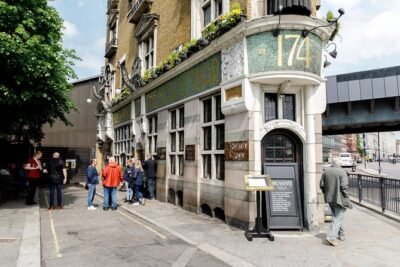
Reviewed · LONDON TOURS
Burnings, Butchery & Black Death: London’s Bloody Past
Smithfield’s past is not pretty: for centuries, this part of London was linked to both animal slaughter and public executions. This two-hour walk puts the grim stories on the streets where they belong, from Black Death burials to the final hours of William Wallace.
I like two things in particular: the route ties history to specific places, and the guide can mix documented events with legends and darker local tales. The main consideration is the subject matter. Executions, disease, and butchery are central to the tour, and it is not suitable for children under 13.
- Smithfield is the heart of the story: Learn how the area became associated with slaughter, plague burials, and executions.
- The route covers about two miles: It starts outside Barbican Station and finishes at Ely Place, near Farringdon Station.
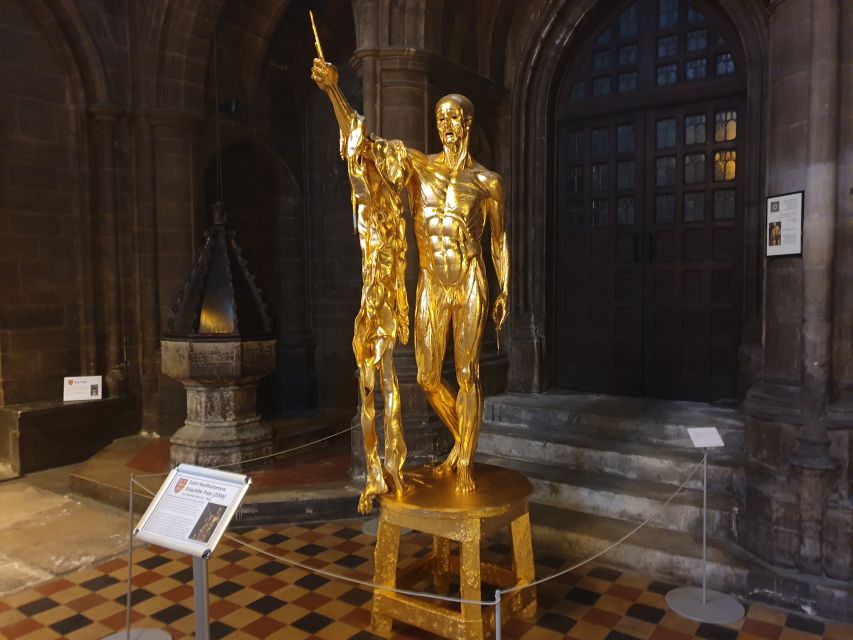
- The stops range widely: Charterhouse Square, St Bartholomew the Great, the Wallace memorial, and the Golden Boy of Pye Corner all feature.
- Expect history with a dash of folklore: The tour includes kings, body snatchers, an eighteenth-century ghost, and Charles Dickens.
- The group is capped at 15: That makes it easier to hear the guide and ask questions.
- Church visits depend on the day: Entry is included when churches are open and no service is in progress.
Smithfield’s grisly past, told on the streets
This tour makes London’s darker history tangible. Instead of keeping plague, executions, and poverty in a history book, you follow a guide around the places tied to those stories. Smithfield was a site of both animal and human slaughter for centuries, and that single fact gives the walk its unsettling focus.
The story spans roughly a thousand years. Along the way, you hear about the city’s struggle to dispose of tens of thousands of Black Death corpses in the fourteenth century, medieval execution methods, and Smithfield’s later life as a notorious slum. The guide also brings in William Wallace, Dickens, body snatchers, kings, and an eighteenth-century ghost.
This is not a gentle stroll through London’s prettiest corners. Its appeal is the contrast between familiar city streets and the violence, disease, and hardship tied to them. The best way to approach it is with curiosity and a tolerance for grisly detail.
From Barbican Station toward Charterhouse Square
Meet just outside the Barbican Station exit on Aldersgate Street. The guide will be holding a Historic London Tours sign, a useful landmark in an area where several busy streets and station exits can make a meeting point feel less obvious than it sounds.
The walk begins in the Barbican area and heads toward Charterhouse Square. This early stop helps set the scene for the history around Smithfield. It is a short guided visit, around five minutes, so think of it as an introduction rather than a long pause for independent exploration.
The route is about two miles in total, covered over two hours. That is a comfortable pace for most people who can manage an ordinary city walk, though the tour is still a walking experience rather than a string of indoor visits. Wear shoes you are happy to walk in, and keep in mind that the guide needs to keep the group moving between stops.
More tours and experiences in London:
- London: The London Eye Entry Ticket
★ 4.6 · 35,875 reviews - From London: Harry Potter Warner Bros Studio Tour
★ 4.7 · 26,588 reviews - Magical London: Harry Potter Guided Walking Tour
★ 4.7 · 22,044 reviews
Smithfield Market and the history of slaughter
Smithfield is the tour’s central subject. For centuries, the area was linked to the slaughter of animals and people, a grim overlap that gives the walk its name. At Smithfield Market, the guide connects the present-day location to that long and brutal past.
The tour also returns to the market area later as London Central Markets. That gives the guide another chance to explain the district’s role and the way its identity changed over time. These are brief guided stops, not extended market visits, so the value lies in the explanation and context rather than time spent browsing.
The Black Death story is one of the tour’s most striking subjects. In the 1300s, London had to deal with tens of thousands of corpses. The guide explains how the city disposed of them, bringing a huge public disaster down to the scale of a place you can stand in today.
You should expect the subject to be handled in a direct way. The tour is designed around London’s gruesome history, not to soften it. If you want a lighter introduction to the city, choose another walk. If you are interested in how urban life coped with crisis, this is a memorable way to explore it.
St John’s Gate, Cloth Fair, and St Bartholomew the Great
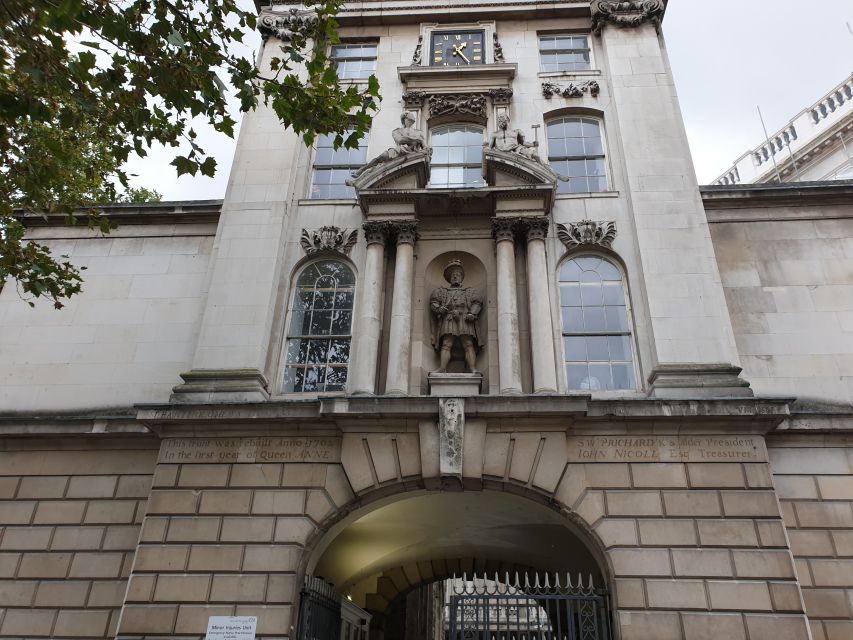
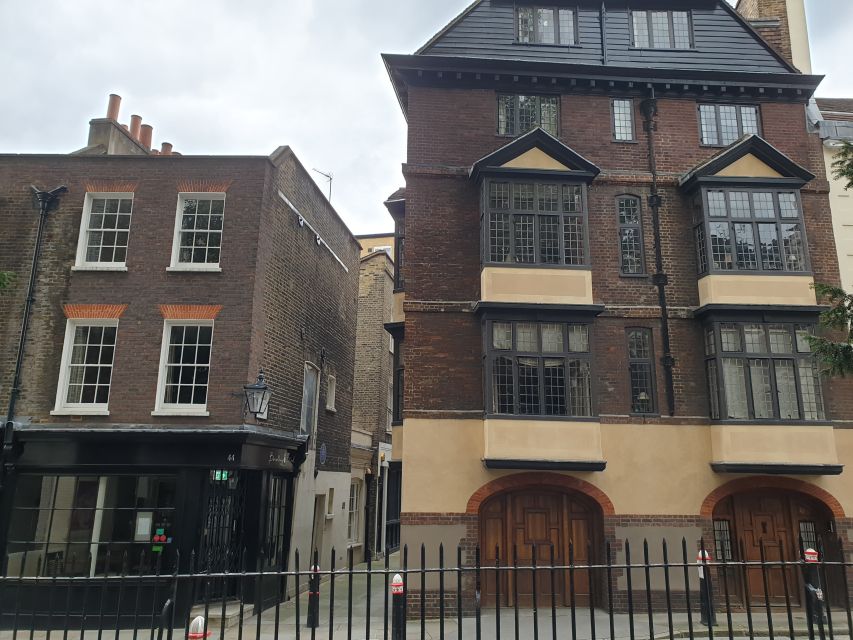
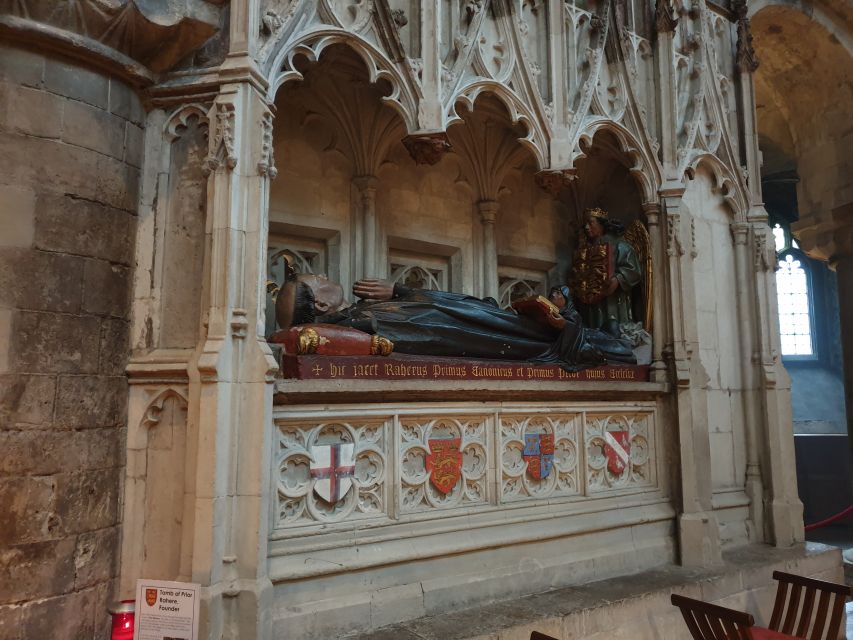
The route continues to St John’s Gate, Cloth Fair, and St Bartholomew the Great. Each stop is brief, around five minutes, which keeps the walk varied but leaves limited time at any one place. The guide supplies the historical thread, while the surrounding streets and buildings give you a sense of how much history can sit close together in central London.
St Bartholomew the Great is one of the points where the tour may include church entry. Entry is included, but it depends on whether a service is in progress. Treat a church visit as a welcome possibility rather than a guaranteed part of the experience.
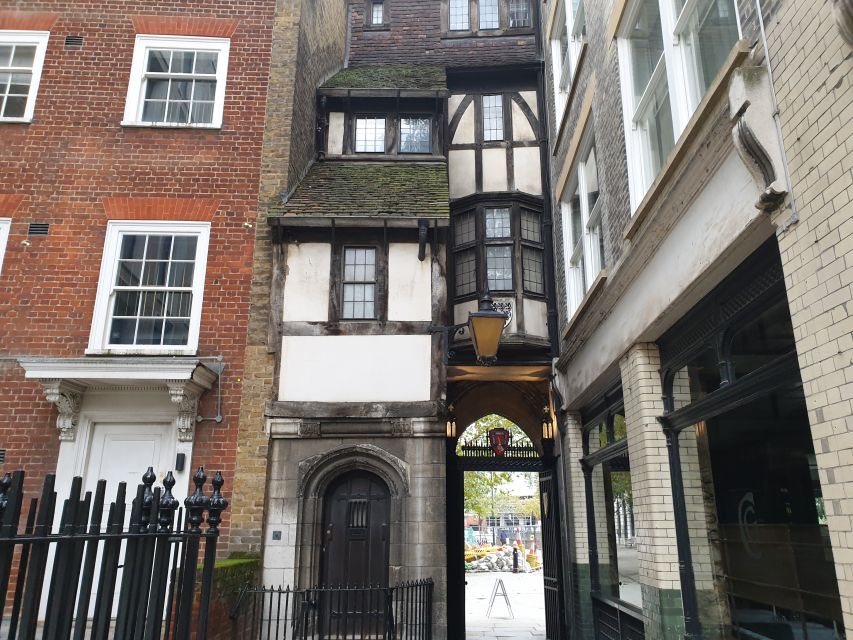
Cloth Fair adds another layer to the area’s past. The route here continues the shift between places of worship, old streets, and the grim public history tied to Smithfield. You are not just hearing one tale repeated at each stop; the tour moves through different kinds of history, from religious sites to violence and poverty.
William Wallace and medieval execution
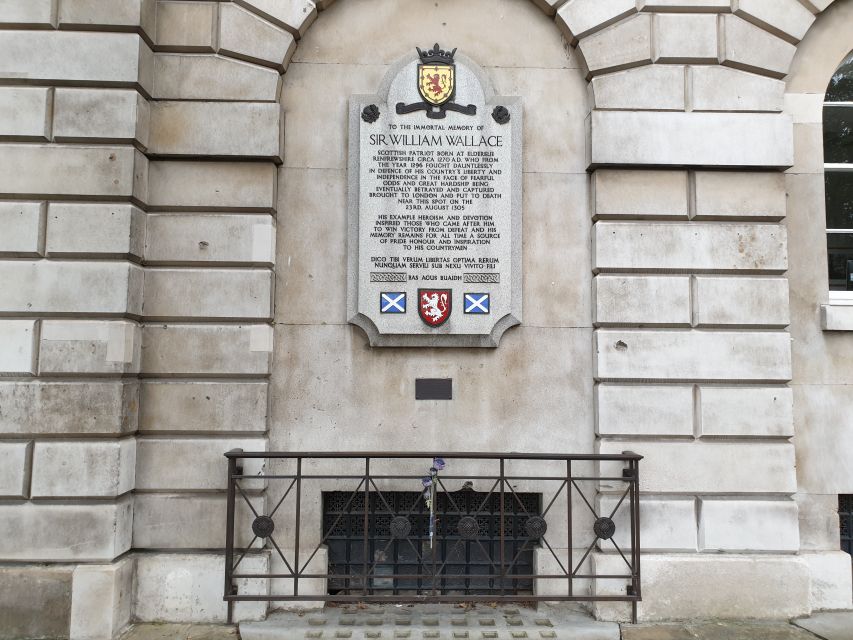
At the Sir William Wallace memorial, the tour turns to the Scottish leader remembered as Braveheart. The guide explains his connection to London and the conditions of his execution. The memorable point is that Wallace was in no state to deliver a stirring cry of freedom at the end. It is a sharp correction to the clean, dramatic version of history that films can leave behind.
The wider discussion covers execution methods used in the Middle Ages. The tour’s focus is not simply who was punished, but how public violence worked as part of the city’s past. The details are likely to be unsettling, but that is the point: they make the distance between modern life and medieval justice hard to ignore.
The memorial stop is also a reminder that the tour is about more than local trivia. London’s history connects to people and events beyond the city, and Wallace’s story gives the walk a broader frame.
Fancy a different kind of day out?
- London: Madame Tussauds London
★ 4.6 · 20,915 reviews - Stonehenge, Windsor Castle, and Bath from London
★ 4.5 · 18,662 reviews - London: Tower Bridge Entry Ticket
★ 4.7 · 15,560 reviews - London Big Bus Hop-On Hop-Off Tour with Optional River Cruise
★ 3.5 · 10,803 reviews
St Bartholomew’s Hospital and the Golden Boy of Pye Corner
The walk next reaches St Bartholomew’s Hospital. Here, the route continues its close look at Smithfield and the surrounding streets, where the guide links individual locations to the larger story of London’s past. As at other stops, the visit is short, so listen closely and ask questions while the group is gathered.
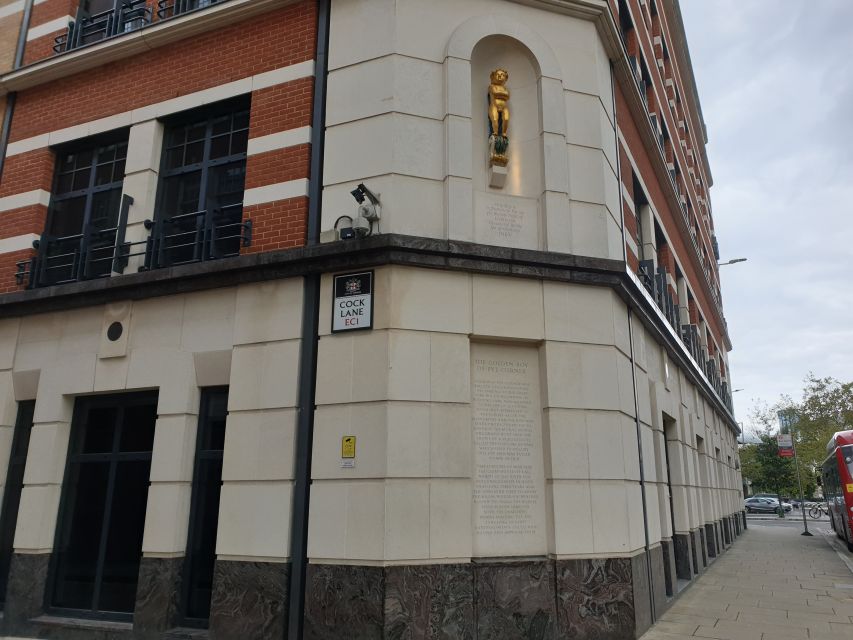
The Golden Boy of Pye Corner provides another distinctive landmark. Its name gives the guide a natural opening for a local story, and it adds variety to a route otherwise focused heavily on plague, slaughter, and punishment. The tour’s appeal lies partly in this mix: a serious historical thread, broken up by unusual details and tales that are easier to remember than a list of dates.
The guide’s style matters here. Past tours led by Tom have been described as combining history, myth, and humor, while also encouraging questions and responding to the group. Your guide may differ, but the format works best when you treat it as a conversation rather than a lecture. The group limit of 15 helps keep that possible.
Dickens, slum life, and the finish at Ely Place
Smithfield did not only carry the grim associations of slaughter and execution. The area also became a notorious slum, and Charles Dickens used it as a setting for Oliver Twist. That part of the tour connects real urban hardship to a famous work of fiction, helping explain why Dickens’s London feels so raw and crowded on the page.
The route also includes the London Central Markets area and Ely Place. The market stop returns to Smithfield’s changing identity, while Ely Place marks the end of the walk. The finish is near Farringdon Station, making it practical to continue your day from there.
The tour is two hours long, and the short stops mean you cover a good deal of ground without spending a long time inside any one site. Church entry is conditional, so the experience remains worthwhile even if a service prevents a visit. You still get the guided walk and the stories attached to the route.
Is the $26 price worth it?
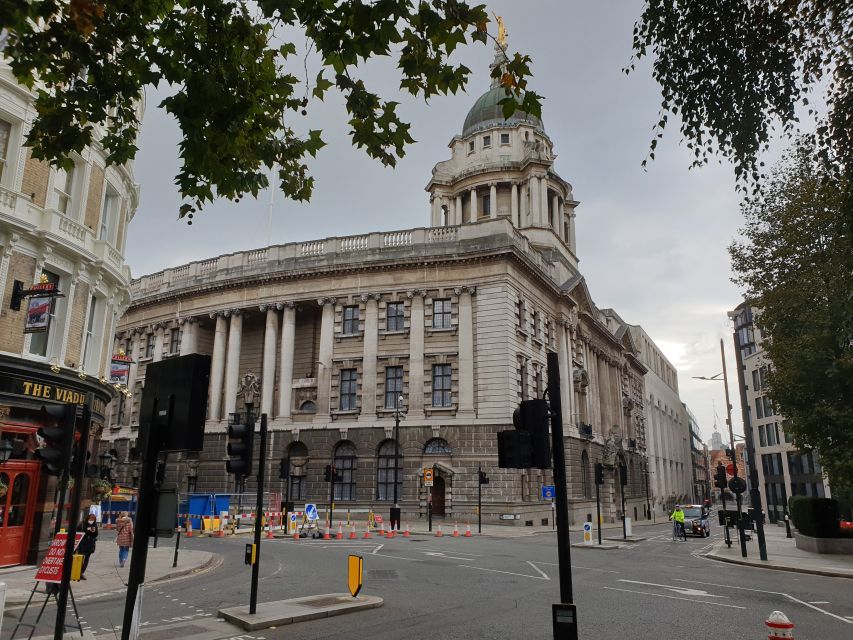
At $26 per person, this is a good-value choice if you want a guided account of London that goes beyond grand buildings and royal milestones. You get two hours with a guide, a roughly two-mile route, and a focused set of stories about plague, executions, slum life, and the people linked to Smithfield. The capped group size of 15 is another plus, particularly if you like asking questions.
The value depends on what you want from a walking tour. This is not a ticket to spend hours inside historic sites, and each listed stop is brief. You are paying for the guide’s storytelling and for the context that helps you read the streets around Smithfield. If you prefer independent wandering, you could visit the area on your own, but you would miss the connected narrative.
The tour is best suited to adults and older teens who enjoy social history and are comfortable with violent subject matter. It is not suitable for children under 13. If you are accompanying an older relative, the route is about two miles; one past guide, Tom, was noted for being attentive to elderly parents, but the pace and walking distance are still worth considering for your own group.
You can cancel up to 24 hours in advance for a full refund, and a reserve-now, pay-later option is available. The tour is in English. Check the available start times when planning, and remember that church entry depends on services.
Should you book this Smithfield walk?
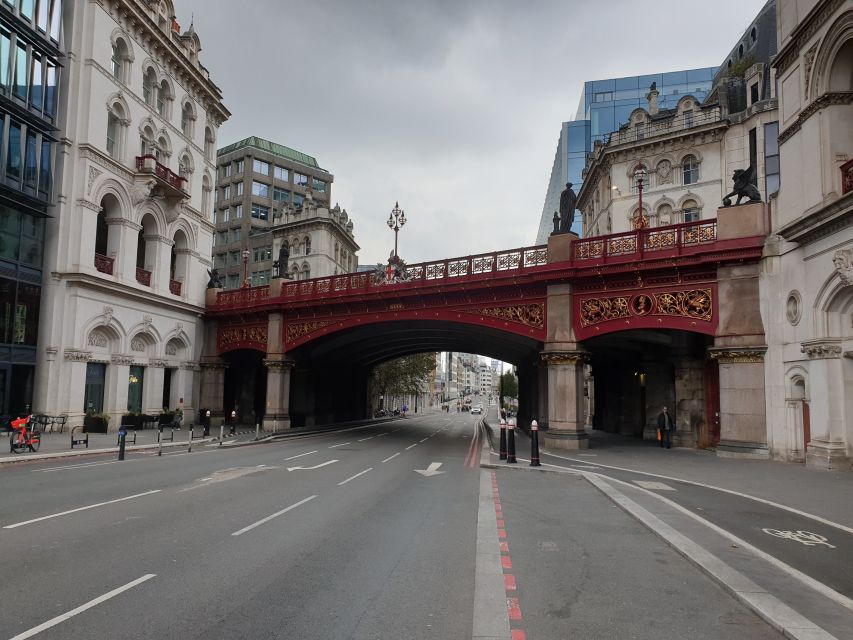
Book it if you want London history with the polite veneer removed. The strongest reason to go is the setting: Smithfield’s links to slaughter, plague, executions, and Dickens’s slum are easier to grasp when a guide connects them to places along the route.
Skip it if you want a light, child-friendly outing or a leisurely visit inside historic buildings. But if two miles on foot and some gruesome stories sound like a fair trade for a vivid look at London’s past, this is a focused, well-priced walk. Bring questions, keep an open mind about the mix of history and legend, and let the guide show you a side of the city many visitors walk past without noticing.
FAQ
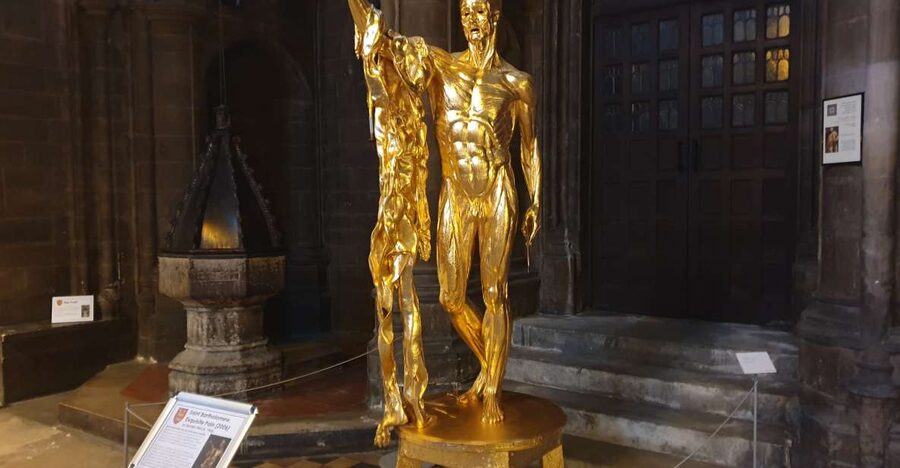
How long does the tour last?
The tour takes about two hours.
How far will I walk?
The total distance is about two miles.
Where does the tour start?
Meet just outside the Barbican Station exit on Aldersgate Street. The guide will have a Historic London Tours sign.
Where does the tour finish?
It finishes at Ely Place, near Farringdon Station.
What language is the tour in?
The live guide speaks English.
Is church entry included?
Yes, church entry is included when possible, but churches may not be visited if a service is in progress.
Is the tour suitable for children?
It is not suitable for children under 13.
How many people are in the group?
Ticket sales are limited to 15 attendees.
Can I cancel or pay later?
You can cancel up to 24 hours in advance for a full refund. A reserve-now, pay-later option is also available.
Just reviewed in London
- London Royal Tour – Buckingham Palace Entry – 12 guests 2,5h★ 4.9 · 14 reviews
- Royal London Tour incl Buckingham Palace & Changing of Guard★ 3.8 · 33 reviews
- Royal London Walking Tour★ 3.9 · 11 reviews
- London: Royal London Tour★ 3.7 · 46 reviews
- London: Royal Tour with Westminster Abbey & Afternoon Tea★ 3.0 · 3 reviews
- London: Tower of London & Changing of the Guard Experience★ 4.6 · 92 reviews
- London: Professional Private Photoshoot and Edited Photos★ 5.0 · 4 reviews
- London: Kensington Palace Tour, Guard Change & Afternoon Tea★ 4.3 · 22 reviews
London Tours, compared.
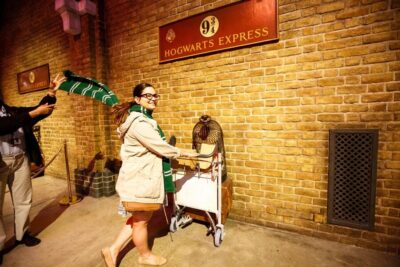

Magical London: Harry Potter Guided Walking Tour
Read our review →
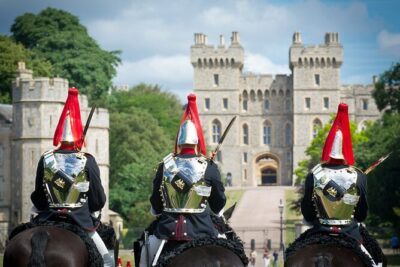
Stonehenge, Windsor Castle, and Bath from London
Read our review →
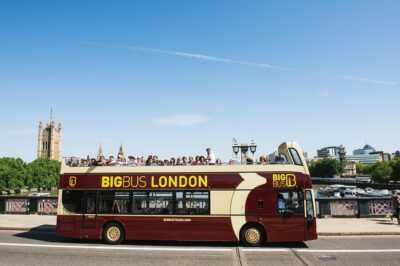
London Big Bus Hop-On Hop-Off Tour with Optional River Cruise
Read our review →