
Reviewed · LONDON PHOTO SHOOTS
Discover Photography
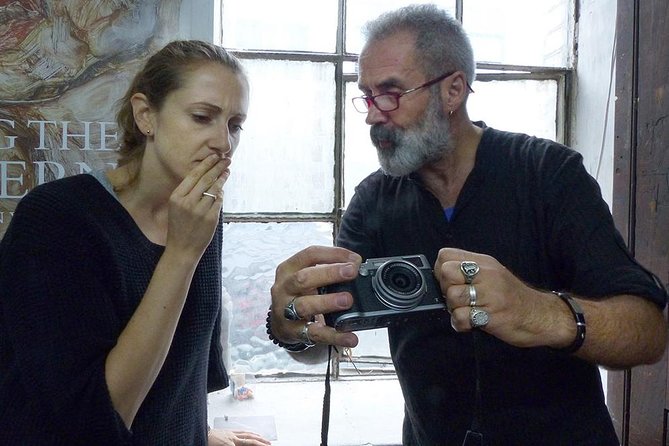
London’s Discover Photography course is about turning the dials on your camera from mystery to useful tools. In two and a half hours, you’ll work through exposure, lenses, white balance, and composition, then put aperture and shutter speed to practical use with an instructor.
I like two things about the format: the class is capped at 12, so there’s room to ask questions, and it teaches you how camera settings affect the picture rather than asking you to memorize a list of buttons. Instructors including Vehbi Koca and Pierre have been praised for clear explanations and a helpful, experimental teaching style.
One consideration: the course is designed for a camera with manual settings, and the provider specifically recommends a DSLR or suitable compact digital camera. Some past sessions have covered iPhone photography, but don’t assume your phone will be enough for this course without checking first.
Key points to know before you book
- You’ll learn the exposure triangle: See how aperture, shutter speed, and ISO work together to control exposure.
- The practical exercise matters: You’ll test how aperture and shutter speed change the image, not just hear the theory.
- Lenses get proper attention: Learn about focal length, angle of view, perspective, and how to make more of the lens you own.
- The group is small: No more than 12 people can attend, giving you a better chance to ask about your own camera.
- Bring a camera with manual controls: A DSLR or compact digital camera with manual settings is the recommended kit.
- Plan for a short class, not a photo walk across London: It lasts about two and a half hours and begins and ends at Westland Place Studios.
Turning camera settings into creative choices
A camera’s automatic mode is handy, but it can also make decisions for you. That’s fine until you want a moving subject to look sharp, a background to soften, or a scene to stay bright without losing detail. This beginner course aims to show you how to take control.
The central lesson is exposure: how much light reaches the camera’s sensor. You’ll learn how aperture, shutter speed, and ISO relate to one another, and how adjusting one setting affects the others. Once those controls make sense, manual mode becomes less like a cockpit and more like a set of choices you can make on purpose.
Aperture controls the opening in the lens. It affects exposure and depth of field, which is the range of the image that appears in focus. Shutter speed controls how long the camera records light. It affects exposure, and it can change how motion appears in your photograph. ISO is part of the exposure relationship, too, though the course information does not spell out a separate practical exercise devoted to it.
That connection is useful well beyond a classroom. Instead of guessing why a photo looks too dark or why the background is as sharp as the subject, you’ll have a way to diagnose the problem. The aim is not to make every picture look technically perfect. It is to understand what the camera is doing, so you can decide what result you want.
The course also covers semi-automatic modes, a sensible bridge between full auto and full manual. If you’re not ready to control every setting at once, learning what the camera handles and what you control can make the transition less daunting.
More photo shoots in London:
- London: Private Photoshoot with Video Clip Option
★ 4.8 · 182 reviews - Professional Photoshoot in London Photographer
★ 5.0 · 102 reviews - Private landmarks photoshoot for families and couples
★ 5.0 · 92 reviews
A practical session at Westland Place Studios
The class meets at Westland Place Studios, 11 Westland Place, in London’s N1 area. It lasts about two hours and 30 minutes, and returns to the same meeting point. The location is near public transportation, which helps keep the trip straightforward, though you’ll want to check your route before setting off.
Expect instruction on the fundamentals, followed by a practical exercise exploring the effects of aperture and shutter speed. The available details do not set out a stop-by-stop route or name a particular outdoor location, so it’s best not to book expecting a fixed sightseeing walk. The focus is the camera lesson, with practice built into the session.
That hands-on part is important. Photography concepts can sound abstract when explained in isolation. Changing a setting and seeing what happens gives you a direct way to connect the dial with the result. You can also use the exercise to test how your own camera responds, which is more useful than leaving with notes that don’t match your equipment.
Some course sessions have been described as going out and applying the theory. That suggests you may get a chance to practice beyond the studio, but the precise setting and conditions are not guaranteed in the information provided. Treat the practical exercise as the sure thing, and any particular walk or scenery as an unknown.
The format is beginner-friendly by design. You do not need to arrive already fluent in camera terminology. You do need to bring a camera that can use manual settings if you want to get the most from the lesson.
Lenses, perspective, and the look of a photograph
A lens does more than bring a distant subject closer. Focal length affects angle of view and perspective, and those choices influence how a scene feels in the frame. The course introduces these ideas so you can make more deliberate use of the lens you have.
This is useful even if you own only one lens. You can learn what its focal length means in practice and how your position and framing affect the finished picture. If you have more than one lens, the lesson can help you think about which tool suits a particular view rather than reaching for the same one every time.
Composition is included, too. That means the class is not limited to technical exposure settings. You’ll consider how you arrange the picture, while learning about colour temperature and white balance, the camera controls that help colour appear more natural under different lighting.
These topics make the session more rounded than a quick primer on shutter speed alone. They connect the camera’s mechanics to the choices you make when composing a photograph. Still, this is an introduction, not a full professional course. The short format is best viewed as a useful foundation, not a promise that every camera feature or photographic style will be covered in depth.
A small class and approachable teaching
With a maximum of 12 participants, the group is small enough to make questions practical. You can ask how a setting works on your camera, rather than trying to translate every instruction from a generic example. That personal help is especially useful for beginners, since camera menus and controls vary.
The course is led by an award-winning photographer. Instructors who have taught sessions include Vehbi Koca and Pierre, but the name of the instructor for your date is not specified here. If having a particular teacher matters to you, check before booking rather than assuming one of them will lead your class.
The teaching style associated with these sessions is a strong part of the appeal. Vehbi has been described as a clear explainer who encourages experimentation and helps people regardless of which camera they bring. Pierre has also been praised for answering questions and keeping the group together as the hints and information build.
That kind of approach suits a subject where there is rarely just one correct setting. A patient instructor can help you understand why a choice works, rather than simply tell you which button to press. You’ll get more from the class if you bring questions about the pictures you want to take and are willing to try settings that feel unfamiliar.
More tours and experiences in London:
- London: The London Eye Entry Ticket
★ 4.6 · 35,875 reviews - From London: Harry Potter Warner Bros Studio Tour
★ 4.7 · 26,588 reviews - Magical London: Harry Potter Guided Walking Tour
★ 4.7 · 22,044 reviews - London: Madame Tussauds London
★ 4.6 · 20,915 reviews
What to bring, and what the iPhone comments mean
The stated recommendation is a DSLR or compact digital camera with manual settings. Bring the camera you want to learn on, and make sure you know how to turn it on and access its controls. The course includes learning to operate the camera in semi-automatic and manual modes, so having your own equipment is central to the point of attending.
There is a small wrinkle: a past session has been described as an iPhone photography class, focused on what the phone’s settings do for photos. That is useful evidence that instruction can sometimes adapt to different devices, but it does not replace the stated equipment guidance for this course. If you plan to bring only a phone, contact the provider first to confirm that your session will cover it.
Children must be accompanied by an adult, and both need paid tickets. The minimum age is 18, so this is primarily an adult class. Most people can participate, and the activity is near public transportation.
Is $95.80 fair value for two and a half hours?
At $95.80 per person, this is not a bargain-basement camera lesson. The value depends on whether you leave able to use your own camera with more confidence. A small class, instruction from an award-winning photographer, and a practical exercise all add more than a lecture alone would offer.
You’re paying for a compact introduction to several connected subjects: exposure, aperture, shutter speed, ISO, lenses, composition, colour temperature, white balance, and depth of field. For a new photographer, that is a useful set of basics. The chance to ask questions about your own camera can also save time later, especially if you have struggled to make sense of its manual or menus.
The price is harder to justify if you already understand exposure and use manual settings comfortably. It may also feel steep if you want a long outdoor photography walk, a specific London route, or extensive one-to-one coaching. None of those is promised by the available details.
The class makes the most sense if you have recently bought a camera, rely heavily on auto mode, or want a clear explanation of how settings affect your images. Think of it as a practical starting point. You’ll still need to take photographs afterward to make the lessons stick.
Booking details worth checking
The activity costs $95.80 per person and lasts approximately two hours and 30 minutes. Confirmation is received at the time of booking, and the group has a maximum of 12 participants.
The experience is non-refundable and cannot be changed. If the minimum number of participants is not met and the activity is cancelled, you’ll be offered another date or experience, or a full refund. That firm policy makes it wise to check your plans carefully before paying.
Should you book Discover Photography?
Book it if you want a structured introduction to manual camera settings and are ready to practice with your own DSLR or compact camera. The small group and focus on why settings change a photo are the main draws, while instructors such as Vehbi Koca and Pierre have been noted for clear, helpful teaching.
Skip it if you already know exposure well, want a guaranteed iPhone class, or expect a set sightseeing route through London. If you’re unsure whether your camera qualifies, confirm that before booking. For a beginner who wants to stop letting the camera make every decision, this looks like a useful, focused way to get started.
FAQ
How long is the Discover Photography course?
The course lasts approximately two hours and 30 minutes.
How much does the course cost?
The listed price is $95.80 per person.
Where does the class meet?
It starts at Westland Place Studios, 11 Westland Place, London N1 7LP.
Does the activity end at the meeting point?
Yes. The activity ends back at Westland Place Studios.
How many people can attend?
The maximum group size is 12 participants.
What camera should I bring?
A DSLR or compact digital camera with manual settings is recommended to get the most from the course.
What topics does the course cover?
Topics include aperture, shutter speed, ISO, exposure, lenses, composition, white balance, colour temperature, depth of field, focal length, angle of view, and perspective.
Is there a minimum age?
Yes. The minimum age is 18. Children must be accompanied by an adult, and both must have paid tickets.
Can I cancel or change my booking?
The experience is non-refundable and cannot be changed. If it is cancelled because the minimum number of participants is not met, you’ll be offered another date or experience, or a full refund.
Just reviewed in London
- Downton Abbey and Highclere Castle Tour from London★ 4.5 · 96 reviews
- Downton Abbey sites, Cotswolds and Blenheim Palace from London★ 4.5 · 50 reviews
- Downton Abbey London Walking Tour★ 5.0 · 39 reviews
- Downton Abbey Town and Country Tour from London by Private Black Taxi★ 4.5 · 3 reviews
- Downton Abbey Day In The Cotswolds Tour★ 5.0 · 13 reviews
- Highclere Castle Private Round Trip Transportation Service★ 4.5 · 5 reviews
- Downton Abbey London Filming Locations: Private Half-Day Tour★ 5.0 · 5 reviews
- Discover the Secrets of Whitehall★ 5.0 · 10 reviews
London Photo Shoots, compared.
Professional Photoshoot in London Photographer
Read our review →
Browse the lists this tour appears in