Reviewed · LONDON TOURS
Slave Trade Money Trail Tour in the City of London
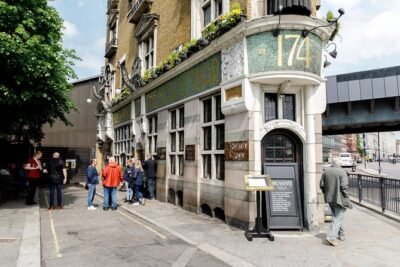
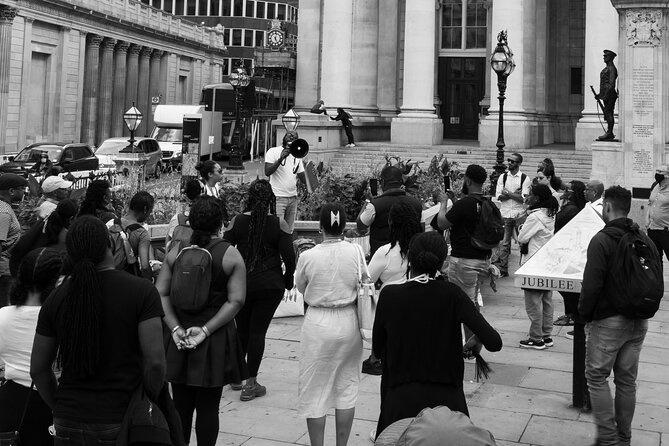
London’s grand financial buildings tell a story of power and commerce. This three-hour walk looks at what those facades can leave out: the links between London’s banks, insurers, shipping companies and the transatlantic slave trade. With guide Darrel Blake, you follow those connections from the Royal Exchange to Borough Market.
I like two things in particular: the tour gives you a fresh way to read familiar City landmarks, and a booklet and artifacts help make the history tangible. One consideration is that this is a serious, emotionally demanding subject, not a light stroll built around pretty views.
Key points to know before you go
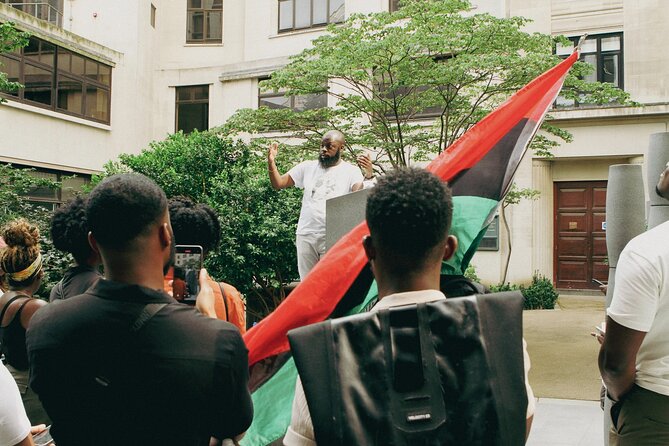
- Follow the money: Explore how London’s financial institutions and commercial sites were connected to the slave trade.
- Meet at the Royal Exchange: The tour starts at 12:00 pm at the Royal Exchange and finishes at Borough Market.
- Expect a three-hour walk: The group is limited to 30, and the tour is offered in English.
- Bring your own refreshments: Lunch and bottled water are not included.
- Plan ahead: The average booking lead time is 42 days, and free cancellation is available up to 24 hours before the start.
Reading the City through its financial past
The City of London can seem built for business: banks, insurers, grand stone facades and streets where people hurry from one appointment to the next. This tour asks you to pause and consider how some of that wealth and power grew. It connects the transatlantic slave trade to the commercial institutions that helped finance, insure and profit from it.
That change of perspective is the heart of the experience. Instead of treating slavery as a distant story that happened elsewhere, you look at London places where decisions, investments and trade helped sustain it. The focus is not only on the people who were enslaved, but also on the businesses and institutions that benefited.
For history buffs, this is a valuable way to add context to a familiar city. For anyone with Caribbean or African heritage, or an interest in social justice and human rights, the subject may feel personal as well as historical. You do not need specialist knowledge to take part: the guide explains the connections, and the tour is designed to make the story understandable to the group.
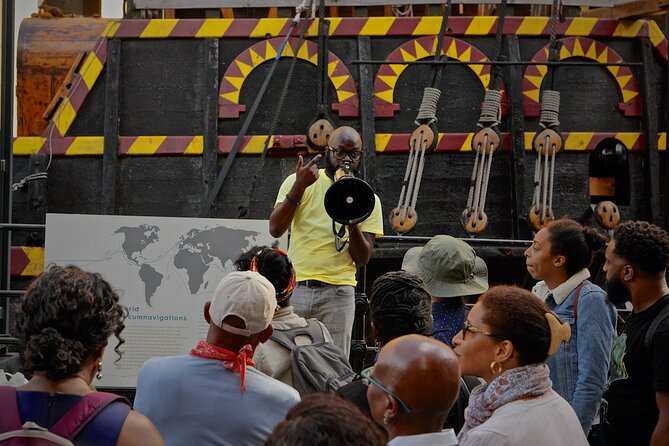
Darrel Blake leads the walk. The tour draws on his research and, according to its description, includes personal experiences and historical artifacts. His approach is clear and direct, with questions that encourage you to think about what you have just heard. That can make the experience more involving than simply listening to a running commentary, though it also means you should be ready to engage with difficult material.
More tours and experiences in London:
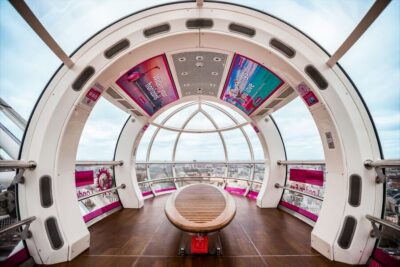
- London: The London Eye Entry Ticket
★ 4.6 · 35,875 reviews - From London: Harry Potter Warner Bros Studio Tour
★ 4.7 · 26,588 reviews - Magical London: Harry Potter Guided Walking Tour
★ 4.7 · 22,044 reviews
From the Royal Exchange to Borough Market
The walk begins at the Royal Exchange, at 12:00 pm. The route’s focus is the historic Bank area and its financial institutions, including the Royal Exchange itself. The itinerary assigns about 15 minutes to the City of London and 20 minutes to the Royal Exchange, so expect focused explanations rather than a long visit inside each site. Admission is listed as free at these stops.
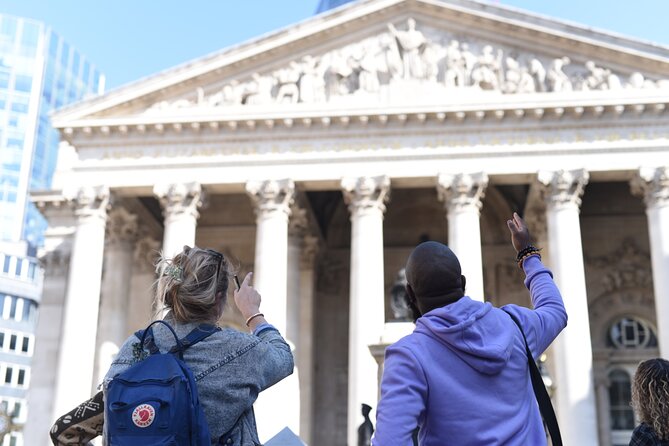
The Royal Exchange was once a centre of London’s commercial life. Here, the tour examines its role in trade connected to the transatlantic slave trade. The building is not just an impressive backdrop; it helps frame a larger question about how commerce was organized and who gained from it. You will be looking at the history of a business hub, not touring a museum collection.
Next, the route turns to 20 Fenchurch Street and the surrounding financial district. This is the longest stop, at about 50 minutes. The discussion links the area to the British economy’s involvement in slavery and to shipping companies that profited from the trade and had offices in the district. That longer stretch gives the guide more room to connect business, transport and wealth, rather than treating each institution as an isolated example.
At Lloyd’s of London, the focus shifts to insurance. The tour explores the institution’s role in underwriting the transatlantic slave trade, a reminder that shipping required more than vessels and cargo. Financial services could help make the trade possible and profitable. The stop is about 20 minutes, enough for a focused account of that connection.
The final stop is Borough Market, where the story moves from finance and shipping to the goods that entered commercial networks. Sugar and tobacco are among the products linked to enslaved labor. The market’s long role as a trading hub provides a place to consider how goods produced through exploitation reached consumers and helped build wealth.
Borough Market is the tour’s endpoint, not a meal stop included in the price. Admission is listed as not included, and lunch is not provided. If you want to eat or browse afterward, you can make that a separate part of your day.
The stops have listed durations of 15, 20, 50, 20 and 20 minutes, which add up to about two hours and five minutes. The experience itself is advertised as approximately three hours, so the remaining time is not itemized. The exact split between walking, transitions and discussion is not specified, but it is sensible to allow the full three hours in your schedule.
What makes the walk different
The tour’s value comes from tracing connections across several kinds of institutions. A bank, a trading exchange, shipping offices, an insurer and a food market may seem to belong to separate stories. Set beside one another, they help show how slavery was tied to the wider economy, not confined to plantations or ports.
The walk also changes how you might look at the City afterward. A building can be both a landmark and part of a system that enriched certain people at the expense of others. That is a harder, more useful perspective than a simple roll call of famous dates and names.
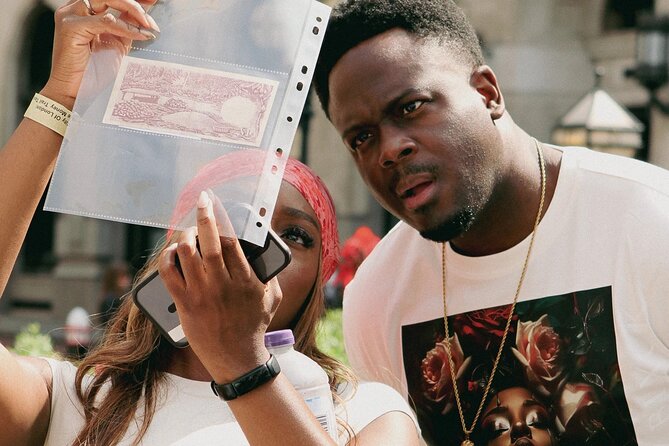
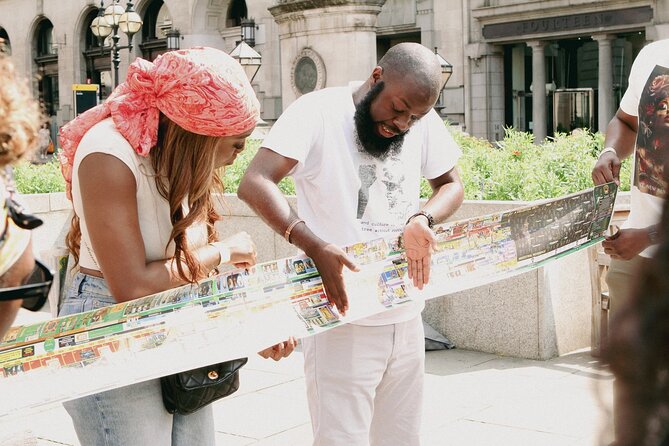
The booklet is a practical plus. It gives you something to refer to as you follow the route and can help you hold onto the names, links and ideas after the tour ends. Artifacts add another layer, bringing historical material into the conversation rather than leaving everything at the level of abstract figures and institutions.
The guide’s style is another important part of the experience. Blake is described as clear and concise, and his questions invite the group to recall and discuss what has just been explained. That active format may suit you if you like learning through conversation. If you prefer a quiet walk with little audience participation, you may find the questioning style less comfortable.
A serious subject, handled directly

This is not a tour that softens the history to keep the mood pleasant. Its subject includes the enslavement and exploitation of Africans, the accumulation of wealth through forced labor, and the lasting effects of that history. The material can be upsetting. At the same time, the tour’s purpose is not shock for its own sake: it offers a way to understand how those past systems connect to present-day London.
The guide’s personal perspective and use of artifacts can make the account feel close rather than remote. Some people may find that especially meaningful when exploring family heritage or histories they were not taught at school. Others may simply want a fuller understanding of how the capital developed. Either way, come prepared to listen, reflect and ask questions.
Families may find the tour worthwhile too. It has been attended by school-age children, including teenagers aged 13 and 15, and the guide is described as explaining the subject in a way the group can follow. Still, parents should consider their children’s readiness for a frank account of slavery and its consequences. The tour is not advertised as a children’s program, so it is best to use your judgment.
Fancy a different kind of day out?
- London: Madame Tussauds London
★ 4.6 · 20,915 reviews - Stonehenge, Windsor Castle, and Bath from London
★ 4.5 · 18,662 reviews - London: Tower Bridge Entry Ticket
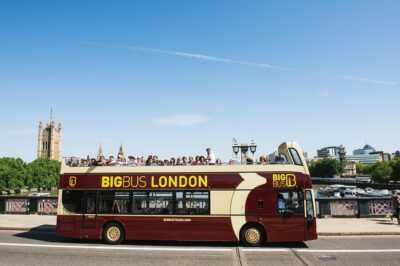
★ 4.7 · 15,560 reviews - London Big Bus Hop-On Hop-Off Tour with Optional River Cruise
★ 3.5 · 10,803 reviews
Is $48.01 good value?
At $48.01 per person, you are paying for a guided experience of about three hours, not entry to a paid attraction or a meal. The price makes most sense if you value the interpretation: a guide who connects buildings and institutions to the larger history, plus a booklet and artifacts to support the discussion.
The route covers several important themes in a compact span, from finance and insurance to shipping and commodities. You could walk through these areas on your own, but it would take research to connect the sites as clearly. If you want a conventional sightseeing tour, the cost may be better spent elsewhere. If you want a focused history walk that challenges the usual story of London’s wealth, it is a fair price for the time and guidance involved.
The group maximum is 30. That is large enough to bring together a range of voices, but it is worth knowing if you prefer very small tours. The format includes questions and discussion, so your experience may depend partly on how much you want to participate and how the group engages.
Practical details for your afternoon
The tour starts at 12:00 pm at the Royal Exchange, London EC3V 3LL, and ends at Borough Market, London SE1 9AL. It is offered in English, and you receive a mobile ticket. The experience lasts about three hours, so plan the rest of your day around a finish roughly three hours after the start.
Lunch and bottled water are not included. Bring water, especially if you prefer to have some with you during a walk, and eat beforehand or plan a separate meal afterward. The tour requires good weather; if poor weather forces a cancellation, you will be offered another date or a full refund.
Most people can participate, service animals are allowed, and the meeting point is near public transportation. The group is capped at 30. The average booking lead time is 42 days, so book ahead if you have a particular date in mind. You can cancel for a full refund up to 24 hours before the start; changes or cancellations inside that window are not accepted.
Should you book the Money Trail Tour?
Book this tour if you want to understand the role London’s financial and commercial institutions played in the transatlantic slave trade, and you are ready for a thoughtful, sometimes difficult afternoon. The strongest reasons to go are the route’s unusual focus, Darrel Blake’s direct teaching style, and the chance to connect several parts of the City’s economy in one walk.
Skip it if you are looking for a light sightseeing tour, a museum visit, or an outing with lunch included. For the right audience, though, this is a useful way to see familiar London streets with new questions in mind. You finish at Borough Market, but the main takeaway is likely to follow you well beyond the walk.
FAQ
How long is the tour?
It lasts approximately three hours. The listed stop times add up to about two hours and five minutes, and the remaining time is not itemized.
Where does the tour start and finish?
It starts at the Royal Exchange, London EC3V 3LL, and ends at Borough Market, London SE1 9AL.
What time does the tour begin?
The start time is 12:00 pm.
What is included in the price?
A tour guide is included. Lunch and bottled water are not included.
How large is the group?
The maximum group size is 30 travelers.
Can I cancel if my plans change?
You can cancel up to 24 hours before the start time for a full refund. If poor weather cancels the tour, you will be offered a different date or a full refund.
Just reviewed in London
- London Christmas Lights Guided Tour With Christmas Music★ 5.0 · 118 reviews
- London: Churchill & World War 2 Walking Tour★ 5.0 · 6 reviews
- Christmas Lights and Markets Guided Walking Tour with Mulled Wine★ 5.0 · 72 reviews
- A Fairytale Christmas Day with Food and Christmas Concert★ 5.0 · 5 reviews
- London Bespoke Black Cab Christmas Lights & Sights Private Tour★ 5.0 · 15 reviews
- London Christmas Lights Guided Walking Tour★ 5.0 · 29 reviews
- Christmas Lights and Markets London Taxi Tour★ 5.0 · 21 reviews
- London Christmas Lights Bike Tour with Local Guide★ 5.0 · 67 reviews
London Tours, compared.
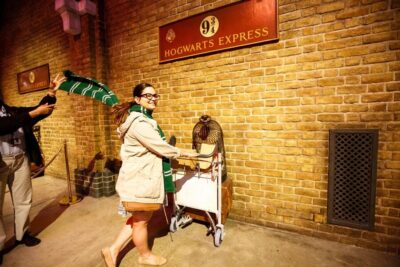

Magical London: Harry Potter Guided Walking Tour
Read our review →
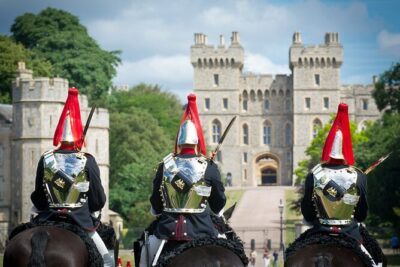
Stonehenge, Windsor Castle, and Bath from London
Read our review →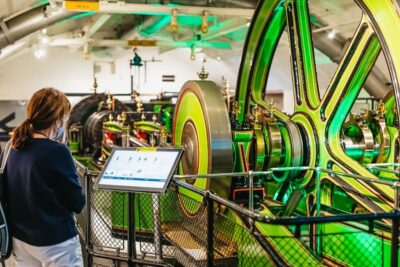
London Big Bus Hop-On Hop-Off Tour with Optional River Cruise
Read our review →