
Reviewed · BRITISH MUSEUM TOURS
British Museum Private Tour: Ancient Daemons and Timeless Beauty
The British Museum can swallow a whole day and still leave you wondering what you missed. This private tour gives you a route through some of its most compelling objects, from the Rosetta Stone to the Sutton Hoo treasure, with a guide to connect the pieces and help you make sense of the vast collection.
I like two things especially: the private format lets you ask questions and shape the visit, and the theme links objects from different cultures instead of turning the tour into a sprint from one famous case to another. Guides Richard and Yuliya Ousarenko have been praised for adapting the route and explaining the objects in clear, lively ways.
One point to check before booking: the tour details describe a private group of up to eight, while the highlights also say up to six. The guided portion is listed as about two hours, though the overall experience is estimated at two to three, so confirm the group limit and expected length if either matters to you.
At a glance: the British Museum private tour
- A private route through a huge museum: You explore with your own group rather than joining a larger public tour.
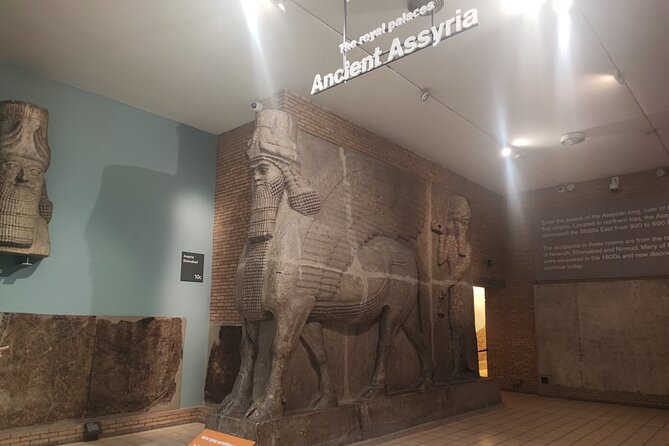
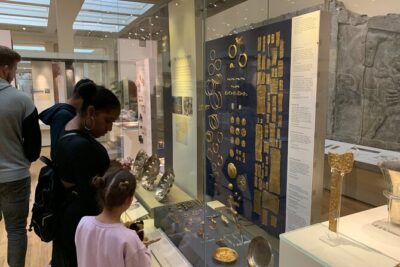
- Famous objects with a story behind them: The planned stops include the Rosetta Stone, Parthenon Marbles, Egyptian mummies, Sutton Hoo, the Lewis chessmen and Shiva Nataraja.
- A guide who can adjust the visit: Richard and Yuliya Ousarenko are among the guides associated with the experience, and guests have described routes tailored to their interests.
- A strong choice for first-time visitors: The collection holds more than eight million artifacts, so expert direction can help you use your limited time well.
- A two to three hour commitment: The guided tour itself is described as about two hours, while the overall duration is approximate.
- Food and drink are not included: Plan a snack or meal separately if you will need one around the tour.
Finding your way through a museum of eight million objects
The British Museum is one of those places where the sheer number of things can become part of the challenge. It holds more than eight million artifacts, and even a well-planned visit cannot cover everything. A private guide helps you trade the impossible goal of seeing it all for a more satisfying one: understanding a handful of remarkable objects.
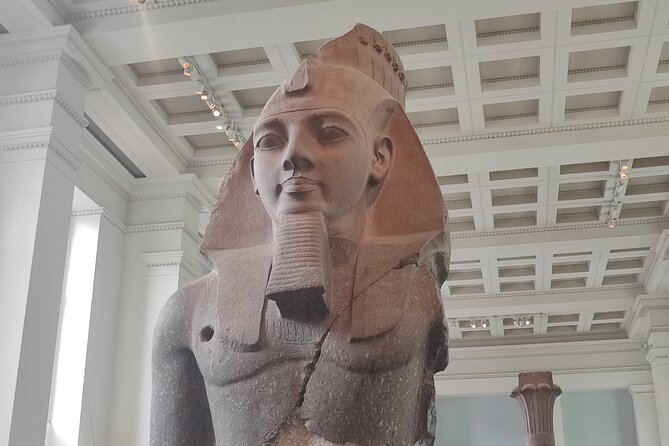
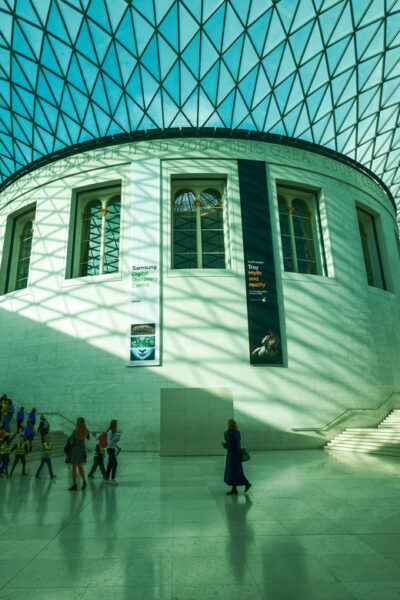
The experience begins at Montague Place and ends back at the meeting point. Inside, you move through the museum beneath its great glass-and-steel canopy, designed by Norman Foster. The building itself is worth noticing, but the practical benefit of a guide is more important: you do not have to decide, from a maze of galleries, which objects deserve your attention first.
This is not a general museum ticket with a guide added as an afterthought. The appeal is the focus on particular objects and the stories that tie them together. You move between languages, empire, death, strategy, religion and ideas of beauty. That variety gives the visit a natural rhythm, while a private format leaves room to pause or ask questions without worrying about a larger group.
The museum’s admission is listed as free, while the tour includes guided entry and fast-track entry. That makes the price a payment for the guide’s time, expertise and route, not for access to the collection alone. The details do not explain exactly how the fast-track arrangement works, so think of it as an included convenience rather than a promise about how long entry will take.
More British Museum visits in London:
- London: British Museum Guided Tour
★ 4.3 · 1,182 reviews - British Museum London Guided Tour Semi-Private 8ppl Max
★ 5.0 · 984 reviews - London: Tour of the British Museum
★ 4.1 · 678 reviews
The Rosetta Stone and the power of a written clue
The Rosetta Stone is a smart place to begin. Its importance is not simply that it is famous. It carries the same decree in three scripts, including ancient Greek and Egyptian hieroglyphs, giving scholars a way to work toward reading a writing system that had been lost to them.
With a guide, you can focus on why the stone mattered rather than just its size or the crowd around it. It becomes a story about language, political power and the painstaking work of interpretation. That is a useful opening for the rest of the tour: objects are not isolated showpieces, but evidence of how people lived, ruled and made meaning.
The museum is large, and a guide can help you stay oriented as you move between galleries. That matters here because the Rosetta Stone is one highlight among many, not the entire visit. If language or archaeology is your main interest, say so at the start and ask how much time the guide can give this stop.
The Parthenon Marbles and the reach of empire
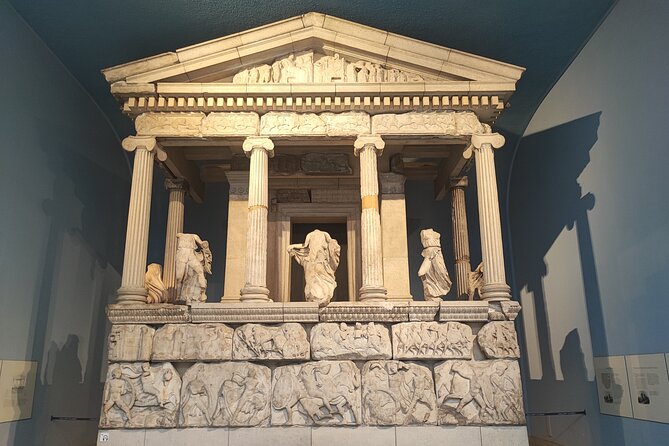
The Parthenon Marbles offer a different kind of encounter. They bring you face to face with the artistic achievement of ancient Greece, while also raising questions about empire, ownership and the movement of cultural objects between countries. The tour’s focus on the glory of past empires gives your guide room to explain their significance as art and as objects with a complicated modern context.
This stop works best when you are allowed to look closely. Rather than treating sculpture as a row of beautiful figures, consider what the figures once belonged to and what their removal from their original setting changes about the way you see them today. A private visit is useful because you can ask questions that might not fit a standard overview.
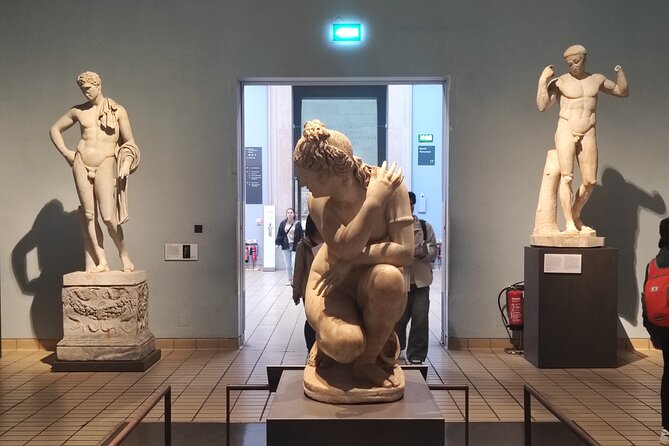
The tour also explores how ideas of beauty have changed through ancient sculpture. That can make the galleries feel less like a collection of old ideals and more like a chance to compare what different societies valued. The tour description does not specify which sculptures will be used for this discussion, so the exact examples may depend on the route and guide.
Egyptian mummies and the human side of the collection
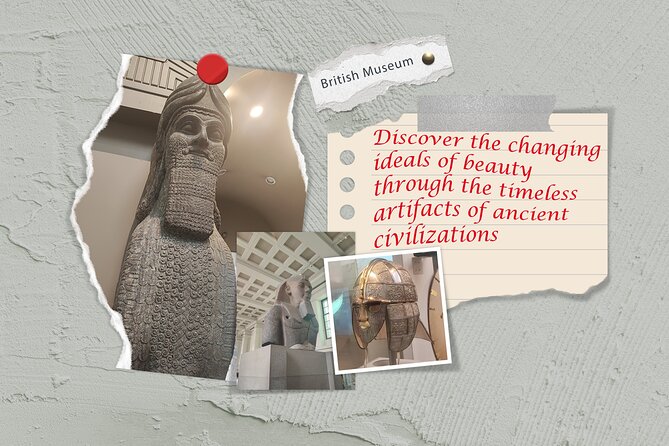
The Egyptian mummy galleries ask you to shift your attention from empire and public life to death and what people hoped might follow it. The tour frames this as a meeting with the dance of life and death, a theme that gives the objects a human focus instead of reducing them to spectacle.
You may find this section especially compelling if you are visiting with family or if ancient religion interests you. A guide can help explain why the objects matter and how they fit into beliefs about burial and the afterlife. It is also a place where it pays to take your time. The museum’s displays can be quiet and absorbing, but a quick stop may leave you with little beyond the visual impression.
The tour does not promise a fixed amount of time in each gallery. If mummies are your priority, mention that when you meet your guide. Private touring is most useful when you speak up about what you want to understand, rather than treating the planned route as a script.
More private tours in London:
- Stonehenge Inner Circle Private Tour from London with Bath Visit
★ 5.0 · 1,909 reviews - Private Tour: Black Taxi Tour of London
★ 5.0 · 1,153 reviews - Private London Arrival Transfer – Airport to Hotel / Accommodation
★ 3.5 · 1,085 reviews - Private London Departure Transfer – Hotel / Accommodation to Airport
★ 4.0 · 560 reviews
Sutton Hoo and an Anglo-Saxon warrior’s last voyage
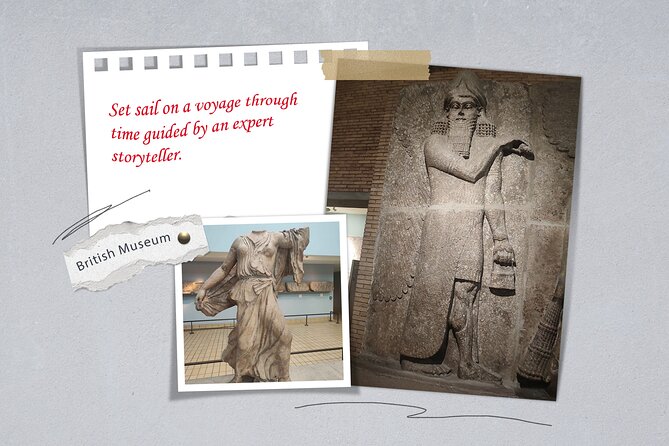
The Sutton Hoo display brings you to a burial treasure associated with an Anglo-Saxon warrior and the mystery of his last voyage. Its objects give a glimpse of a world with its own systems of status, craftsmanship and belief, far removed from the Egyptian and Greek material elsewhere in the tour.
This contrast is one of the route’s strengths. You are not simply moving forward through a timeline. Instead, you see how different cultures made sense of power, death and the afterlife, each through objects that carry their own questions. Sutton Hoo can be a particularly good stop for visitors who know the classical world better than early medieval Britain.
The tour description does not name every object or promise a detailed account of the burial’s archaeology. Still, the focus on the warrior’s final journey offers a clear way into the display. Ask your guide what is known, what remains uncertain and how the objects help tell the story.
The Lewis chessmen and Shiva Nataraja
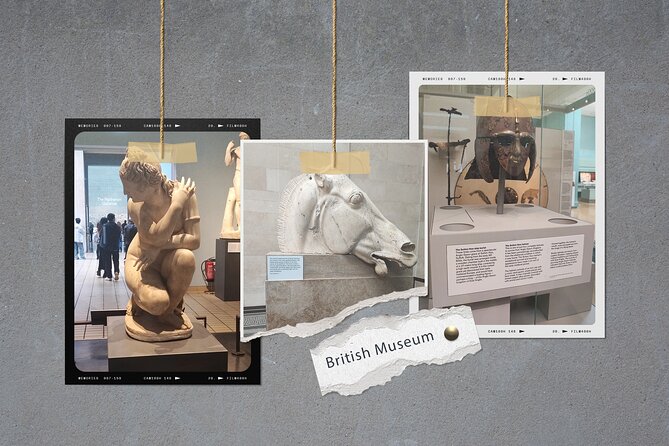
The Lewis chessmen bring a change of mood. Their carved figures invite you to look at strategy, wit and character, rather than the scale of an empire or the solemnity of a burial. They are also a good reminder that museum objects can be engaging without needing a grand historical speech. A close look at their expressions and poses can make the set feel surprisingly immediate.
From there, the tour’s planned attention to Shiva Nataraja opens another cultural and religious frame. The figure represents Shiva in a cosmic dance of creation and destruction, a vivid image for thinking about cycles of change. It is a striking counterpoint to the chessmen: one set encourages you to think about human play and competition, while the other points toward a much larger view of the universe.
These stops show why a themed route can help. You encounter objects from different civilizations, but the guide can draw out shared concerns and sharp contrasts. If a particular culture or object catches your interest, this is the time to ask for more context rather than rushing ahead to the next famous display.
Why a private guide changes the visit
The main value here is not the promise of seeing every headline object. No two or three hour tour can do that in a museum this large. The value is having someone make choices for you, explain why those choices matter and adjust the pace when your group wants more time.
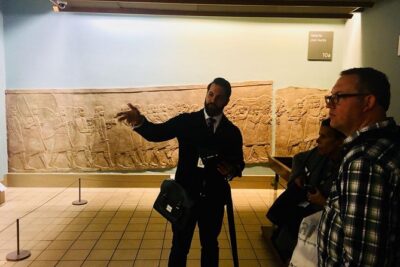
The private format is especially useful for families, first-time visitors and groups with different interests. One person may want the Rosetta Stone, another may be drawn to mummies or sculpture. A flexible guide can help find common ground, and you avoid the awkwardness of holding up a larger group when you need to ask a question.
The guides named in the tour information include Richard and Yuliya Ousarenko, whose visits have been described as flexible and tailored. One group’s guide, Richard, extended the tour by half an hour without extra charge. That is a generous example, not a feature you should count on. The practical lesson is to tell your guide what matters most and ask at the outset how much room there is to adjust the route.
The most highly praised element is the guide’s ability to explain the exhibits and make the experience feel connected. That matters more than a checklist of famous objects. If you leave with a clearer sense of why the Rosetta Stone, Sutton Hoo or Shiva Nataraja deserves attention, the tour has done more than move you through galleries.
What the price buys, and who gets the best value
The listed price is $203.65 per group. At the advertised maximum of eight people, that works out to about $25.46 per person. If the applicable limit is six, it is about $33.94 per person. Because the tour information gives both limits, confirm which one applies before you book.
For a small group, that can be good value if you want a guide’s full attention and a focused introduction to the museum. The museum itself has free admission, so this is not the cheapest way to walk through its doors. You are paying for a guided route, interpretation, and the chance to tailor the experience to your interests. If you are happy to wander alone and choose your own objects, you may prefer to spend nothing on a guide.
The tour is estimated at two to three hours, while the included guided museum tour is described as about two hours and one itinerary entry gives a three-hour duration. Treat the timing as approximate. If you have a train, meal or another booking afterward, leave a cushion rather than relying on the shortest estimate.
Food, snacks and drinks are not included. The meeting point is Montague Place, the tour ends back there, and the activity is described as near public transportation. Confirmation is provided at booking. Most people can participate, and only your own group joins the private tour.
Is this British Museum tour right for you?
Book it if you want a thoughtful introduction to the museum, prefer conversation to a self-guided checklist, or have a group with varied interests. It is particularly appealing if you want to understand a few major objects in context and value the freedom to ask questions as you go.
Skip it if you are content to explore independently, have a strict budget, or want a guaranteed deep focus on one gallery. The route covers several civilizations and themes, so a specialist visit devoted to a single subject may suit you better.
Before paying, confirm whether your group can include six or eight people and ask what duration to expect. Then choose the interests you most want the guide to cover. This tour makes the best sense when you arrive with a little curiosity and a short wish list, not a demand to see all eight million objects.
FAQ
How long does the tour last?
The overall experience is estimated at two to three hours. The guided museum tour is described as about two hours, and another duration detail gives three hours, so timing is approximate.
How many people can join the private tour?
The tour price is listed for a group of up to eight, while the highlights describe a private group of up to six. Confirm the applicable limit before booking.
Where does the tour start and end?
It starts at Montague Place in London and ends back at the meeting point.
Which objects are included on the route?
Planned highlights include the Rosetta Stone, Parthenon Marbles, Egyptian mummies, Sutton Hoo, the Lewis chessmen, Shiva Nataraja and ancient sculptures.
Is museum admission included?
The guided tour and fast-track entry are included. British Museum admission is listed as free.
Are food and drinks included?
No. Snacks, food and drinks are not included.
Is the tour private?
Yes. Only your group participates.
More museum visits in London
- Tower of London and Crown Jewels Exhibition Ticket
★ 4.5 · 6,677 reviews - London: Chelsea Football Club Stadium and Museum Tour
★ 4.8 · 4,576 reviews - Chelsea FC Stadium Tours and Museum
★ 5.0 · 1,908 reviews - Official tickets: Moco Modern & Contemporary Art Museum
★ 4.5 · 1,157 reviews
Just reviewed in London
- Shared British Museum Highlights Tour★ 5.0 · 3 reviews
- British Museum In-Depth Private Guided Tour★ 5.0 · 40 reviews
- British Museum Private Tour★ 5.0 · 5 reviews
- Bridget Jones Walking Tour of Locations★ 5.0 · 31 reviews
- British Museum Guided Tour with Priority Timeslots(Small Group)★ 5.0 · 192 reviews
- Booze, Brothels & The Bard: A Walking Tour of London’s Bawdy Borough★ 5.0 · 96 reviews
- London Food Walking Tour: Taste Your Way Through Soho & Chinatown★ 5.0 · 187 reviews
- Borough Market & Beefeater Gin Distillery Tour★ 5.0 · 6 reviews
British Museum Tours, compared.
British Museum London Guided Tour Semi-Private 8ppl Max
Read our review →
British Museum Audio Tour & Priority Entrance Ticket
Read our review →
The British Museum London – Exclusive Guided Museum Tour
Read our review →
Private Guided Tour of the British Museum – Tickets Included
Read our review →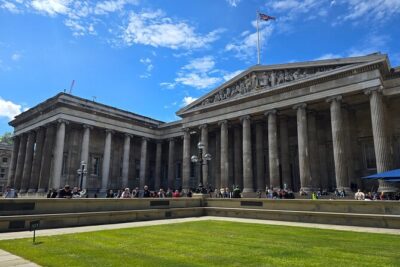
British Museum Guided Tour with Priority Timeslots(Small Group)
Read our review →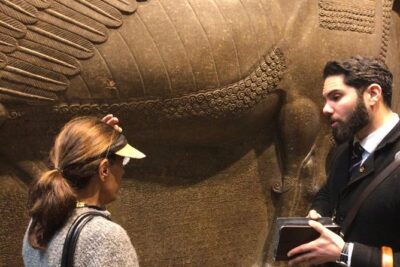
British Museum & National Gallery of London Semi-Private 8ppl Max
Read our review →Browse the lists this tour appears in