
Reviewed · BRITISH MUSEUM TOURS
London: British Museum Highlights Tour: How Beauty Was Born
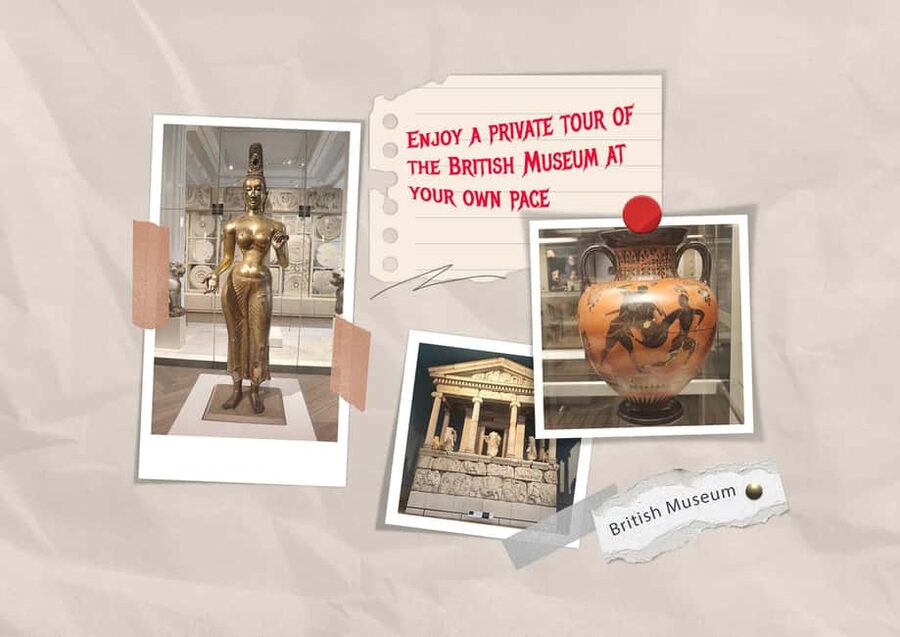
The British Museum’s objects are more than old things in glass cases. This two-hour tour links them through a lively question: how have people understood beauty, love, death, and faith across time? You’ll meet famous works such as the Rosetta Stone and the Parthenon Marbles, then look beyond Greece to Egypt, Mesopotamia, India, and medieval Europe.
I like two things about this approach. First, a small group of no more than eight makes it easier to follow a guide’s story and ask questions. Second, the themes give you a reason to connect objects across cultures instead of treating the museum as a checklist.
The main consideration is pace. Two hours is enough for a focused introduction, not for an in-depth visit to a museum with more than eight million objects. The tour also involves moderate walking and is not suitable for wheelchair users or people with mobility impairments.
- The Rosetta Stone links a familiar museum icon to the long effort to read Egyptian hieroglyphs.
- The Parthenon Marbles anchor a discussion of Greek art and how ancient ideas still shape modern beauty standards.
- Egyptian mummies bring questions of death, medicine, and the afterlife into view.
- Stories of tragic love show how ancient artists gave form to emotions that still feel familiar.
- Medieval images of Jesus introduce alternative stories beyond the familiar biblical accounts.
A two-hour route built around big ideas
The tour is called How Beauty Was Born, but its subject reaches beyond sculpture and appearance. The guiding idea is that objects can reveal how people thought about the body, love, death, belief, and the world around them. That makes the visit more useful than simply hearing dates and names.
The museum holds more than eight million artifacts, so a short guided visit needs a clear focus. You won’t see everything, and that is the point. A guide selects a handful of objects and builds connections between them, helping you spend your time looking closely rather than trying to cover impossible ground.
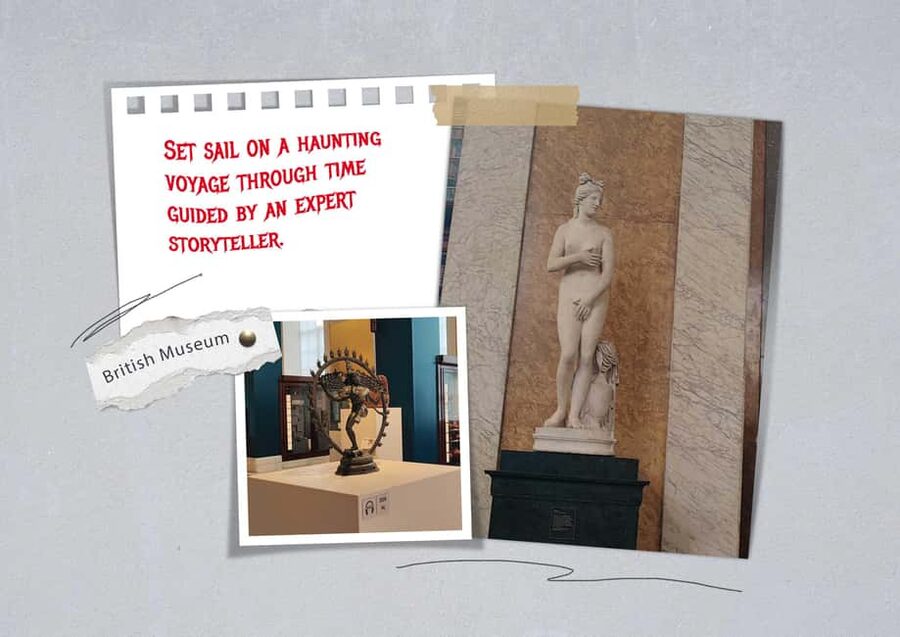
The tour is led in English by an expert storyteller and is limited to eight participants. That small cap matters in a large museum: it can make it easier to hear the guide, stay together, and ask a question without having to compete with a crowd. The atmosphere is described as friendly and professional, with storytelling at the center.
The route is presented through several ancient cultures and later European art. The exact order of stops is not specified, so think of the themes below as the tour’s main threads rather than a guaranteed minute-by-minute sequence.
The Rosetta Stone and the work of reading the past
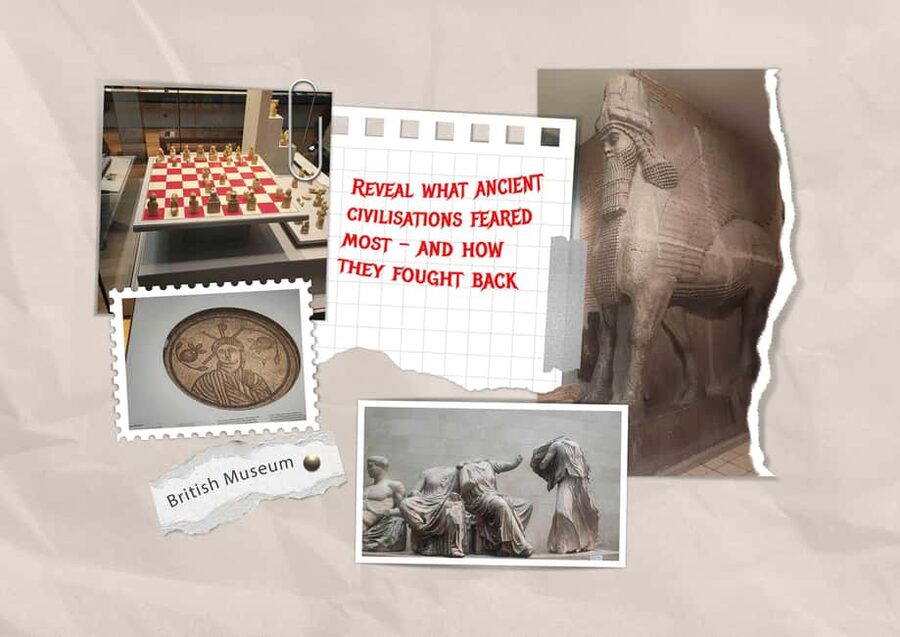
The Rosetta Stone is one of the tour’s headline objects because it helped researchers decipher Egyptian hieroglyphs. Its importance is not just that it is famous. It gives the guide a practical way to explain how people make sense of the past: a written object can hold a message for centuries, then become readable when scholars find the right key.
That story makes a good opening point for a museum visit. You’re not only looking at a stone; you’re considering how knowledge is recovered and how a single object can change what we understand about a civilization. If you have already seen pictures of it, a guide can add context that a quick look alone may not provide.
The tour also makes room for Mesopotamia, a region associated in the experience’s themes with inventions such as the wheel, siege engines, and advances in farming. The useful question is what such early innovations mean to us now. Rather than treating the past as distant and sealed off, the tour asks you to notice the ways earlier ideas continue to shape everyday life.
More British Museum visits in London:
- London: British Museum Guided Tour
★ 4.3 · 1,182 reviews - British Museum London Guided Tour Semi-Private 8ppl Max
★ 5.0 · 984 reviews - London: Tour of the British Museum
★ 4.1 · 678 reviews
Greek sculpture and the changing ideal of beauty
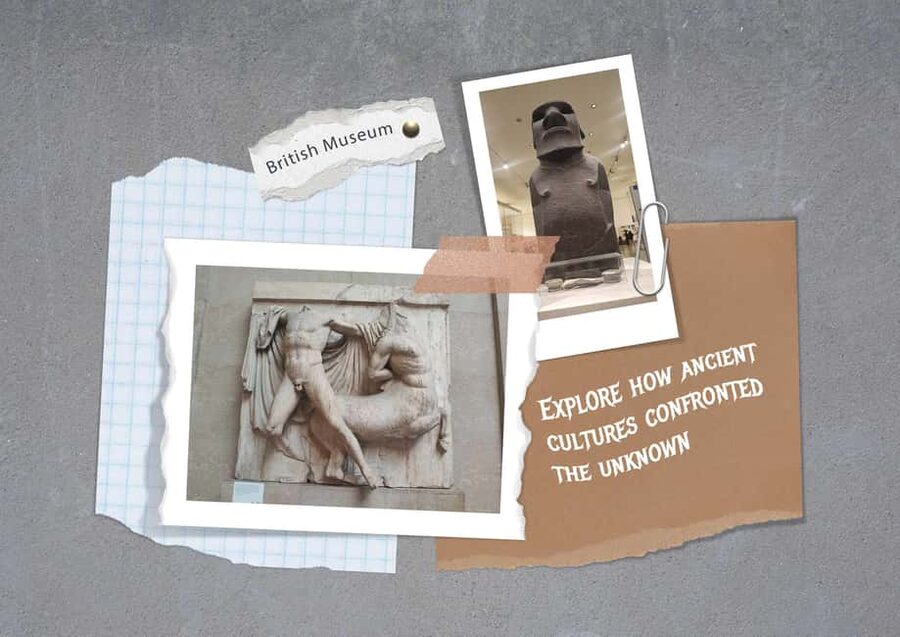
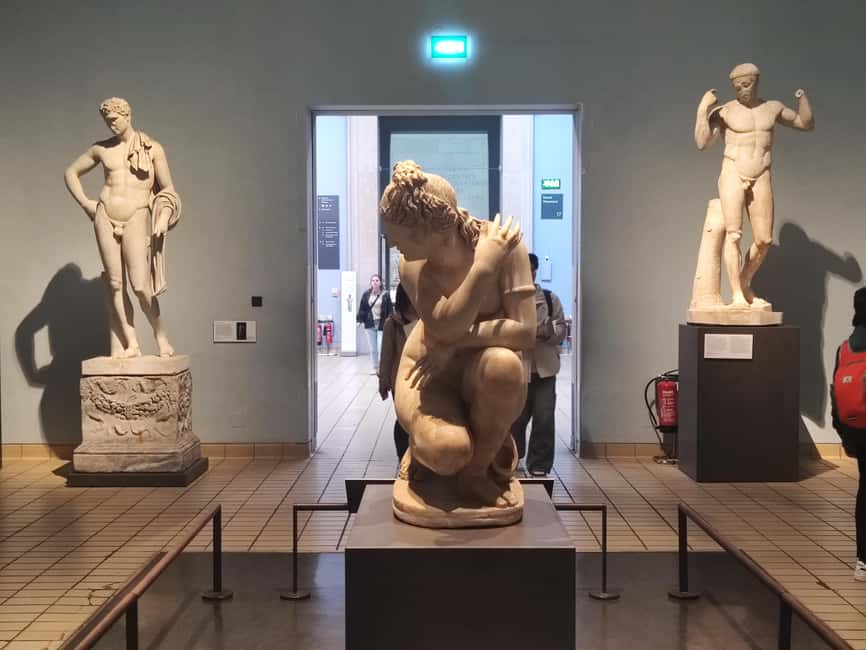
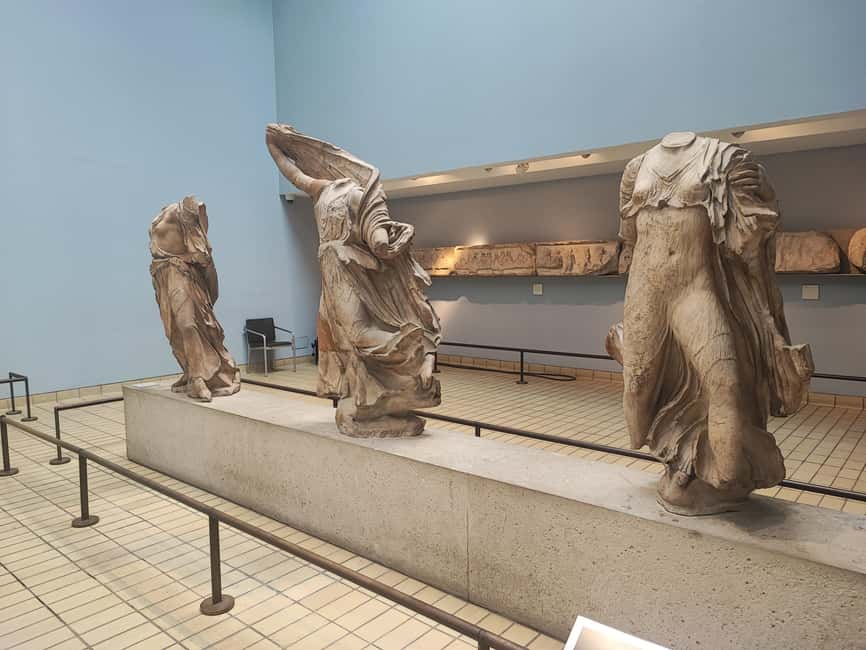
The Parthenon Marbles provide the clearest link to the tour’s central theme. Ancient Greece is associated with philosophy, democracy, theatre, and art, and here the guide asks whether it also helped shape the standards of beauty that persist today.
That question gives you a way to look at the marbles with more purpose. Instead of simply noting their age or scale, you can consider what Greek art valued and why later generations kept looking back to it. The tour connects the objects to ideas about art and culture, while leaving room for you to think about how standards of beauty change over time.
There is a natural limitation. A two-hour visit cannot cover every debate about the marbles or Greek art, and the description does not promise a specialist art-history lecture. If you want an extended study of the Parthenon sculptures, you may want to return on your own after the tour. If you want an accessible introduction with a strong central theme, this stop should give you plenty to think about.
Egyptian mummies, medicine, and life after death
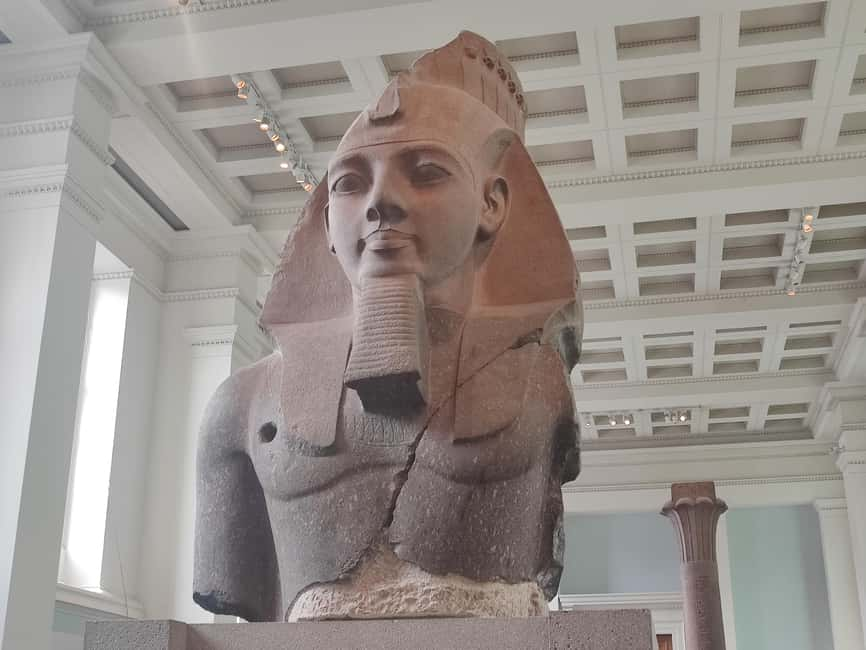
Egypt’s contribution to the route is not limited to pyramids and hieroglyphs. The mummies bring the tour’s questions about beauty into contact with mortality, ritual, and beliefs about what happens after death. The experience frames this stop as a chance to contemplate the dance of life and death alongside the preserved dead.
A guide can help you look past the immediate spectacle of a mummy and consider what preservation meant to the people who practiced it. The tour also connects ancient Egypt with advances in medicine. These are rich subjects for a short visit, though the time available means you should expect an introduction rather than a full treatment of Egyptian beliefs or medical history.
The museum’s mummies can be an intense stop, particularly for children or anyone uncomfortable with human remains. The tour description does not set an age limit, but it is worth considering your own comfort before booking. For many visitors, this is precisely the kind of object that makes a museum feel less abstract: it asks you to confront the same questions about the body and death that people have faced for thousands of years.
India, rebirth, and the search for inner peace
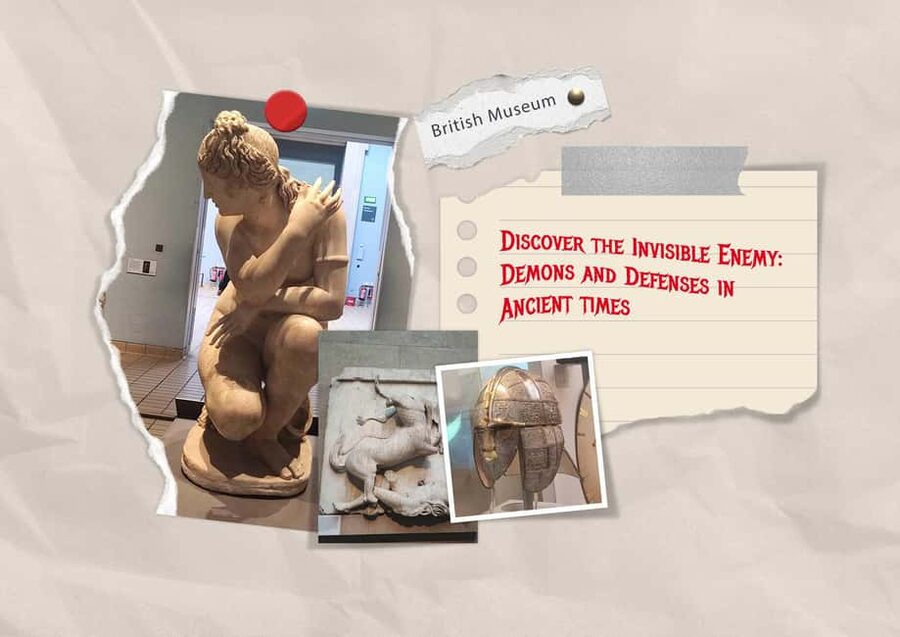
The tour’s Indian themes widen the discussion beyond physical beauty. Yoga, rebirth, and paths to enlightenment are introduced as ideas that still influence how people think about life and the soul. The guide asks how these beliefs continue to matter in the modern world.
That connection is useful if you want the visit to reach beyond a sequence of ancient civilizations. It encourages you to consider how beliefs travel through time and remain part of modern life. The experience does not specify a particular Indian object or gallery for this part of the tour, so it is best to treat it as a thematic conversation rather than expect a named highlight comparable to the Rosetta Stone.
More city highlights tours in London:
- London: City Sights Hop-On Hop-Off Bus & Bookable Extras
★ 4.4 · 6,579 reviews - London: London by Night Sightseeing Open-Top Bus Tour
★ 4.5 · 5,516 reviews - London: Tootbus Must-See Hop-On Hop-Off Bus Tour with Cruise
★ 4.0 · 3,653 reviews - London: River Thames Hop-On Hop-Off Sightseeing Cruise
★ 4.4 · 3,112 reviews
Tragic love stories told through art
The tour also looks at how earlier societies represented love and fate. Tragic love stories, the guide’s theme suggests, could stir powerful emotions in their audiences, much as they do now. Art becomes a record not only of what people made, but of what moved them.
This stop may be especially appealing if you enjoy stories as much as dates and object labels. The tour promises to explore how ancestors presented these timeless tales, though it does not name the particular works or stories. That means the exact examples may depend on the guide’s selection, and you should not book expecting one specific myth or artwork.
Medieval images and the lesser-known stories of Jesus
The final thread reaches medieval art and stories about Jesus that sit beyond the traditional accounts. The experience describes these as bonus narratives, with the image of a comic book offering a playful way to think about how stories were told and shared.
The subject gives the tour a chance to discuss how religious figures and stories were represented in art. It may also surprise visitors who know only the best-known accounts. As with the love-story section, no specific artwork is named in advance, so the value lies in the guide’s explanation and the broader question of how communities shaped and passed on stories.
What the small group and express entry mean
At $33.67 per person, this is a paid guided experience in a major museum, not a ticket to a private collection. The price is easiest to justify if you value a focused route and a storyteller who can connect objects to larger ideas. If you prefer to browse at your own pace or already know the museum well, an unguided visit may suit you better.
Express security entry is included. That is useful, but it should not be read as a promise that you will bypass every possible wait or enter through a private door. The meeting point is the group entrance at the British Museum’s Edward VII’s Entrance, where the guide will hold a My London Guide sign.
There is a small but practical note about entry: a tour participant described an entry problem involving museum staff that the guide resolved. That is a reassuring example of having someone there to help, but it is also a reminder to arrive at the stated meeting point and give yourself enough time to find it. No individual guide name is provided.
The activity ends back at the meeting point. Food and drinks are not included, and hotel pickup and drop-off are not provided, so plan your own route to and from the museum.
Preparing for the museum’s rules and walking
Wear comfortable shoes. The tour involves a moderate amount of walking, and the museum visit is not suitable for wheelchair users or people with mobility impairments. If you need step-free access or a slower route, confirm whether this tour can meet your needs before booking; the stated suitability guidance is restrictive.
Large bags and backpacks are not allowed inside the museum. Bring a camera if you like, but use it without flash. Food and drinks are not permitted inside the exhibition halls, so have a snack or drink before or after the tour rather than expecting to carry refreshments through the galleries. Water is listed as something to bring, but the exhibition-hall restriction still applies.
The reported score is 5 out of 5 from four reviews, a very small sample. Two comments are available in detail: one calls the tour very good and detailed, while also noting that the guide solved an entry problem; another simply describes it as a wonderful experience. The praise points most clearly to detailed guiding and help with an entry snag, but four ratings are too few to guarantee that every visit will be identical.
Who should book this British Museum tour?
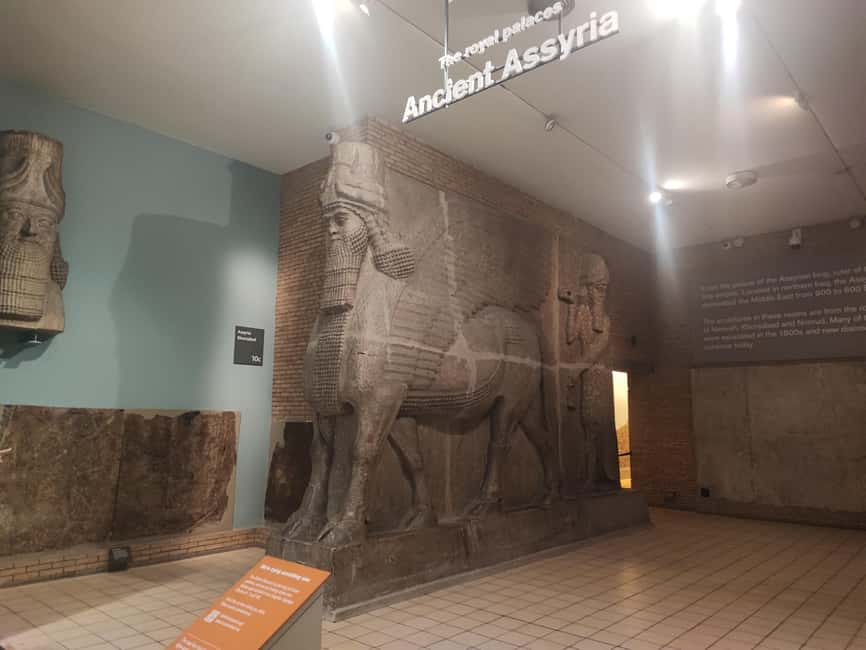
This tour suits first-time visitors who want a manageable introduction to the museum, especially if you enjoy art with a story attached. Its small group, two-hour length, and connected themes make it a sensible choice when you want more than a self-guided stroll but do not want to spend a full day following a specialist route.
It is also a good fit if you are curious about how ideas travel between cultures. Greek beauty, Egyptian death rituals, Mesopotamian inventions, Indian beliefs, tragic love, and medieval Christian stories form a broad sweep. You’ll get the most from it if you are comfortable with a brisk, walking-based visit and happy to explore selected highlights rather than see every gallery.
You may want a different option if you need wheelchair access, have limited mobility, want to study one civilization in depth, or prefer to set your own pace. The themes are broad, and some stops are described without naming the precise object. If that flexibility sounds appealing, the guided storytelling is the main reason to book.
My call: Book it if you want a compact, thoughtful introduction led by a small-group guide, with famous objects tied to questions that still matter. Skip it if you need an accessible route or would rather spend your two hours choosing your own galleries. At this price, the value comes from the stories and connections, not from trying to see the whole British Museum.
FAQ
How long does the tour last?
The tour lasts about two hours.
What is the maximum group size?
The group is limited to eight participants.
What language is the tour in?
The live tour guide speaks English.
Where does the tour start?
Meet at the group entrance to the British Museum, Edward VII’s Entrance. The guide will hold a My London Guide sign.
Where does the tour end?
It ends back at the meeting point.
Is express entry included?
Yes. Express entry through the security check is included.
What is included in the price?
The experience includes a guided tour with an expert storyteller, about two hours of touring, express security entry, and a small-group setting.
Are food and drinks included?
No. Food and drinks are not included, and food and drinks are not permitted inside the exhibition halls.
Can I bring a backpack or take photographs?
Large bags and backpacks are not allowed inside the museum. Photography is allowed without flash.
Is the tour suitable for wheelchair users?
No. The activity is listed as unsuitable for wheelchair users and people with mobility impairments.
More museum visits in London
- Tower of London and Crown Jewels Exhibition Ticket
★ 4.5 · 6,677 reviews - London: Chelsea Football Club Stadium and Museum Tour
★ 4.8 · 4,576 reviews - Chelsea FC Stadium Tours and Museum
★ 5.0 · 1,908 reviews - Official tickets: Moco Modern & Contemporary Art Museum
★ 4.5 · 1,157 reviews
Just reviewed in London
- London Royal Tour – Buckingham Palace Entry – 12 guests 2,5h★ 4.9 · 14 reviews
- Royal London Tour incl Buckingham Palace & Changing of Guard★ 3.8 · 33 reviews
- Royal London Walking Tour★ 3.9 · 11 reviews
- London: Royal London Tour★ 3.7 · 46 reviews
- London: Royal Tour with Westminster Abbey & Afternoon Tea★ 3.0 · 3 reviews
- London: Tower of London & Changing of the Guard Experience★ 4.6 · 92 reviews
- London: Professional Private Photoshoot and Edited Photos★ 5.0 · 4 reviews
- London: Kensington Palace Tour, Guard Change & Afternoon Tea★ 4.3 · 22 reviews
British Museum Tours, compared.
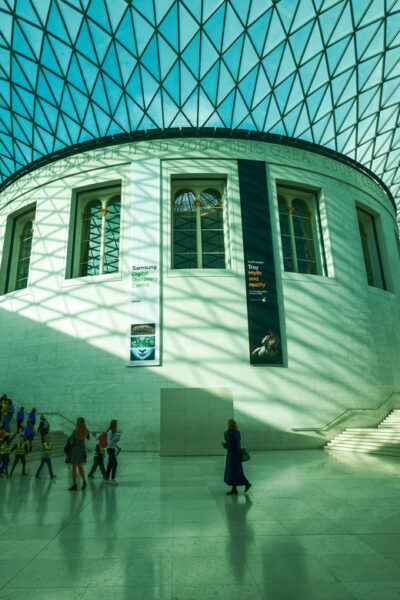
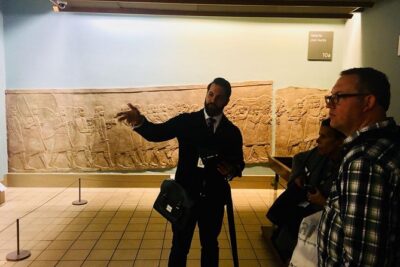
British Museum London Guided Tour Semi-Private 8ppl Max
Read our review →
British Museum Audio Tour & Priority Entrance Ticket
Read our review →
The British Museum London – Exclusive Guided Museum Tour
Read our review →
British Museum & National Gallery of London Semi-Private 8ppl Max
Read our review →
British Museum Archaeology Course and Guided Tour
Read our review →
British Museum Guided Tour with Priority Entrance
Read our review →Browse the lists this tour appears in