
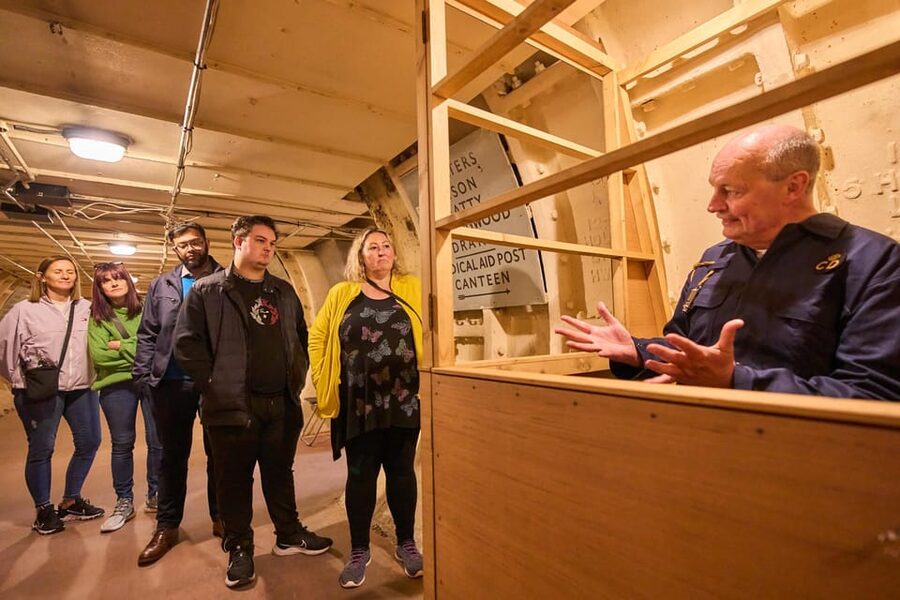
Reviewed · LONDON HIDDEN TUBE STATION TOURS
Clapham South: Subterranean Shelter Guided Tour
Clapham South’s wartime shelter is a mile-long maze beneath an ordinary Tube station. I like two things in particular: you can see the original bunks where people slept during air raids, and the tour connects wartime shelter life with the later arrival of Caribbean migrants on the Empire Windrush.
The guides bring the story to life with personal accounts and a role-played 1940s ARP warden. The main drawback is practical: you’ll walk on uneven ground in low light, use static escalators and spend 75 minutes underground, so this is not a good choice if you have claustrophobia or mobility limitations.
What makes this tour worth your time
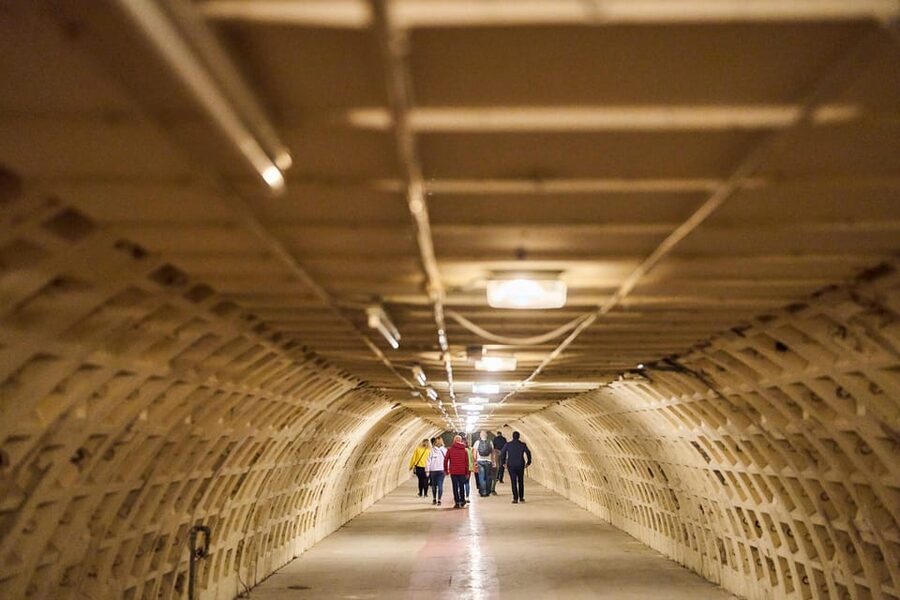
- Thirty metres below South London: Descend 11 stories beneath Clapham South station into a network of tunnels more than a mile long.
- A shelter built for more than 8,000 people: See the spaces designed for sleeping, eating and basic medical care during air raids.
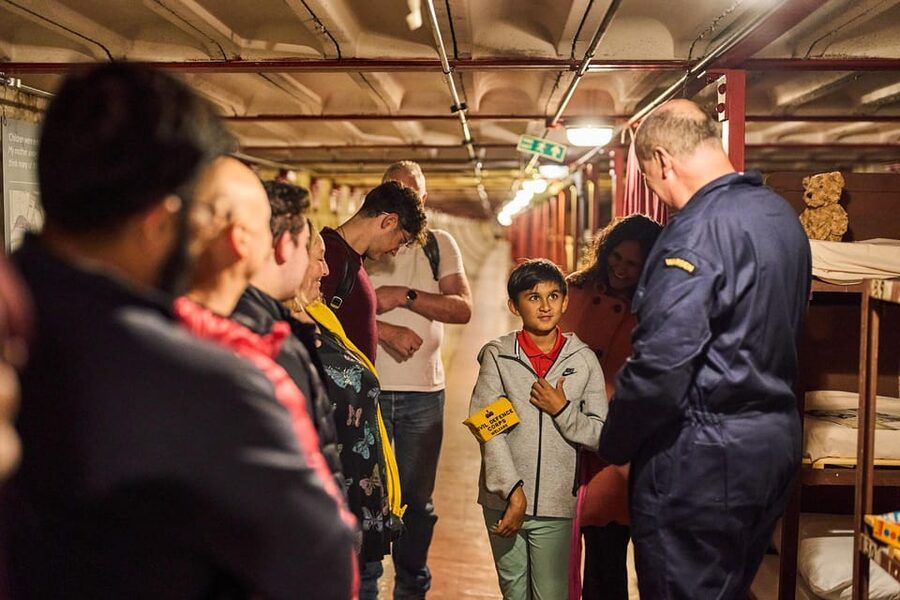
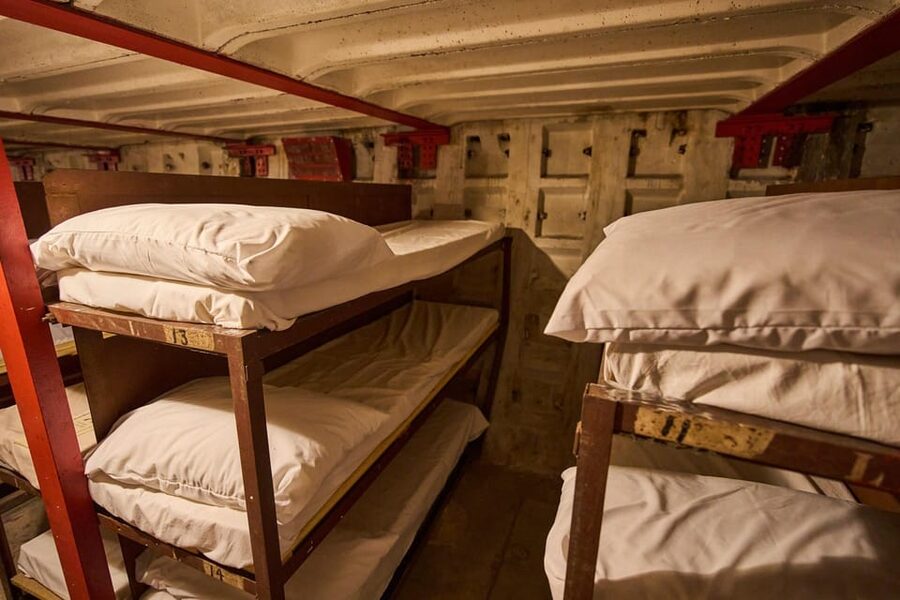
- Original bunks and occupant graffiti: Look closely at the cramped sleeping places and marks left by people who stayed here.
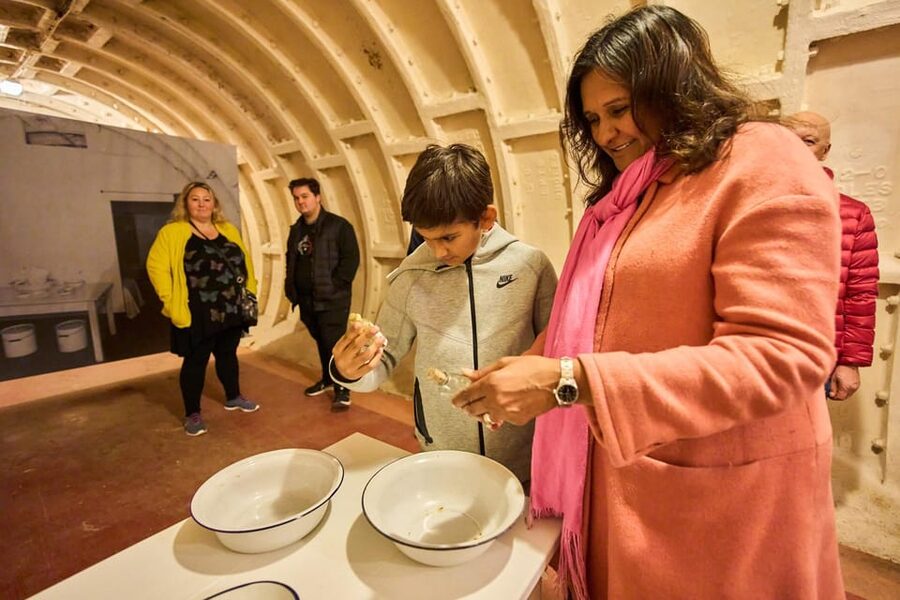
- Wartime scenes brought back to life: Visit a recreated warden’s cabin and canteen, and handle genuine Second World War objects.
- More than a wartime story: Hear about Caribbean migrants arriving on the Empire Windrush and people who stayed in the shelter during the Festival of Britain.
Beneath Clapham South station
The tour starts above ground, at the Marks & Spencer Food Hall on Balham Hill, a short walk from Clapham South station. From there, the guides lead you below the Tube station and down 11 stories, around 30 metres, into a site most people passing overhead never see.
That descent sets the tone. You are not entering a museum gallery built to resemble a shelter. You are exploring a real underground complex, constructed in the 1940s and opened in 1944. The space has a functional, enclosed feel, and the sound of Northern line trains passing above helps make the setting tangible.
The shelter is one of eight deep-level air raid shelters built beneath London. Its tunnels stretch for more than a mile, and the site was designed to hold over 8,000 people. That scale matters: this was not a small refuge for a few nearby households, but a large public shelter with sleeping, food and medical facilities.
You have 75 minutes with a guide, so expect a focused visit rather than time to wander alone. The tour is led in English, and the guides shape the experience with historical explanation and a role-played ARP warden. No guide names are provided, but the warden character is a distinctive part of the presentation.
More hidden Tube station tours in London:
- Aldwych: Hidden Tube Station Guided Tour
★ 4.8 · 54 reviews - London: Hidden Baker Street Tube Station Tour
★ 4.7 · 51 reviews - London: Guided Tour of Hidden Tube Station at Charing Cross
★ 4.7 · 20 reviews
Seeing how a mass shelter worked
A shelter’s capacity tells only part of the story. The details that make the tour useful are the spaces built to support daily life: a canteen, medical stations and sleeping quarters. These facilities help you picture the shelter not simply as a tunnel to flee into, but as somewhere people had to eat, rest and manage the strain of spending a night underground.
The shelter’s cramped bunks are among the most affecting sights. Thousands slept here during air raids, and the original beds give you a clear sense of how little personal space was available. They are now used as benches, so you can sit on the same fittings that families relied on during those frightening nights.
That physical scale is worth keeping in mind. A brief look at a bunk tells you more about crowded conditions than a long panel of statistics might. You can see how close people would have been to one another, and why a supposedly safe night could still have been uncomfortable and unsettling.
The tour also uses newly refurbished areas to show how parts of the shelter may have looked in wartime. The warden’s cabin and canteen have been carefully recreated from research in the museum’s archives. These scenes offer context, but the original structure remains the main attraction: the contrast between preserved tunnel space and reconstructed rooms helps distinguish what has survived from what has been restored.
Meeting the ARP warden
One of the two guides takes the role of a 1940s ARP warden. This character-led approach gives the history a human scale and helps you follow the experience through the imagined first night of a South London family arriving at the shelter.
The role-play is most useful as a frame for practical questions: what might a family have needed, where would people sleep, and how would an enormous shared refuge function? It gives the guide a way to move beyond dates and construction details, while the second guide helps support the tour.
The performance element will not suit everyone equally. If you prefer a purely factual lecture, the warden’s role may feel theatrical. But it is grounded in the site’s history, and it helps make the routines and pressures of shelter life easier to picture without turning the tour into a stage show.
There are also genuine Second World War artefacts to handle, including torches. You can see what an Anderson shelter looked like and sit on the original bunks. These hands-on moments are valuable because the building is large and the subject can feel abstract; an object held in your hand brings it down to human scale.
Reading the walls and hearing the stories
Keep an eye out for graffiti left by shelter occupants. These marks are small traces of individual lives in a place designed for thousands, and they offer a different kind of evidence from the recreated rooms or formal historical account. They are easy to pass by if you focus only on the guide, so take a moment to look carefully as you move through the tunnels.
The tour also moves beyond the air raid years. In the post-war period, the shelter was used in other ways, including as accommodation for the first Caribbean migrants to Britain arriving on the Empire Windrush. You’ll hear accounts connected with those arrivals and see beds where many spent their first nights in London.
This connection gives the site a broader story. The shelter was built for a wartime emergency, but its later use reflects a changing city and the practical needs of people arriving in Britain. The tour also refers to visitors to the Festival of Britain, showing how the site served people in more than one chapter of London’s recent past.
The personal accounts are a key reason to choose this visit over a general history talk. Instead of treating the shelter as a sealed wartime relic, the guides link the tunnels to people who slept, worked or arrived here. That mix of accounts makes the visit relevant even if you already know the basic outline of London’s wartime history.
More guided tours in London:
- Magical London: Harry Potter Guided Walking Tour
★ 4.7 · 22,044 reviews - London: Emirates Stadium Entry Ticket and Audio Guide
★ 4.7 · 5,513 reviews - Stonehenge, Windsor Castle and Bath Full Day Guided Tour
★ 4.5 · 5,346 reviews - London Jack the Ripper Guided Tour with Ripper-Vision
★ 4.5 · 4,840 reviews
The pace, the setting and the limitations
This is a walking tour through a large underground site, not a relaxed sit-down visit. The route includes uneven ground, low lighting and walking up and down static escalators. Wear sturdy, comfortable shoes and clothing suited to the weather for the above-ground meeting and departure.
The low light and enclosed tunnels are part of what makes the place feel real, but they are also important limits. The tour is not suitable for people with claustrophobia, and it is not step-free. It is also unsuitable for people with mobility impairments and children under 10.
There is no cloakroom, and large bags and luggage are not allowed. Food and drinks are also prohibited inside the tour. Bring ID or a passport, as well as comfortable shoes, and arrive 15 minutes before the start time. The meeting point is in front of the Marks & Spencer Food Hall at Balham Hill, SW12 9EA, about a two-minute walk from Clapham South station. On leaving the station, turn right.
Travel to and from the station is not included. This is a useful detail when weighing the total cost and timing, especially if you are fitting the visit around other London plans. The tour itself lasts 75 minutes, a manageable block for most people, but allow additional time to reach the meeting point and get your bearings.
Is $51 a fair price?
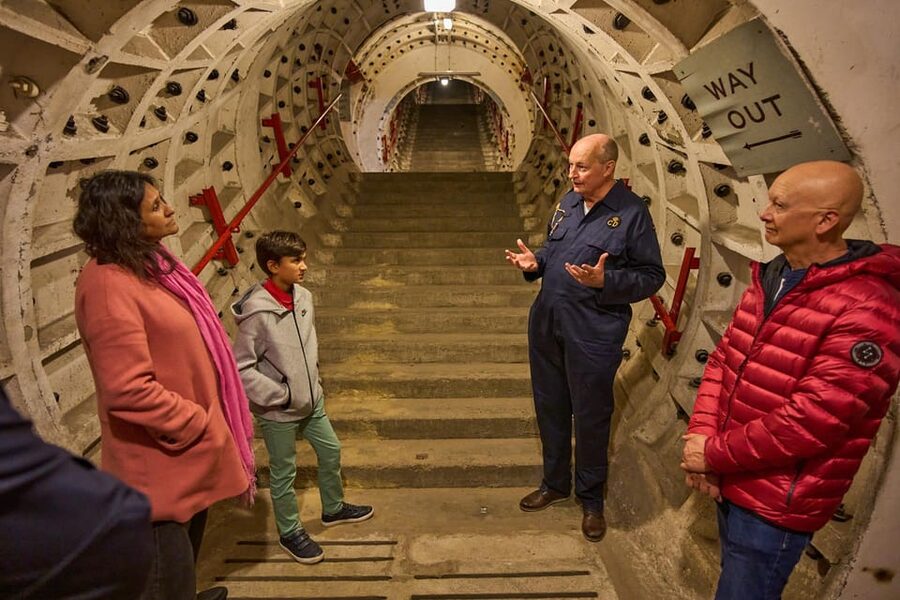
At $51 per person, this is not the cheapest way to spend an hour in London. You are paying for access to a normally closed historic site, a guided route through a large underground structure, and interpretation that connects wartime use with post-war migration. The original bunks, graffiti, artefacts and recreated spaces give the tour more substance than a simple walk through empty tunnels.
The value depends on what interests you. If you enjoy social history, London’s wartime past or places that show how ordinary people lived through major events, there is plenty to take in. The Windrush story adds another layer that makes the visit more than a narrow account of air raids.
If you mainly want grand architecture, polished museum displays or a self-paced visit, the price may feel harder to justify. Much of the appeal comes from the guide’s storytelling and the atmosphere of the site, not from a long list of separate exhibits. The compact 75-minute format is efficient, but it also means the tour moves at a set pace.
The tour has received five-star ratings, with particular praise for the guides’ enthusiasm, organization and ability to make the history feel real. The role-played warden was singled out as effective. That is a good sign if guided interpretation matters to you, though the experience remains a better fit for people comfortable with theatrical storytelling and underground spaces.
Who should book the Clapham South tour?
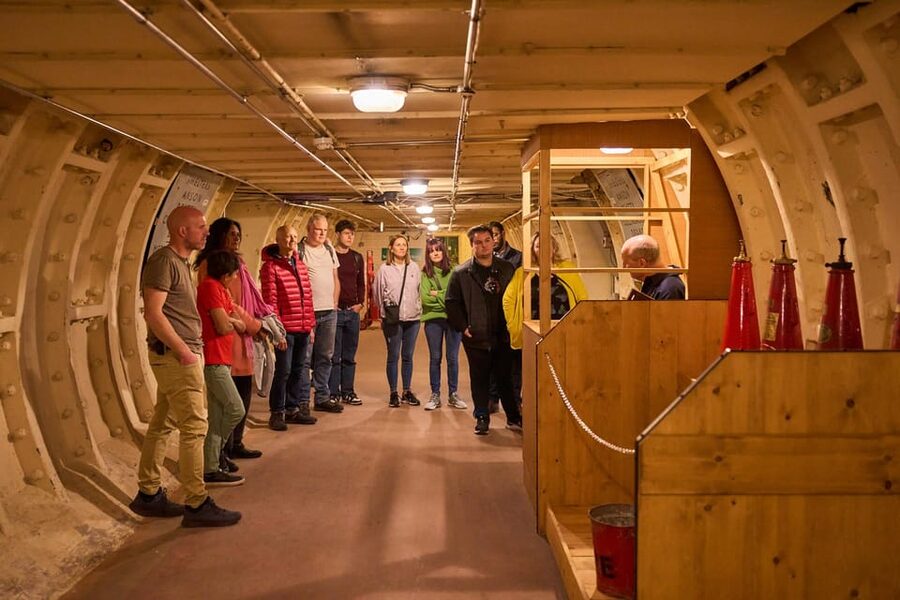
I’d recommend this tour to anyone curious about how Londoners managed air raids, or anyone who wants to understand the city through places that are still tied to everyday life. The sound of trains above, the cramped sleeping spaces and the occupant graffiti offer details that a surface-level account of the Blitz can miss.
It is also a strong choice if you want to connect wartime history with Britain’s post-war story. The Windrush accounts and the shelter’s later uses give the visit a wider focus, and make it especially worthwhile if you are interested in migration and the changing character of London.
Think twice if you dislike enclosed spaces, need step-free access, have mobility limitations or are bringing a child under 10. The route’s uneven ground, low light and static escalators are not minor details; they shape the whole visit. For everyone else, this is a distinctive, well-guided way to spend 75 minutes below South London, with plenty of real history underfoot.
FAQ
How long is the Clapham South shelter tour?
The guided tour lasts 75 minutes.
How far underground does the tour go?
The shelter is around 30 metres underground, or 11 stories below Clapham South station.
How long are the shelter tunnels?
The underground network extends for more than a mile.
Where is the meeting point?
Meet in front of the Marks & Spencer Food Hall on Balham Hill, SW12 9EA. It is about a two-minute walk from Clapham South station.
How early should I arrive?
Arrive 15 minutes before your tour time.
What language is the tour in?
The live guided tour is in English.
Is the tour suitable for children?
Children under 10 are not suitable for this tour.
Is the tour accessible for people with mobility impairments?
No. The tour is not step-free and includes walking up and down static escalators. It is not suitable for people with mobility impairments.
What should I wear and bring?
Wear comfortable, sturdy shoes and weather-appropriate clothing. Bring a passport or ID card.
Can I bring food, drinks or a large bag?
No. Food, drinks, luggage and large bags are not allowed, and there is no cloakroom.
Just reviewed in London
- Doctor Who London Walking Tour★ 4.9 · 137 reviews
- From London: Windsor, Stonehenge, & Salisbury Cathedral Trip★ 3.8 · 46 reviews
- Destination London: E-Bike Tour★ 5.0 · 3 reviews
- Cardiff Day Tour from London with Local Guide (Visit Wales)★ 4.0 · 20 reviews
- Devon and Cornwall: 5-Day Tour from London★ 4.7 · 115 reviews
- Camden: Explore London’s Creative Side with a Local Host★ 4.9 · 10 reviews
- From London: Oxford, Stratford, Cotswolds & Warwick Castle★ 4.3 · 110 reviews
- London: Guided E-bike Tour★ 4.6 · 63 reviews
London Hidden Tube Station Tours, compared.
Guided Tour of Hidden Tube Station at Charing Cross
Read our review →
Hidden Tube Tour – Piccadilly Circus: The Heart of London
Read our review →Browse the lists this tour appears in