
Reviewed · LONDON HIDDEN TUBE STATION TOURS
London: Hidden Tube Tour of Holborn’s Secret Platforms
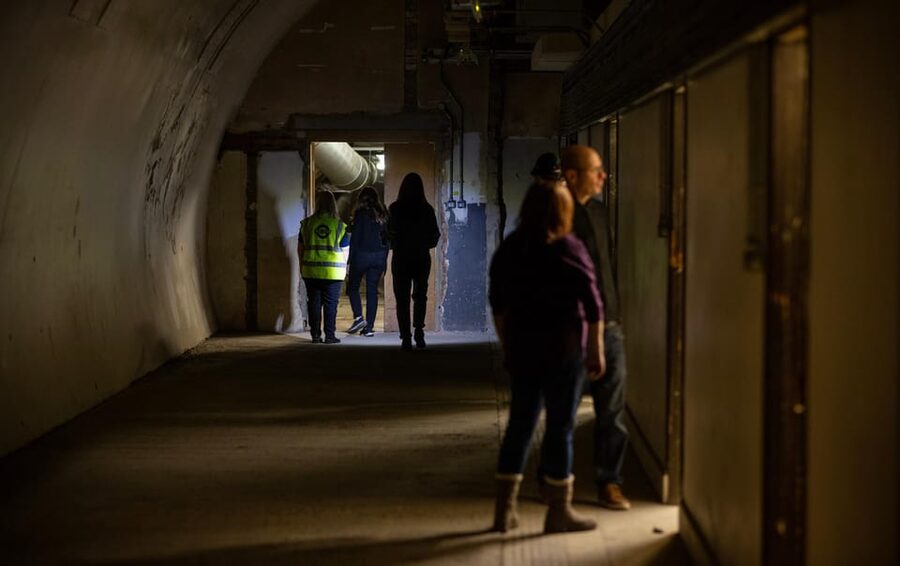
Holborn has more going on than the trains rushing through its open platforms. On this 85-minute guided tour, you step behind concealed doors into disused station spaces, including two former Aldwych branch platforms that have been closed to the public for decades.
I like two things in particular: the chance to see original Edwardian design and an early signalling cabin up close, and the human stories of how these spaces served Londoners in wartime and beyond. One thing to weigh carefully: there are stairs, uneven ground and low lighting, with no elevators, so this is not a comfortable choice if you have mobility concerns or claustrophobia.
- Two closed Aldwych platforms reveal the remains of a little-used branch line, including vintage posters and original Leslie Green design.
- A view of the Piccadilly line gives you an unusual look at a working part of Holborn station.
- An early signalling cabin offers a glimpse of the equipment behind the Underground’s operation.
- The station’s past uses include scientific laboratories, wartime shelter for London Transport staff and a model rail club.
- The guide-led format connects the physical spaces to the people who worked in and used them.
- Practical note: bring ID, water and comfortable closed shoes. Large bags, food and drinks are not allowed.
Behind Holborn’s concealed doors
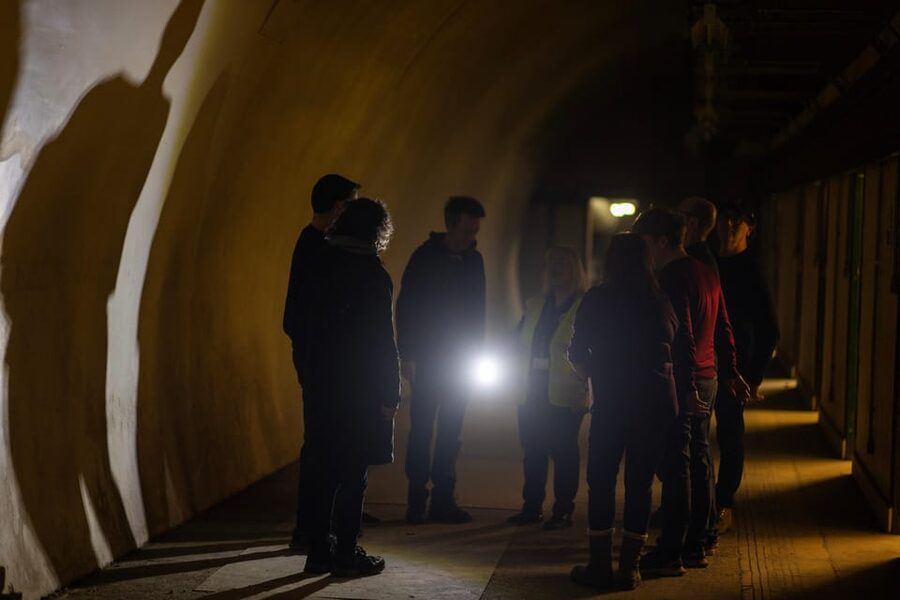
Holborn opened in 1906 as a four-platform station serving the Piccadilly line. Today, it is a busy interchange in central London, but the tour takes you into spaces most passengers never see. The contrast is the point: just beyond the familiar station, old platforms and work areas preserve a different chapter of Underground life.
You meet the guide on the corner of Gate Street and Kingsway, then head into station areas normally off-limits to the public. The tour is run by the London Transport Museum, whose focus on the city’s transport history gives the visit a useful frame. You are not simply looking at old railway fixtures; you are hearing how the station’s design and changing role fitted into London’s growth.
The guide’s explanations are a major part of the appeal. The small amount of available feedback specifically praises the guides, and that makes sense for a tour where much of the value lies in connecting physical details to stories. Old platforms can look like empty rooms without context. A good explanation helps you picture the staff, passengers and changing uses that made them matter.
Two Aldwych platforms, frozen in time
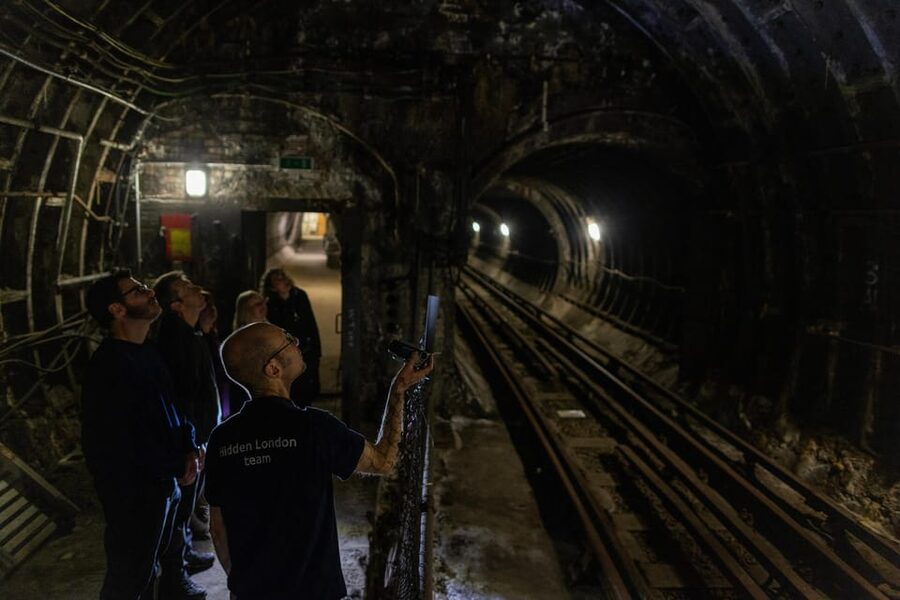
The tour’s central draw is the pair of closed platforms from the former Aldwych branch. This little-used line is a reminder that the Underground was not built as one fixed system. Routes and stations changed as London’s needs shifted, leaving some spaces behind the scenes while the rest of the network continued to grow.
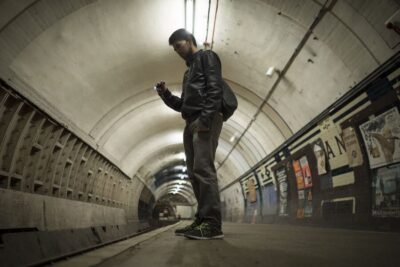
On the platforms, look for vintage posters and the original Leslie Green Edwardian design. These details give the spaces a period feel without turning them into a staged museum display. The station’s old surfaces and fittings are part of the setting, and the guide can help you read them as evidence of how the Underground once looked and worked.
You can also see an original early 20th-century signalling cabin. For anyone interested in railways, this is more than an attractive relic: it points to the practical systems that helped control train movements. Even if you are not a technical rail enthusiast, seeing the cabin in its station setting makes the network’s behind-the-scenes work easier to imagine.
The platforms have been closed for about 30 years, and some of the disused areas have not been seen by the public in nearly that long. That sense of access is a real part of the value. This is not just a walk past old photographs or a display case; you enter spaces that have remained out of everyday view.
More hidden Tube station tours in London:
- Aldwych: Hidden Tube Station Guided Tour
★ 4.8 · 54 reviews - London: Hidden Baker Street Tube Station Tour
★ 4.7 · 51 reviews - London: Guided Tour of Hidden Tube Station at Charing Cross
★ 4.7 · 20 reviews
A working station and a view of the Piccadilly line
Holborn is not only a relic. The tour also gives you an unexpected view of the Piccadilly line, bringing the old and current Underground together in one visit. You can see how the station’s hidden spaces sit alongside a network still moving people through central London.
That connection matters. Historic stations can feel remote from present-day travel, but Holborn remains part of an active system and is playing a role in a major signalling upgrade. The tour places its early equipment and old platforms beside the Underground’s continuing modernization, showing that transport history is not simply a story of what has ended.
The contrast can help you notice how much infrastructure lies outside a passenger’s usual view. When you travel through a station, you mostly see the concourse, signs and platform edge. Here, the guide takes you behind the visible layer and explains how design, technology and changing use shaped the station over time.
From a 1906 station to a changing district
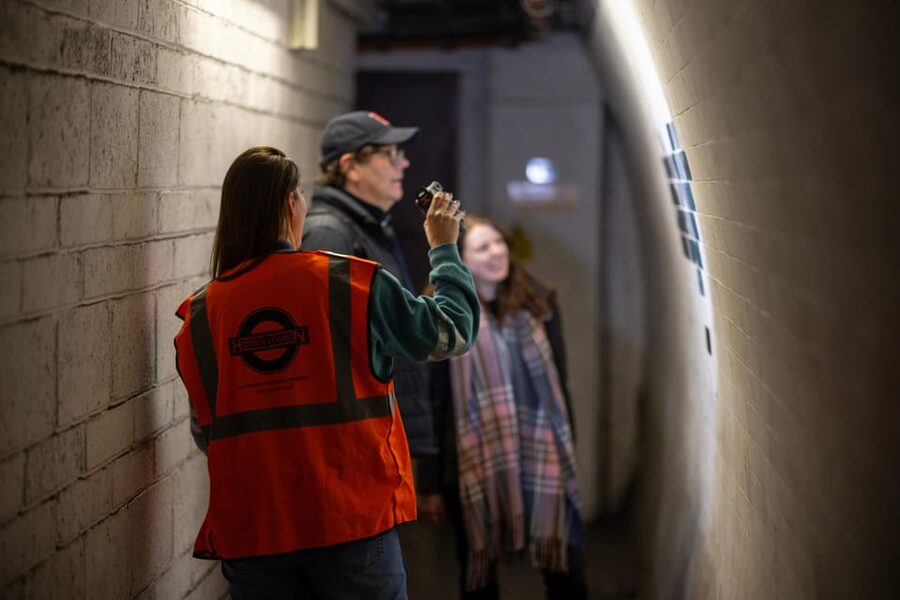
Holborn’s story also reaches beyond the railway. When the station opened in 1906, it was part of a transport system serving an area that later became a prime business district. The station’s presence helped reshape its surroundings, turning a district once associated with a less reputable reputation into a central place of work and commerce.
The tour also covers the 1930s modernization programme. That project led to the closure of nearby British Museum station, a reminder that expanding or upgrading a network can make older facilities redundant. For visitors with an interest in London’s streets and transport, this is a useful link between what happened underground and how the city above it changed.
The history is not presented only as a string of dates. You hear how the station and Aldwych branch were used in surprising ways over the years, including as scientific laboratories and as a home for a model rail club. These later chapters show how disused railway spaces can take on new purposes rather than simply sitting idle.
Wartime shelter and the people behind the railway
One of the tour’s more human threads is the use of station spaces as shelter for London Transport staff during the Blitz. The guide discusses how staff may have felt working there during the height of the bombing. That framing matters: it shifts the story from architecture and machinery to the people who kept the transport system running in difficult conditions.
You should expect historical interpretation, not a dramatic re-creation. The value is in standing in the actual spaces while considering how they served people under wartime pressure. The guide also shares first-hand accounts from those who worked in and used Holborn and the Aldwych branch, giving the station’s past a personal scale.
For visitors who enjoy London history, these stories can be more affecting than a long list of technical details. They show that a station is not just a place trains pass through. It can become a workplace, shelter, laboratory or club, depending on what the city needs.
More tours and experiences in London:
- London: The London Eye Entry Ticket
★ 4.6 · 35,875 reviews - From London: Harry Potter Warner Bros Studio Tour
★ 4.7 · 26,588 reviews - Magical London: Harry Potter Guided Walking Tour
★ 4.7 · 22,044 reviews - London: Madame Tussauds London
★ 4.6 · 20,915 reviews
What the 85 minutes feel like
The tour lasts 85 minutes and is guided in English. Expect a steady walking visit through station areas, not a sit-down talk. The route includes stairs, uneven ground and low lighting, and there are no elevators. Comfortable shoes are essential; open-toed shoes are not allowed.
Because the tour enters restricted areas, follow the guide’s directions and be prepared for a less polished environment than a conventional museum gallery. These are working and disused station spaces, not a fully accessible exhibition route. If you are uneasy in confined settings, claustrophobic, or have difficulty with stairs, choose another activity.
The meeting point is on the corner of Gate Street and Kingsway, WC2B 6AA. The tour ends back at the same place, so you do not need to arrange transport between a start and finish point. Bring a passport or ID card and water. Food, drinks and luggage or large bags are not allowed.
Children must be at least 10 years old. There can be no more than four children aged 10 to 15 per adult, so families should check that ratio before booking. The tour’s walking conditions also make it a better fit for older children who can manage stairs and dimly lit spaces.
Is $60.61 good value?
At $60.61 per person, this is a specialist tour rather than a budget way to see the Underground. The price makes most sense if you value access to closed station spaces and want a guide to explain the station’s history as you move through it. You are paying for a limited-access experience, not simply for a short walk around a public station.
The 85-minute length is compact enough to fit into a day of London sightseeing, but it is still long enough to cover several distinct themes: the Aldwych branch, Edwardian design, signalling, the 1930s modernization and wartime use. If you are already interested in transport history, the range of stories makes the cost easier to justify.
For a casual visitor with little interest in the Underground, the price may feel high for a tour focused on one station. You will get the most from it if you enjoy the details of how cities work, want to see places normally closed to the public, or have already seen London’s major landmarks and are looking for a more specific subject.
There are only seven published ratings, so the perfect score is a small sample, not a promise that every visitor will have the same experience. The clearest praised feature is the guides’ command of the subject. That is especially important here: access alone would be interesting, but good interpretation turns old platforms and equipment into a coherent story.
Who should book this tour?
I would put this tour high on the list for Underground enthusiasts, London history fans and anyone curious about the infrastructure behind a familiar public service. It also suits repeat visitors who want a different side of central London, especially if they enjoy architecture, wartime history or the development of rail networks.
It is less suitable if you need step-free access, dislike enclosed or dimly lit places, or prefer a relaxed walk with few stairs. The route is not suitable for people with mobility impairments or claustrophobia, and children under 10 cannot join. Do not book it as a casual family activity without checking the age and child-to-adult limits.
If you are comfortable with the physical conditions and the price fits your plans, the tour offers something difficult to replicate on an ordinary Tube journey: a look at hidden platforms and station spaces, with a guide to explain why they are there. If those details sound more like homework than holiday, spend the money elsewhere.
FAQ
How long is the Hidden Tube Tour of Holborn’s secret platforms?
The guided tour lasts 85 minutes.
Where does the tour start and end?
It starts on the corner of Gate Street and Kingsway, WC2B 6AA, and ends back at the same meeting point.
What will I see during the tour?
You visit disused areas of Holborn station, including two closed platforms from the former Aldwych branch. You can also see vintage posters, Leslie Green Edwardian design, an early signalling cabin and a view of the Piccadilly line.
Is the tour suitable for children?
Children under 10 are not permitted. A maximum of four children aged 10 to 15 is allowed per adult.
Is the tour accessible for people with mobility impairments?
No. The walk includes stairs, uneven ground and low-lit areas, and there are no elevators. It is not suitable for people with mobility impairments.
What should I bring, and what is not allowed?
Bring a passport or ID card, comfortable shoes and water. Food and drinks, luggage or large bags, and open-toed shoes are not allowed.
What language is the tour in, and can I cancel?
The live guide speaks English. You can cancel up to 24 hours in advance for a full refund.
Just reviewed in London
- London: Landmarks Walking Tour & Harry Potter Walking Tour★ 4.5 · 27 reviews
- London: Hop-On Hop-Off Pass with Thames River Cruise 24 Hrs★ 3.7 · 34 reviews
- London: Hop-on Hop-off Bus Tour and Madame Tussauds Ticket★ 3.7 · 71 reviews
- London: Historic London Pub Walking Tour★ 4.8 · 94 reviews
- London: Tower of London, Hop-on, Hop-off Bus & River Cruise★ 4.2 · 11 reviews
- London: Hop-On Hop-Off 2-Day River Thames Sightseeing Pass★ 3.1 · 3 reviews
- London: “Here We Go Again” Afternoon Tea Bus★ 4.4 · 14 reviews
- Historic pub tour with Brazilian guide (in Portuguese)★ 5.0 · 3 reviews
London Hidden Tube Station Tours, compared.
Guided Tour of Hidden Tube Station at Charing Cross
Read our review →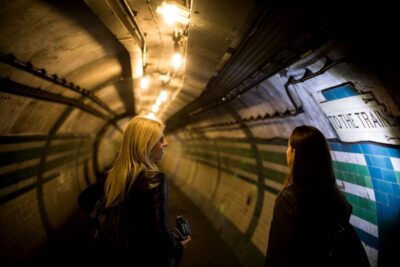
Hidden Tube Tour – Piccadilly Circus: The Heart of London
Read our review →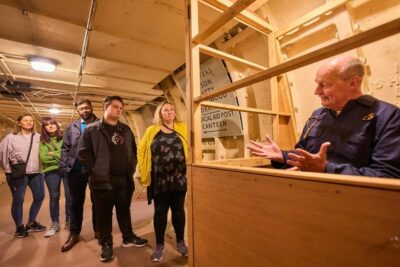
Browse the lists this tour appears in