
Reviewed · BRITISH MUSEUM TOURS
London: British Museum Highlights: Private Tour
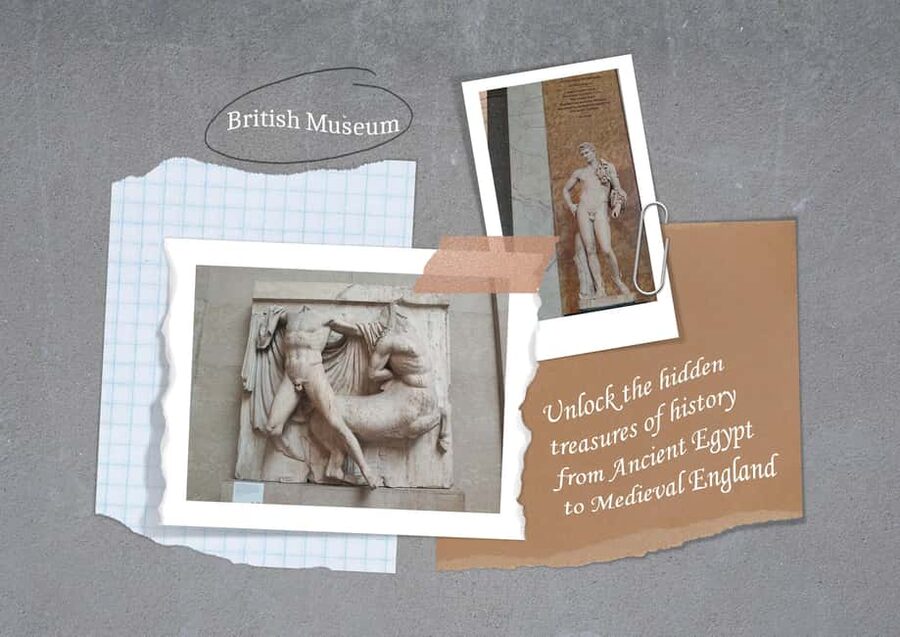
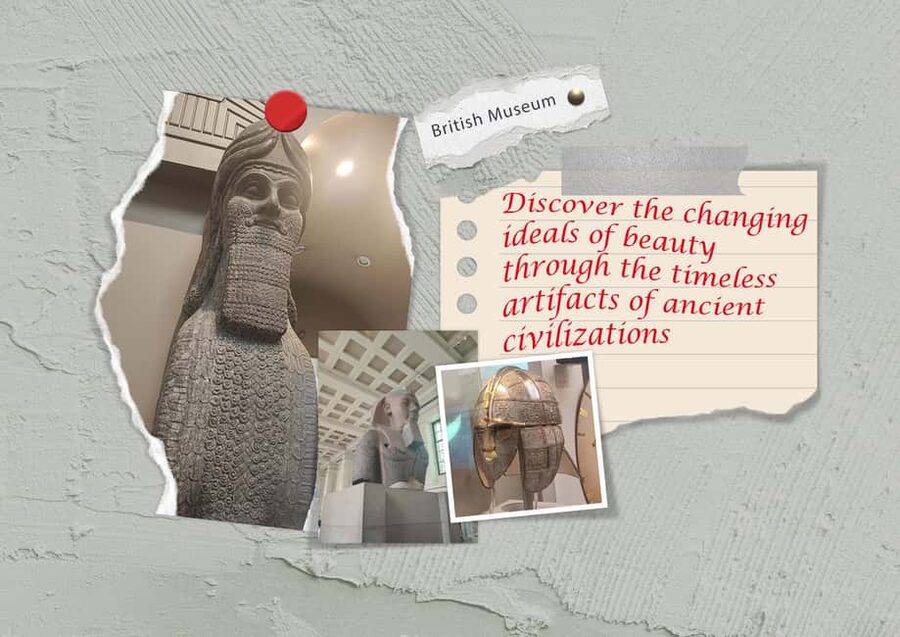
The British Museum holds more than eight million objects, so a two-hour visit needs a clear focus. This private tour builds one around ideas of beauty, love, death, and belief, using famous works such as the Rosetta Stone, the Parthenon Marbles, and Egyptian mummies to make distant eras feel connected to your own life.
I like that the tour is private for up to four people, so you can ask questions without keeping pace with a large group. I also like its mix of celebrated pieces and less familiar subjects, including medieval stories about Jesus. One consideration: two hours can only sketch a museum this large, and the tour involves a moderate amount of walking.
Key points to know
- The Rosetta Stone gives the guide a vivid way to explain how scholars learned to read Egyptian hieroglyphs.
- The Parthenon Marbles turn a visit to ancient Greek sculpture into a conversation about beauty and its influence.
- Egyptian mummies bring beliefs about death and the afterlife into view through real objects.
- The themes range widely, from Mesopotamian inventions and Indian ideas of rebirth to tragic love stories and medieval images of Jesus.
- Your group is limited to four, with an English-speaking guide and express security entry included.
- Richard is named in past feedback, along with praise for the guide’s enthusiasm, but the specific guide for your date is not guaranteed.
A focused route through a very large museum
The British Museum is a world-history collection on a scale that can be daunting without a plan. Its more than eight million artifacts are far too many to take in during one visit, let alone a two-hour one. This tour’s value lies in choosing a handful of objects and themes, then helping you see how they speak to one another.
The experience is private, with a maximum group size of four. That format suits people who want to pause for questions, need a guide to keep a family or small group engaged, or simply prefer conversation over listening in a crowd. It does not mean you will have the museum to yourselves. You are still visiting a major public collection, but the guide’s attention is reserved for your party.
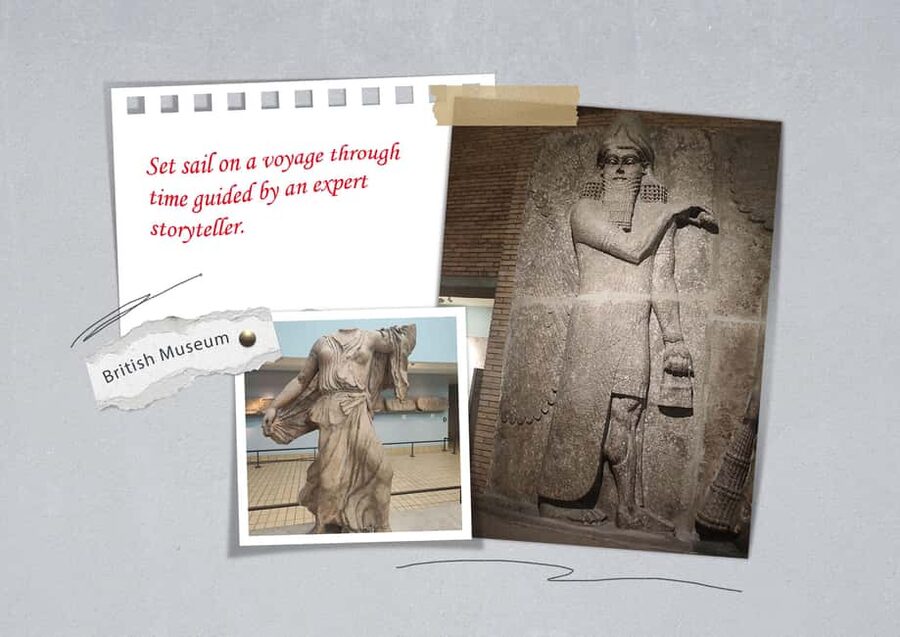
Expect a professional storyteller rather than a lecture built around dates and names alone. The tour’s central thread is how people have pictured beauty, love, death, and spiritual life. That gives you a way to connect objects from different cultures and periods, even if you have little background in art or archaeology.
More British Museum visits in London:
- London: British Museum Guided Tour
★ 4.3 · 1,182 reviews - British Museum London Guided Tour Semi-Private 8ppl Max
★ 5.0 · 984 reviews - London: Tour of the British Museum
★ 4.1 · 678 reviews
Starting at Edward VII’s Entrance
The meeting point is the group entrance at Edward VII’s Entrance, where your guide will hold a My London Guide sign. The activity ends back at the same meeting point, which makes it easier to plan the rest of your day without arranging a separate pickup.
Express security entry is included. That can save time at the security check, but it is best understood as a faster entry process, not a promise that the museum will be empty or that every queue disappears. Large bags and backpacks are not allowed inside, so travel light. You can take photographs without flash, but touching the exhibits is not permitted.
Once inside, the guide’s job is to help you spend your limited time well. The precise sequence of stops is not specified, and the museum visit may shift with practical conditions. Think of the named objects and themes as the substance of the tour, not a guaranteed minute-by-minute route.
Reading the Rosetta Stone
The Rosetta Stone is one of the museum’s best-known objects, and for good reason. It carries the same text in three scripts, including hieroglyphs, which helped scholars work out how to read a writing system that had been lost to ordinary understanding. In a guided visit, the stone is more than a famous slab behind glass. It becomes evidence of how patient comparison can bring a forgotten language back into view.
That story is an especially useful starting point if you are new to the museum. It makes clear that an artifact can matter for what it tells us about the past and for the questions it helped people answer later. Your guide can give the object context without asking you to become an Egyptologist before lunch.
The practical drawback is that the Rosetta Stone is famous, and famous objects attract attention. You may not get a long, quiet stretch in front of it. A guide can still help you focus on what to look for and why the object’s inscriptions matter.
Seeing beauty through the Parthenon Marbles
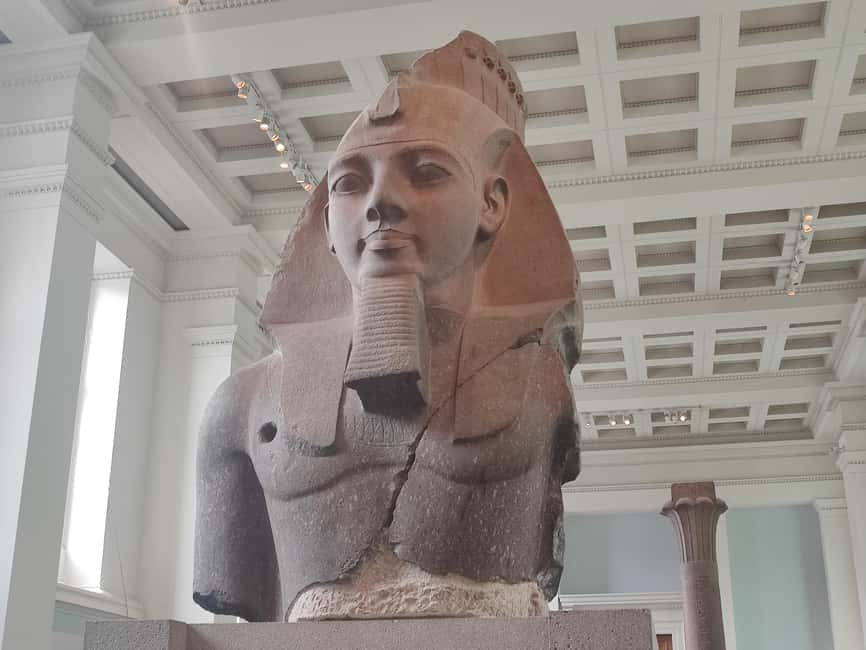
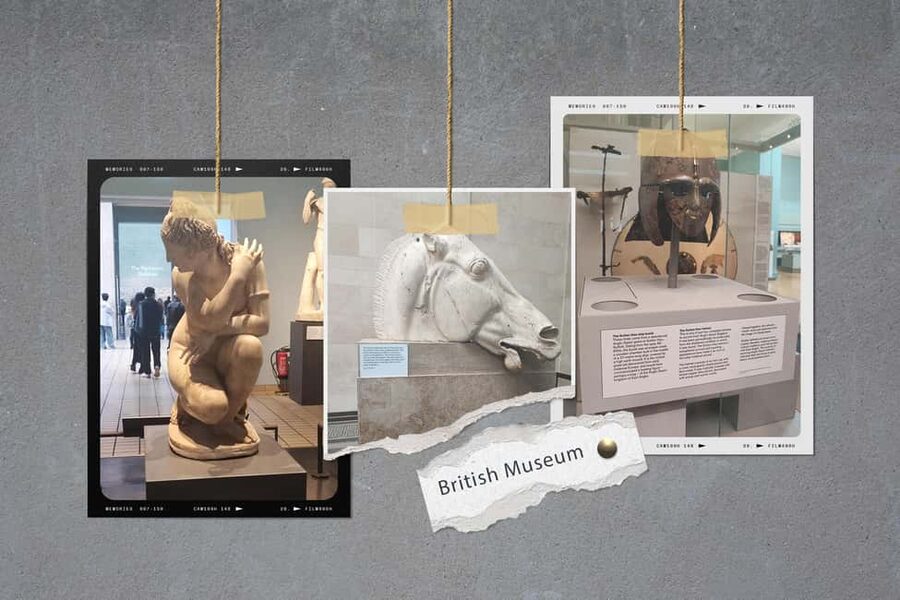
The Parthenon Marbles provide the tour’s central stop for considering ancient Greek art and the long reach of Greek ideas. The guiding question is not simply what the sculptures show, but how they helped shape later ideas about beauty, art, and culture. That turns the visit into a conversation rather than a quick checklist of classical masterpieces.
You do not need to know Greek history or have a trained eye to take part. The guide’s role is to help you notice what the objects suggest about the people who made them and the standards later societies carried forward. If you are traveling with someone who is less interested in dates and dynasties, that broader theme can make the stop easier to connect with.
There is also a limit to what two hours can cover. The tour promises a focused look at the marbles, not an exhaustive account of ancient Greece or every debate surrounding the sculptures. If this is the one collection you most want to study, tell your guide at the start and ask how much time the group can spend there.
More city highlights tours in London:
- London: City Sights Hop-On Hop-Off Bus & Bookable Extras
★ 4.4 · 6,579 reviews - London: London by Night Sightseeing Open-Top Bus Tour
★ 4.5 · 5,516 reviews - London: Tootbus Must-See Hop-On Hop-Off Bus Tour with Cruise
★ 4.0 · 3,653 reviews - London: River Thames Hop-On Hop-Off Sightseeing Cruise
★ 4.4 · 3,112 reviews
Facing life and death with Egyptian mummies
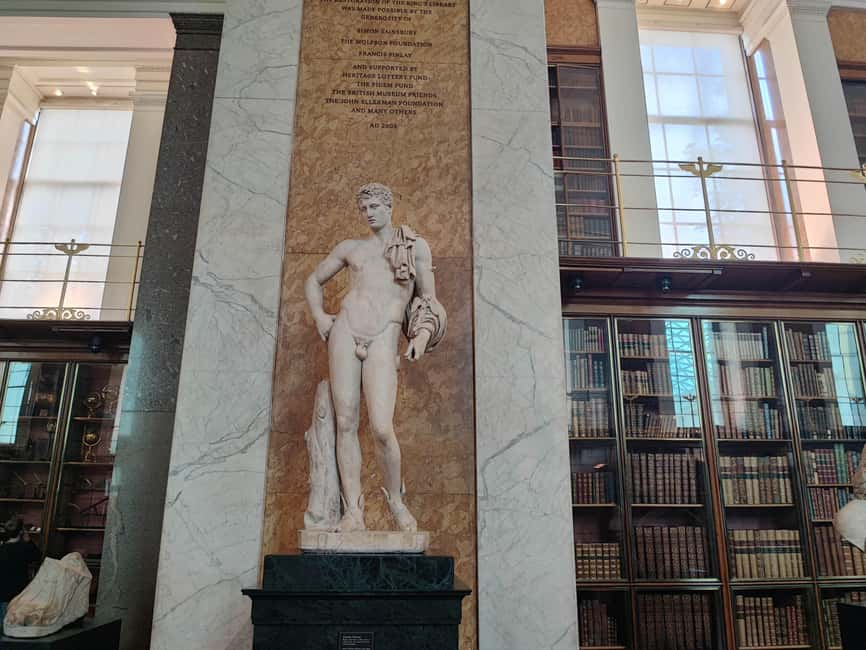
The Egyptian mummies bring the tour’s ideas about mortality into direct view. Mummification is not just a striking physical practice. It points toward beliefs about death, the body, and what might follow life. A guide can make those beliefs easier to understand by connecting objects to the people and ideas behind them.
This stop also helps balance the tour’s attention to beauty and artistic form. Here, the questions are about care, belief, and the human response to death. The subject may feel solemn, but the tour presents it as part of a larger story about how people have tried to make sense of existence.
The collection can be compelling, but it may not suit everyone, especially young children or anyone uncomfortable with human remains. You can ask the guide about the route and content if this is a concern. The tour description does not specify how long you will spend at the mummies, so you should not expect a detailed treatment of every aspect of ancient Egyptian burial practices.
Connecting Mesopotamia and India to present-day questions
The tour also turns to ancient Mesopotamia, credited here with inventions and developments such as the wheel, siege engines, and farming practices. The useful question is what these early societies can tell us now. Instead of treating the ancient world as a parade of firsts, the guide can help you think about how practical innovations changed the way people lived and organized communities.
Ancient India brings a different set of ideas into the conversation: yoga, rebirth, and pathways to enlightenment. These themes invite reflection on how beliefs about the soul and the cycle of life still shape people’s understanding of existence. You do not need to share those beliefs to appreciate how art can express them.
These subjects broaden the visit beyond the museum’s best-known European and Egyptian objects. They also ask more of you as a listener: the value comes from following the guide’s connections between an object, a belief, and a modern question. If you prefer a tour devoted only to major sculptures, this wider scope may feel like a detour. If you enjoy seeing how cultures frame similar human concerns in different ways, it is a strength.
Tragic love stories and medieval images of Jesus
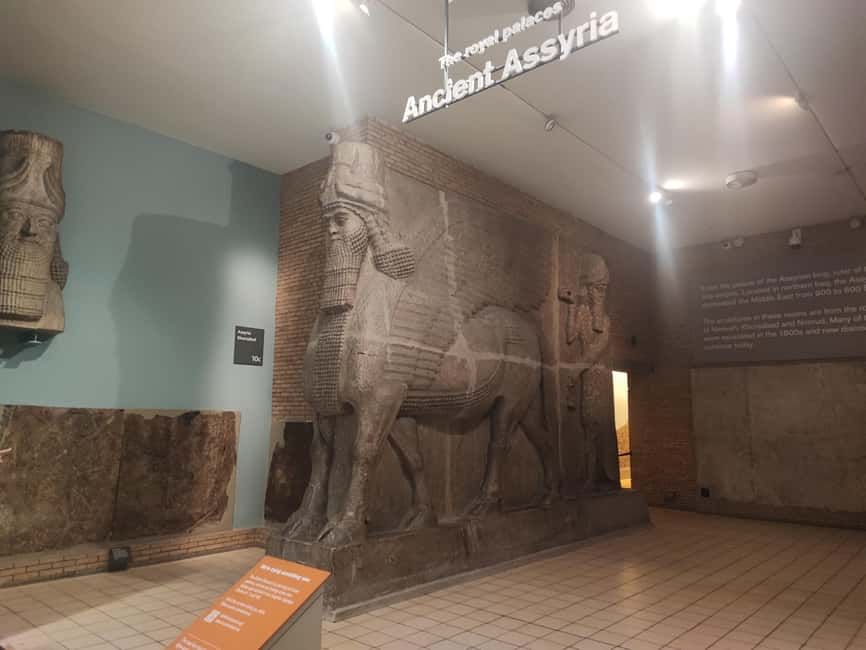
The tour includes art connected with tragic love and fate. The subject gives the guide a way to ask what emotions stories stirred in their original audiences and how artists chose to represent those feelings. Love and loss are easy to recognize across time, but the details of each culture’s storytelling can be quite different.
Another unusual thread is the childhood of Jesus as it appears in medieval images and stories outside the familiar account. The tour frames these as additional narratives, sometimes described as bonus stories that did not make the final edition. That can be a fresh angle if you know the traditional Christian story, though the exact works and amount of time devoted to them are not specified.
The point is not to cover every version of these stories. It is to notice that art and religious storytelling have always carried more than one kind of narrative. These stops also give the tour a human scale after the grand monuments and famous artifacts.
What the private format and price mean
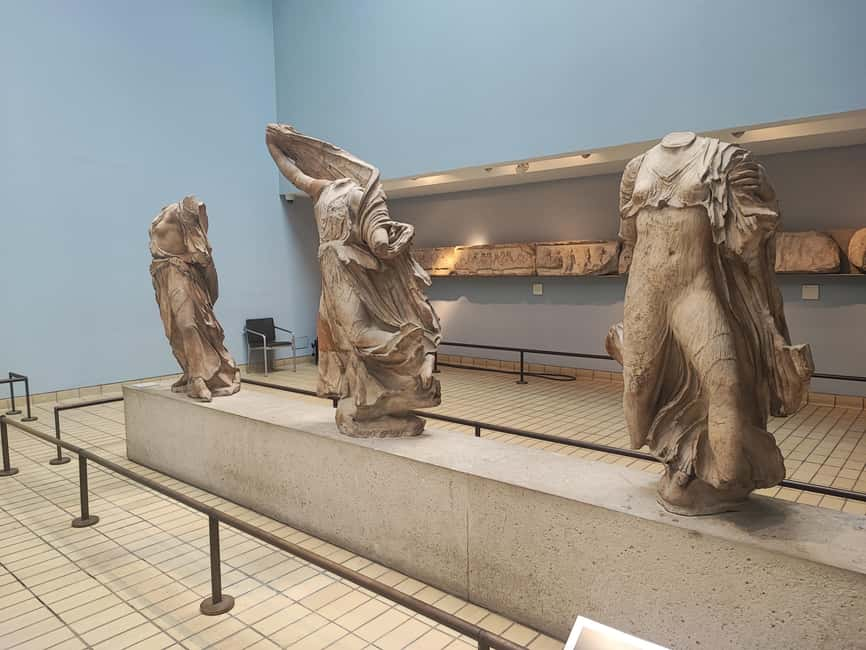
The listed price is $74.08 per person. Because the tour is private for up to four people, the cost is best judged by your group size and how much you value a guide’s attention. At the listed rate, four people would total $296.32 before any separate expenses. For a couple, the per-person cost buys a more personal visit, but it is naturally a larger outlay than joining a shared group tour.
You are paying for a two-hour guided experience, express security entry, and a route shaped around a small private party. Food, drinks, and hotel pickup or drop-off are not included. If you want a guide to provide context and help you choose what to notice in a vast collection, that can be worthwhile. If you would rather wander at your own pace or focus on only one gallery for a long time, a self-guided visit may suit you better.
Past feedback specifically praises the guides’ information and enthusiasm, and names Richard as a good guide. That is a useful sign of what the experience can offer, but it does not guarantee Richard will lead your tour. The small group size helps create room for questions, while the guide’s skill remains an important part of the value.
Pace, access, and a few practical cautions
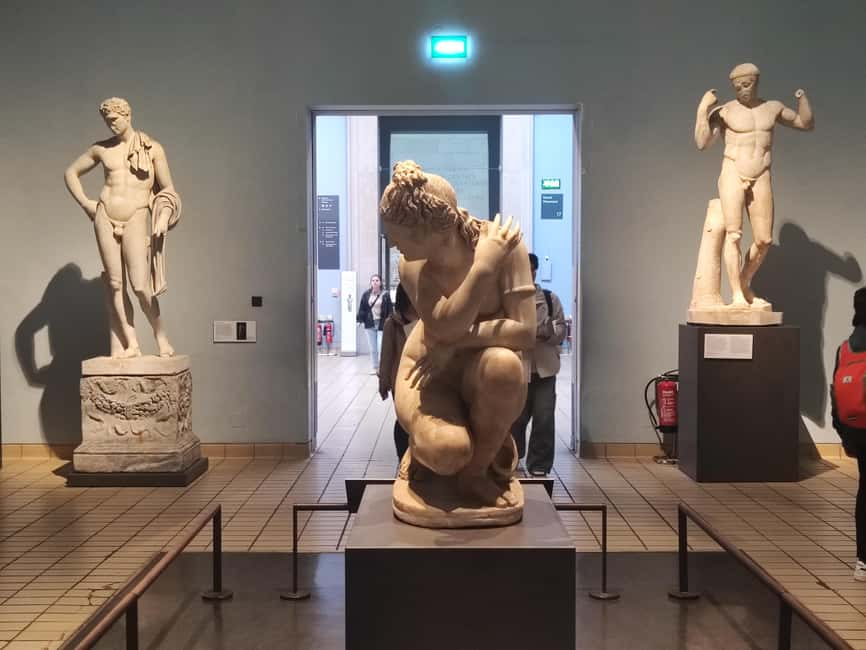
The tour lasts about two hours and involves a moderate amount of walking. You should be comfortable being on your feet and moving through museum spaces. The activity is not suitable for wheelchair users, according to the stated access information, so contact the provider before booking if you have mobility needs or require a particular accommodation.
You can bring a camera, but flash photography and selfie sticks are not allowed. Food and drinks are not permitted in the exhibition halls, and large bags and backpacks cannot be taken inside. Weapons, sharp objects, pets other than assistance dogs, alcohol, drugs, and explosive substances are also prohibited.
The tour is offered in English. Starting times vary, so check availability for the date you have in mind. You can cancel up to 24 hours in advance for a full refund, and reserve now while paying later. Those terms offer flexibility, but they do not change the central decision: you need to want a brisk, guided introduction rather than an unhurried visit to every collection.
Should you book this British Museum tour?
Book it if you want a short, personal orientation to the museum and enjoy connecting art with larger questions about beauty, belief, death, and love. The Rosetta Stone, Parthenon Marbles, and mummies give the visit familiar anchors, while the Mesopotamian, Indian, and medieval themes add range. The private group of up to four is the clearest advantage if you want space to ask questions.
Skip it if you want to explore at your own pace, need wheelchair access, or plan to spend much of the day in a single gallery. Two hours is enough for a guided introduction, not a full survey of a collection this large. If that is the kind of visit you want, the format and focus make sense.
FAQ
How long is the British Museum tour?
The tour lasts about two hours.
Is the tour private?
Yes. It is reserved exclusively for your group, with up to four people.
What language is the tour in?
The live tour guide speaks English.
Where does the tour start and finish?
It starts at the group entrance at Edward VII’s Entrance, where the guide holds a My London Guide sign. It ends back at the same meeting point.
Is express entry included?
Yes. Express entry through the security check is included.
Which objects and themes are included?
The tour highlights the Rosetta Stone, Parthenon Marbles, Egyptian mummies, ancient Mesopotamia and India, tragic love stories, and medieval stories about Jesus.
Is the tour suitable for wheelchair users?
No. The activity is listed as not suitable for wheelchair users.
What is the cancellation policy?
You can cancel up to 24 hours in advance for a full refund.
More museum visits in London
- Tower of London and Crown Jewels Exhibition Ticket
★ 4.5 · 6,677 reviews - London: Chelsea Football Club Stadium and Museum Tour
★ 4.8 · 4,576 reviews - Chelsea FC Stadium Tours and Museum
★ 5.0 · 1,908 reviews - Official tickets: Moco Modern & Contemporary Art Museum
★ 4.5 · 1,157 reviews
More private tours in London
- Stonehenge Inner Circle Private Tour from London with Bath Visit
★ 5.0 · 1,909 reviews - Private Tour: Black Taxi Tour of London
★ 5.0 · 1,153 reviews - Private London Arrival Transfer – Airport to Hotel / Accommodation
★ 3.5 · 1,085 reviews - Private London Departure Transfer – Hotel / Accommodation to Airport
★ 4.0 · 560 reviews
Just reviewed in London
- London Royal Tour – Buckingham Palace Entry – 12 guests 2,5h★ 4.9 · 14 reviews
- Royal London Walking Tour★ 3.9 · 11 reviews
- Royal London Tour incl Buckingham Palace & Changing of Guard★ 3.8 · 33 reviews
- London: Royal London Tour★ 3.7 · 46 reviews
- London: Royal Tour with Westminster Abbey & Afternoon Tea★ 3.0 · 3 reviews
- London: Tower of London & Changing of the Guard Experience★ 4.6 · 92 reviews
- London: Professional Private Photoshoot and Edited Photos★ 5.0 · 4 reviews
- London: Kensington Palace Tour, Guard Change & Afternoon Tea★ 4.3 · 22 reviews
British Museum Tours, compared.
British Museum London Guided Tour Semi-Private 8ppl Max
Read our review →
British Museum Audio Tour & Priority Entrance Ticket
Read our review →
The British Museum London – Exclusive Guided Museum Tour
Read our review →
British Museum & National Gallery of London Semi-Private 8ppl Max
Read our review →
British Museum Archaeology Course and Guided Tour
Read our review →
British Museum Guided Tour with Priority Entrance
Read our review →Browse the lists this tour appears in